
Sri Lanka vs Nepal Pitch Report: Korogi Sports Park Records, Weather & Asian Games 2026 Quarter-Final
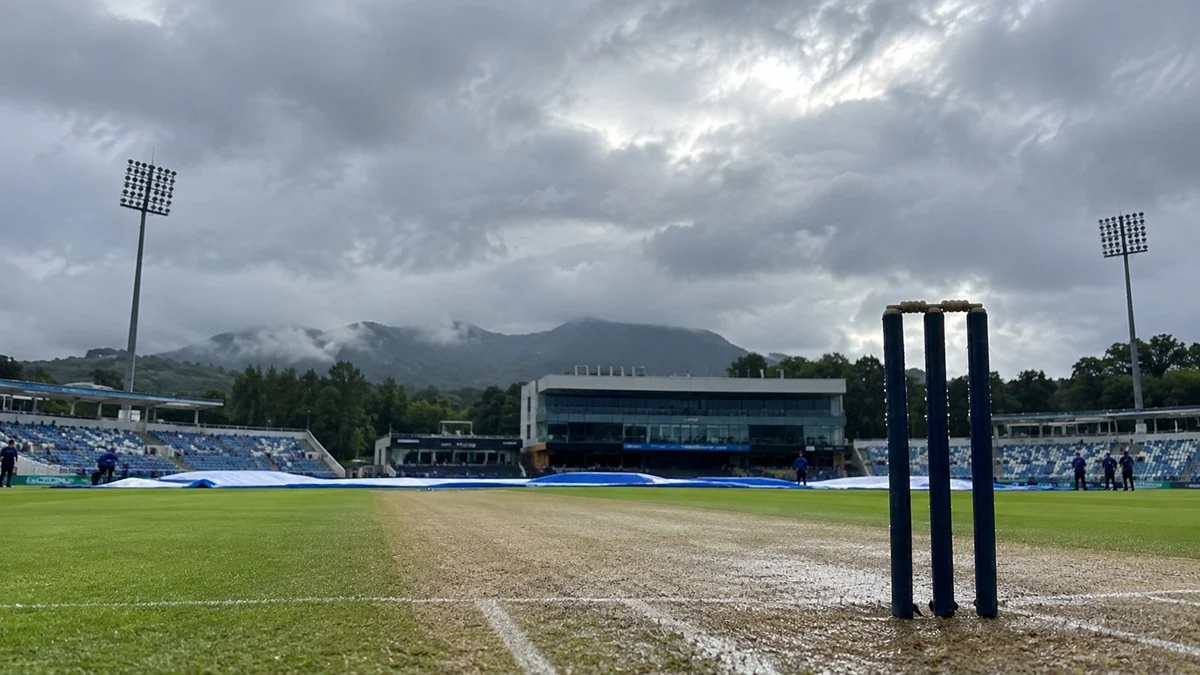
The Sri Lanka vs Nepal pitch report will be an important part of the Asian Games 2026 men’s cricket quarter-final as the two teams prepare to meet at Korogi Sports Park in Nisshin, Japan, on September 29. The match is scheduled to begin at 5:30 AM IST, with a place in the semi-final at stake.
Conditions at Korogi Sports Park have already played a major role in the tournament. The surface has not consistently produced high-scoring cricket, while spin has been particularly effective in some of the recent matches. Weather is an even bigger concern after rain repeatedly interrupted the group stage and affected the first two quarter-finals.
Sri Lanka enter the competition directly at the quarter-final stage as one of the seeded teams. Nepal, meanwhile, have already gained valuable experience at this venue and reached the knockout round after an impressive group campaign that included a five-wicket victory over Afghanistan.
| Match Detail | Information |
|---|---|
| Match | Sri Lanka vs Nepal |
| Tournament | Asian Games 2026 Men’s Cricket |
| Stage | 3rd Quarter-Final |
| Date | September 29, 2026 |
| Time | 5:30 AM IST |
| Venue | Korogi Sports Park |
| Location | Nisshin, Japan |
| Format | T20 |
| Stakes | Winner advances to semi-final |
Sri Lanka vs Nepal Pitch Report – What to Expect at Korogi Sports Park?
The Sri Lanka vs Nepal pitch report suggests that this is not necessarily a venue where batters can attack freely from the first ball. Recent matches have shown that scoring can become difficult when the surface slows down, particularly against quality spin bowling.
Available venue data currently puts the average first-innings score in the 125–127 range, while the second-innings average is considerably lower at around 83. The same dataset shows spinners accounting for approximately 58% of the wickets, compared with about 42% for pace bowling.
That does not mean every match will be low-scoring. Nepal demonstrated the other side of the venue when they reached 149/4 in a rain-reduced 15-over innings against Japan. Sundeep Jora and Lokesh Bam both scored half-centuries before rain prevented Japan from beginning their chase. The bigger clue came from Nepal’s match against Afghanistan.
Afghanistan were restricted to only 102/7, with Nepal’s spin attack controlling the middle overs. Lalit Rajbanshi returned 3/13 and Kushal Bhurtel took 4/21, meaning Nepal’s spinners accounted for all seven Afghanistan wickets. Nepal then completed the chase at 103/5 in 17.2 overs. Those numbers make spin one of the most important tactical factors for Tuesday’s quarter-final.
Korogi Sports Park Pitch Records
| Venue Record | Current Figure |
|---|---|
| Average 1st innings score | Around 125–127 |
| Average 2nd innings score | Around 83 |
| Matches won batting first | 6 |
| Matches won bowling first | 4 |
| Spin share of wickets | 58.2% |
| Pace share of wickets | 41.8% |
| Highest listed total | 204/5 |
| Lowest listed total | 47 all out |
The historical numbers should be treated as context rather than a prediction for one match. Conditions can change considerably depending on moisture, weather and pitch preparation, particularly during a tournament that has already experienced significant rain.
Why Nepal Already Know These Conditions Well
One advantage Nepal carry into this quarter-final is familiarity. They have already played at Korogi Sports Park during the Asian Games, whereas Sri Lanka enter directly at the knockout stage. Nepal have therefore experienced both the slower characteristics of the surface and the weather interruptions first-hand.
Their five-wicket victory over Afghanistan was especially significant. Restricting Afghanistan to 102/7 demonstrated how effective Nepal can be when their spinners find assistance from the surface. Kushal Bhurtel’s four wickets and Lalit Rajbanshi’s three wickets could therefore influence how Sri Lanka construct their batting approach. Sri Lanka may need to avoid allowing Nepal’s slow bowlers to control the middle overs.
For Nepal, the challenge will be different. Sri Lanka possess greater depth and international experience, so simply repeating the Afghanistan strategy may not be enough. Their bowlers will need to adapt quickly if the pitch plays better for batting on Tuesday morning.
Will Batting or Bowling First Be Better?
Under normal conditions, batting first could be a reasonable option because the available venue numbers show a substantial difference between first- and second-innings scoring. However, the weather makes the toss considerably more complicated.
If there is moisture around the surface or further rain before the match, the captain winning the toss may prefer to assess conditions before making an aggressive decision. A shortened match would also change the value of batting first versus chasing. This means the Sri Lanka vs Nepal pitch report cannot be separated from the weather forecast.
Sri Lanka vs Nepal Weather – Could Rain Affect the Quarter-Final?
Weather is arguably the biggest uncertainty surrounding this match. Korogi Sports Park has already experienced repeated interruptions during the Asian Games. Nepal’s group match against Japan was abandoned after Nepal had scored 149/4 from 15 overs, while rain also caused major disruption during the knockout stage.
Current match-day previews indicate cloudy conditions around Nisshin, making the weather worth monitoring right up to the toss. Forecasts can change quickly, so the final rain probability should be checked again closer to the start rather than treated as fixed a day in advance. That uncertainty matters because this is a knockout match.
Rain can influence not only whether the full 20 overs are possible but also the nature of the surface. Additional moisture can offer early assistance to seamers, while a shortened contest can completely alter batting strategy. The ground staff and drainage conditions will therefore be almost as important as the pitch itself.
Recent Rain Makes the Weather More Important Than Usual
There is another reason not to treat the weather section as a routine forecast. The Asian Games cricket competition in Japan has already seen matches affected or abandoned because of rain. Nepal themselves experienced a no-result against Japan, while the September 28 knockout schedule was also heavily affected by poor weather.
That makes the possibility of another interruption a genuine match factor rather than a generic pre-match talking point. For both teams, flexibility could become crucial. A 20-over match, a reduced-overs contest and a severely interrupted match would each require very different strategies.
Sri Lanka vs Nepal Pitch Report – Key Factors
| Factor | Expected Impact |
|---|---|
| New ball | Some assistance possible if moisture remains |
| Batting | Easier after settling in, but not guaranteed to be high-scoring |
| Spin | Potentially important through middle overs |
| Pace | Could benefit from fresh/moist conditions |
| First innings | Venue evidence generally stronger than second innings |
| Weather | Major variable |
| Toss | More important if rain is around |
Nepal’s recent performance against Afghanistan provides perhaps the clearest evidence for this match. Their spinners successfully defended pressure on a surface where Afghanistan struggled to accelerate, and Nepal then managed the chase without needing a high scoring rate. Sri Lanka will therefore have to assess the pitch quickly rather than approaching the game on reputation alone.
What Would Be a Competitive Score?
Based on the recent evidence, 130–150 could be a useful competitive range in a full 20-over match if the surface remains on the slower side.That figure should not be treated as a fixed par score. Nepal have already made 149 in only 15 overs against Japan, showing that significantly faster scoring is possible when batters settle and conditions are favourable.
If the pitch offers turn similar to Nepal’s match against Afghanistan, even a total closer to 120 could become difficult to chase. Conversely, a fresher surface and better weather could push the expected total much higher. The first three or four overs should therefore provide the clearest indication of how the pitch is behaving.
Sri Lanka vs Nepal Quarter-Final: Why This Match Matters
This is a direct knockout contest, so there is no margin for recovery. Nepal have already produced one of the notable performances of the men’s tournament by beating Afghanistan and then progressing from Group A. Sri Lanka, however, arrive at the quarter-final stage with a squad containing considerable international experience.
The contrast makes the contest particularly interesting: Sri Lanka bring experience and depth, while Nepal bring recent match practice at the actual venue. For Nepal, understanding Korogi Sports Park could be a genuine advantage. For Sri Lanka, adapting quickly to both the surface and the uncertain weather will be essential.
The final Sri Lanka vs Nepal pitch report should become clearer closer to the toss on September 29. Based on the evidence available so far, spin could again have an important role, batting may require some patience, and the weather remains the biggest variable surrounding this Asian Games 2026 quarter-final.

Related Posts
India Women vs Sri Lanka Women Pitch Report Today: Korogi Sports Park Pitch for Asian Games 2026 Final
Bangladesh vs Malaysia Pitch Report: Korogi Sports Park Records, Weather & Asian Games 2026
India vs Afghanistan Pitch Report Today: Will Korogi Sports Park Help Spinners in Asian Games Quarter-Final?

Sri Lanka vs Nepal Playing 11: Probable XI and Team News for Asian Games Quarter-Final

India Women vs Sri Lanka Women Playing XI Today: IND-W vs SL-W Asian Games 2026 Final