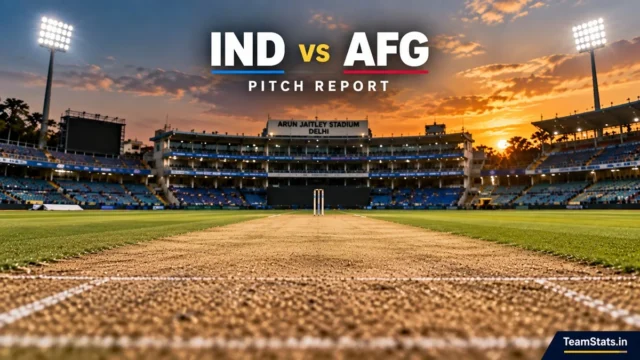
India vs Afghanistan Pitch Report Today: Will Korogi Sports Park Help Spinners in Asian Games Quarter-Final?
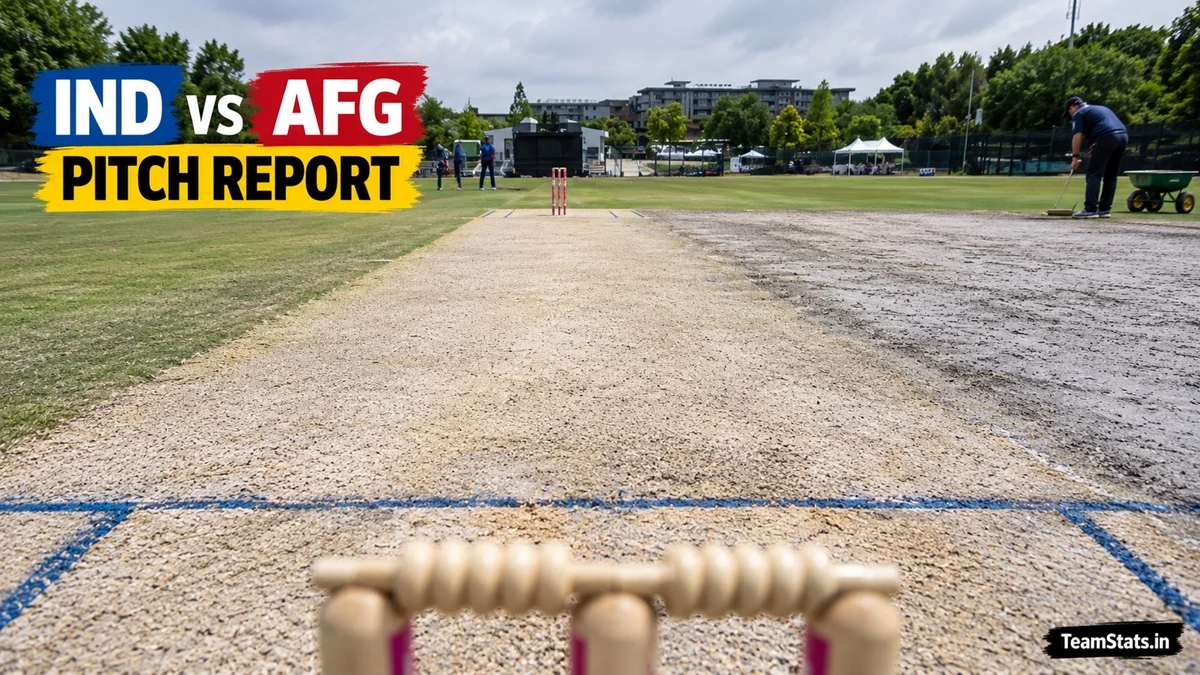
The India vs Afghanistan Pitch Report will be one of the biggest talking points when India begin their men’s Asian Games 2026 campaign against Afghanistan on Monday, September 28. The second quarter-final will be played at Korogi Sports Park in Nisshin, Japan, with the first ball scheduled for 10:00 AM IST.
India enter the knockout stage directly, while Afghanistan have already played two matches at this venue. That recent experience could matter because Korogi Sports Park has not behaved like a straightforward batting surface throughout the tournament. Rain around the Nagoya region has added another layer of uncertainty before the quarter-final.
India come into this match shortly after completing a 3-0 T20I series sweep against Afghanistan in Delhi. Readers looking at the wider rivalry can check the Afghanistan National Cricket Team vs India National Cricket Team Stats, but conditions in Japan present a very different challenge from the surfaces India encountered during that series.
India vs Afghanistan Pitch Report: What Korogi Sports Park Could Offer
The latest India vs Afghanistan Pitch Report suggests that batters should not expect consistent pace throughout the innings. Korogi Sports Park uses a hybrid cricket surface that can provide bounce when it is firm, but there has also been evidence of significant assistance for spin. How much moisture remains in and around the surface on match morning could determine which characteristic becomes more prominent.
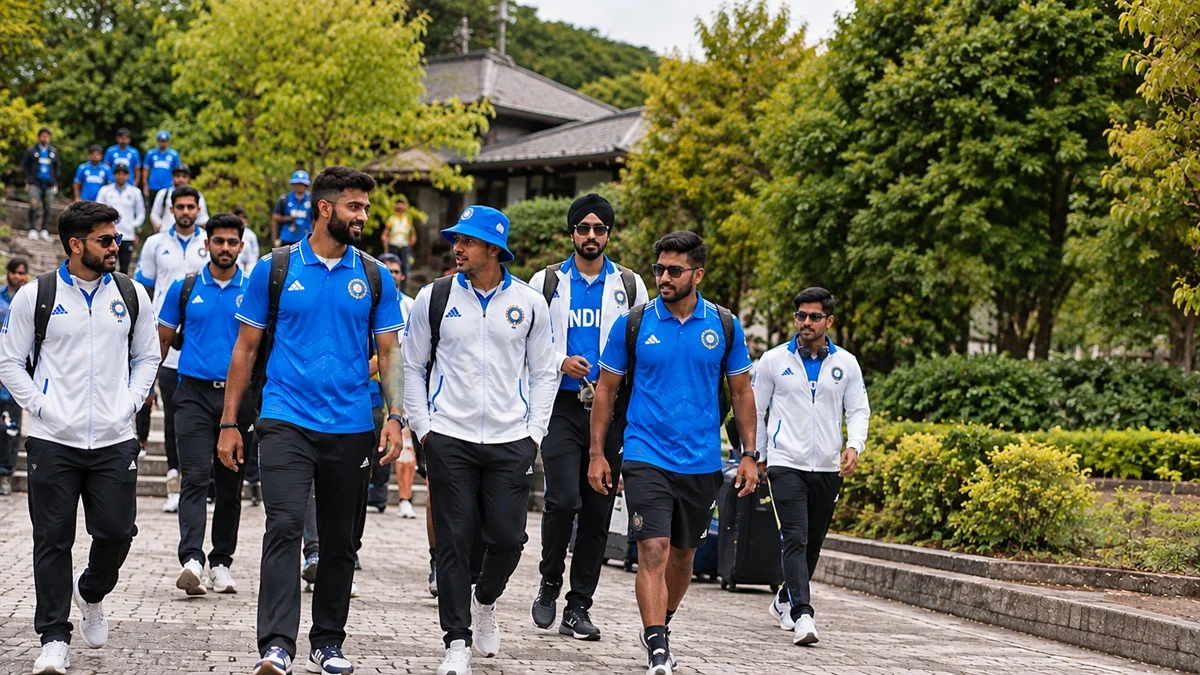
Afghanistan have already experienced that challenge. They scored 129/6 against Japan in their opening Asian Games match, but their second game produced a completely different batting performance. Afghanistan were restricted to 102/7 against Nepal before Nepal completed the chase at 103/5 in 17.2 overs.
The biggest clue from that Afghanistan-Nepal match came from Nepal’s spinners. Lalit Rajbanshi finished with 3/13, while Kushal Bhurtel took 4/21. All seven Afghanistan wickets fell to spin, providing India with a useful indication of what could work if the quarter-final is played on a similarly slow surface.
Virat Kohli Retirement Update: 2027 World Cup Will Be His Last for India
India have enough spin depth to exploit those conditions. Axar Patel, Washington Sundar, Ravi Bishnoi and other spin options give captain Shreyas Iyer considerable flexibility, while Afghanistan also have bowlers capable of using a surface offering grip. The contest through the middle overs could therefore become more important than simply looking at the size of the boundaries.
Recent venue numbers also need to be viewed carefully. Korogi Sports Park has produced high-scoring cricket in the past, so describing it as a permanently low-scoring ground would be misleading. The more important evidence for this India vs Afghanistan Pitch Report is how the surface has behaved during the current tournament and how persistent rain may change it before Monday’s game.
According to the Times of India Asian Games 2026 tournament coverage, Afghanistan made 129/6 against Japan before being held to 102/7 against Nepal at the same venue. Hong Kong were also restricted to 81/9 against Malaysia, while their next match produced 121/8 against Oman. Those varying totals show why one fixed “average score” does not tell the complete story of the current conditions.
India’s attacking top order will still have opportunities if the pitch remains firm. Abhishek Sharma arrives in Japan after an outstanding series against Afghanistan, including his record-breaking century in Delhi. His recent numbers are covered in detail in Abhishek Sharma Stats, and his ability to score quickly in the Powerplay could be especially valuable before the pitch begins to slow.
The difference from Delhi, however, is significant. TeamStats previously examined the India vs Afghanistan Pitch Report for the 2nd T20I at the Arun Jaitley Stadium, where the short boundaries and quicker scoring conditions created a different type of contest. Korogi Sports Park requires a fresh reading based on what has happened in Japan rather than simply carrying those expectations into this quarter-final.
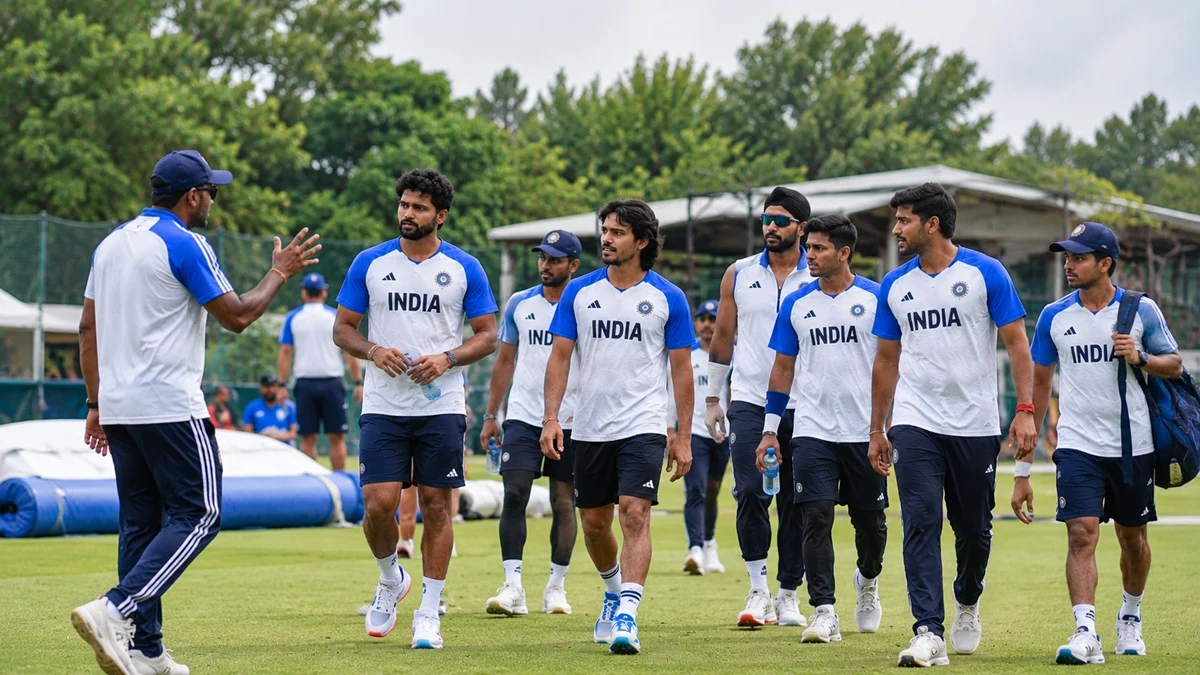
India will also have to decide how aggressively they want to approach the opening six overs. If the ball comes onto the bat cleanly early, attacking before spin takes control could be valuable. If there is moisture in the surface, however, patience against the new ball may become just as important.
Afghanistan have an advantage in one specific area: familiarity. They have already spent competitive time on this ground, while India are entering the Asian Games tournament directly at the quarter-final stage. That does not decide the match, but Afghanistan should have a clearer understanding of how quickly the surface changes and which lengths are difficult to attack.
India, meanwhile, have recent experience of playing Afghanistan immediately before travelling to Japan. The India vs Afghanistan Playing XI discussions from the bilateral series showed how many batting and bowling combinations India can use, and that flexibility could become useful if the team management decides conditions require an additional spinner.
Rain Could Completely Change the India vs Afghanistan Pitch Report
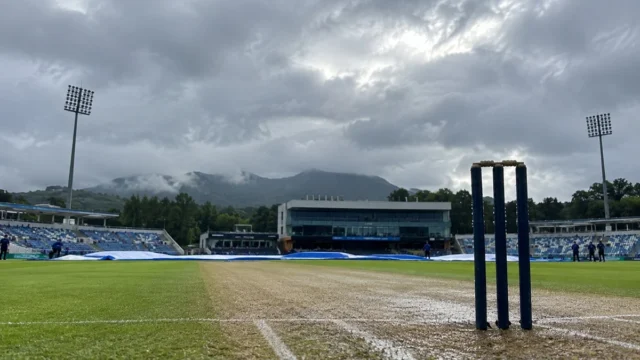
Weather is the biggest complication surrounding the India vs Afghanistan Pitch Report today. Nagoya has experienced persistent rain in the build-up to the quarter-final, and the weather has already affected the Asian Games men’s cricket schedule. Nepal vs Japan and Malaysia vs Oman were both abandoned, making conditions at Korogi Sports Park impossible to ignore.
The Indian Express reported that Nagoya had seen almost continuous rain since Saturday. The report also noted that Korogi Sports Park does not have floodlights, meaning poor weather and visibility can create additional scheduling pressure even when rainfall temporarily eases.
For the pitch itself, rain makes predictions more complicated. A covered surface can retain moisture, while repeated interruptions can prevent the ground staff from preparing exactly the type of wicket they originally intended. If conditions remain damp, stroke-making could become harder and bowlers who vary their pace may become increasingly difficult to attack.
There is also a tactical question around the toss. Normally, recent chasing results might encourage the captain winning the toss to bowl first, particularly when weather is uncertain. But if rain is around, the decision will depend heavily on the condition of the pitch, the outfield and the possibility of a shortened match.
That is why the final India vs Afghanistan Pitch Report should be updated after the ground inspection and toss. A surface that looks dry on Sunday evening can behave differently after another spell of overnight rain, so the visual condition of the wicket on Monday morning will provide the strongest final clue.
India’s spin resources could become particularly important if the surface remains slow. Axar Patel offers control and batting depth, Washington Sundar can attack right-handed batters with off-spin, and Ravi Bishnoi provides a different wicket-taking option. On a pitch where Nepal’s spinners recently claimed all seven Afghanistan wickets, India have good reason to consider spin seriously when selecting their final XI.
Afghanistan cannot be underestimated on these conditions either. Their Asian Games squad is different from the more experienced side India faced during the recent bilateral series, but several players have now had valuable match time in Japan. Their 48-run victory over Japan was followed by defeat against Nepal, giving them direct experience of how quickly conditions at Korogi can change.
India’s recent record against Afghanistan remains strong, but a knockout game on an unfamiliar surface reduces the value of historical numbers. The teams’ previous meetings and records provide useful background, while Monday’s result will depend much more heavily on how quickly the players adjust to the conditions in Nisshin.
Fans following India’s overall tournament route can also check the Asian Games Cricket Schedule 2026 for the quarter-finals, semi-finals and medal matches. India have entered directly at the last-eight stage, so there is no group game available to gradually adapt to the venue before the knockout pressure begins.
The clearest conclusion from the India vs Afghanistan Pitch Report is therefore not that Korogi Sports Park is simply a batting or bowling wicket. The surface has previously produced runs, but recent Asian Games matches have shown that spin can become extremely influential, while rain has introduced another major variable.
If the pitch is dry and firm, India’s aggressive batting could make full use of the Powerplay and the relatively short dimensions of the ground. If moisture and repeated rain leave the surface slower, the match could instead become a battle of patience, spin and smart strike rotation.
For India, reading those conditions quickly may be just as important as selecting the strongest XI. For Afghanistan, two matches of experience at Korogi Sports Park could prove useful. The final pitch condition will become clearer closer to the toss, but the evidence available before the quarter-final points towards a surface where adaptability — rather than pure hitting power — could decide who moves into the Asian Games semi-finals.

Related Posts
Sri Lanka vs Nepal Pitch Report: Korogi Sports Park Records, Weather & Asian Games 2026 Quarter-Final
India Women vs Sri Lanka Women Pitch Report Today: Korogi Sports Park Pitch for Asian Games 2026 Final

Bangladesh vs Malaysia Pitch Report: Korogi Sports Park Records, Weather & Asian Games 2026

India Women vs Japan Women Playing XI Today: Asian Games 2026 Quarter-Final
India vs Afghanistan Playing XI: Match Abandoned, India Reach Asian Games 2026 Semi-Final