India Women vs Sri Lanka Women Pitch Report Today: Korogi Sports Park Pitch for Asian Games 2026 Final
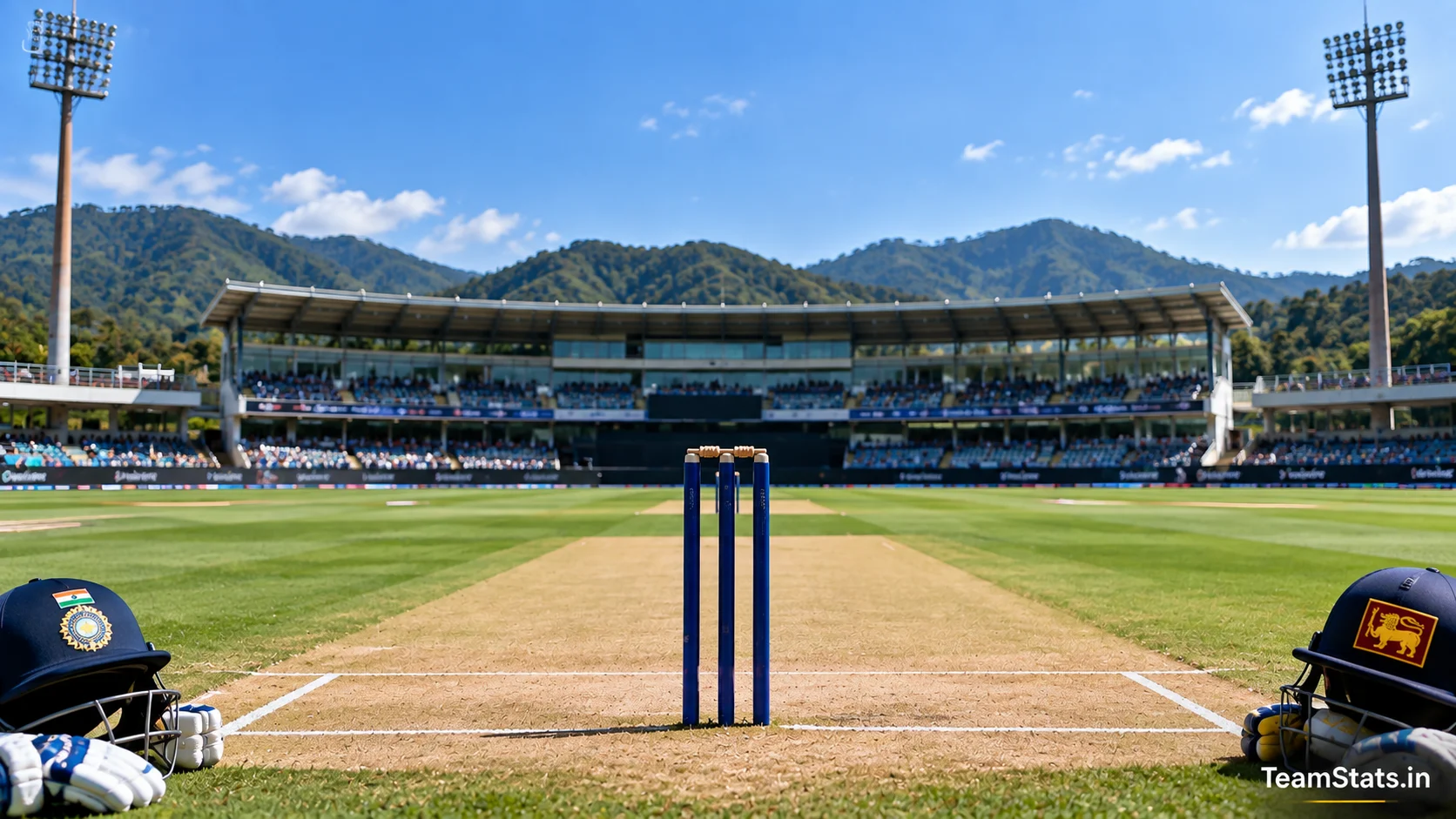
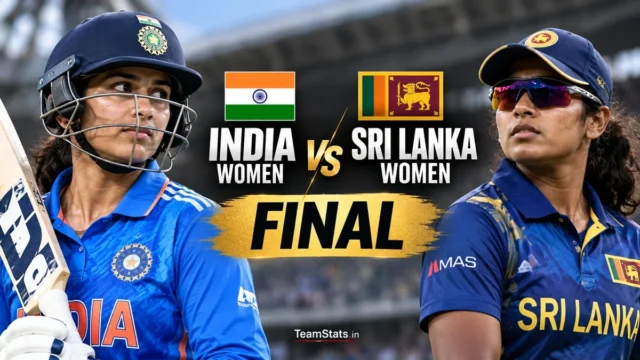
The India Women vs Sri Lanka Women pitch report will be one of the key talking points before the Asian Games 2026 women’s cricket gold medal match on September 22. India Women and Sri Lanka Women will meet at Korogi Sports Park in Nisshin, Japan, after producing dominant performances in their respective semifinals.
Recent matches at this venue have given us enough evidence to understand what both teams could face in the final. Korogi Sports Park has produced everything from teams being bowled out below 100 to successful chases approaching 180, so simply calling it a batting or bowling pitch would not tell the full story.
India enter the contest after beating Bangladesh by 114 runs, while Sri Lanka chased 178 against Pakistan with eight wickets in hand. For the complete match build-up, semifinal performances and gold-medal context, check our India Women vs Sri Lanka Women Asian Games 2026 Final preview.
IND-W vs SL-W Final Match Details
| Detail | Information |
|---|---|
| Match | India Women vs Sri Lanka Women |
| Tournament | Women’s Asian Games 2026 |
| Stage | Gold Medal Match / Final |
| Date | September 22, 2026 |
| Venue | Korogi Sports Park, Nisshin, Japan |
| Match Time | 10:30 AM IST |
| Format | T20 |
| India Captain | Harmanpreet Kaur |
| Sri Lanka Captain | Chamari Athapaththu |
India are the defending Asian Games women’s cricket champions, while Sri Lanka have reached another gold-medal contest against their regional rivals.
India Women vs Sri Lanka Women Pitch Report Today
The Korogi Sports Park pitch has shown good scoring potential when stronger batting teams have spent enough time at the crease. The two semifinals on September 20 are the strongest evidence.
India batted first against Bangladesh and powered their way to 195/4 in 20 overs. Shafali Verma was the central figure, scoring an unbeaten 100 from only 49 balls, while Smriti Mandhana contributed 37 and Harmanpreet Kaur made 40.
India then bowled Bangladesh out for just 81 in 15.4 overs.
The first semifinal produced a completely different type of result. Pakistan posted a competitive 177/4, but Sri Lanka chased it successfully, reaching 178/2 in 17.5 overs. Chamari Athapaththu led that chase with an unbeaten 83 from 50 balls.
Those two matches tell us something important about the India Women vs Sri Lanka Women pitch report: runs are available, but batting quality and execution have had a much bigger influence than the surface alone.
Recent Scores at Korogi Sports Park
Here are some of the most relevant Asian Games 2026 results from the venue:
| Match | First Innings | Second Innings | Result |
|---|---|---|---|
| India Women vs Bangladesh Women | India 195/4 | Bangladesh 81 all out | India won by 114 runs |
| Pakistan Women vs Sri Lanka Women | Pakistan 177/4 | Sri Lanka 178/2 | Sri Lanka won by 8 wickets |
| Sri Lanka Women vs Malaysia Women | Sri Lanka 160/4 | Malaysia 74/7 | Sri Lanka won by 86 runs |
| Japan Women vs India Women | Japan 57 all out | India 59/2 | India won by 8 wickets |
These scores show why the venue should not be classified using one simple label.
The same ground has produced 195/4 and 178/2, but it has also seen Japan dismissed for 57 and Bangladesh bowled out for 81. The quality gap between teams has clearly influenced the numbers.
For the final, the semifinal results involving India, Sri Lanka, Pakistan and Bangladesh are therefore more useful than simply calculating an overall venue average.
Is Korogi Sports Park a Batting or Bowling Pitch?
Based on the latest Asian Games matches, the pitch looks balanced but capable of becoming very good for batting when a set batter takes control.
India’s 195/4 demonstrated that attacking cricket can be rewarded. Sri Lanka’s successful chase of 178 showed that batting second is not necessarily a disadvantage either.
At the same time, bowlers have remained involved throughout the tournament.
India have twice dismissed opponents for low totals at this ground. Japan managed only 57 against them in the quarterfinal before Bangladesh were bowled out for 81 in the semifinal.
That makes the final particularly interesting. India and Sri Lanka both have considerably stronger batting line-ups than many of the teams that struggled here earlier in the tournament.
Why India’s 195/4 Matters for the Final
India’s semifinal performance is probably the strongest example of what is possible on this surface.
Shafali Verma attacked from the top of the order and reached her century from 49 balls. Smriti Mandhana also provided early momentum, while Harmanpreet Kaur helped India maintain the scoring rate through the middle phase.
India eventually reached 195/4.
The important point was not simply the final total. India were able to score quickly without suffering a major batting collapse.
That suggests established batters who adjust to the bounce and pace of the surface can score freely.
For Sri Lanka, stopping India’s opening pair before they establish momentum could therefore be one of the most important challenges of the final.
Sri Lanka’s 178 Chase Is an Even Bigger Warning
If India’s 195 showed how effectively a team can bat first at Korogi Sports Park, Sri Lanka’s semifinal demonstrated why a large total does not guarantee victory.
Pakistan scored 177/4, a total that would normally create substantial scoreboard pressure in a T20 knockout match.
Sri Lanka made it look manageable.
They reached 178/2 with 13 balls remaining, with captain Chamari Athapaththu scoring an unbeaten 83.
That performance gives Sri Lanka a significant amount of confidence if they are asked to chase again in the final.
It also means India cannot assume that a score of 165, 170 or even 175 will necessarily be enough.
What Could Be a Good First-Innings Score?
Recent evidence suggests that 170-plus should be viewed as a strong starting point rather than an automatically winning total.
A practical range based on the latest matches would look like this:
| First-Innings Total | How It Could Look |
|---|---|
| Below 150 | Potentially difficult to defend |
| 150–169 | Competitive with strong bowling |
| 170–179 | Strong total, but clearly chaseable |
| 180–189 | Very good first-innings score |
| 190+ | Excellent total based on recent evidence |
These are estimates rather than fixed par scores. Conditions on the day, wickets lost during the powerplay and the quality of death bowling could change the equation considerably.
Pakistan’s semifinal is the clearest warning. Even 177/4 was not enough against Sri Lanka.
Will Spin Play an Important Role?
Spin could become increasingly important during the middle overs.
India have several spin options capable of controlling that phase, while Sri Lanka can also use slower bowling to prevent batters from continuously hitting through the line.
The important question will be whether the pitch offers enough grip for spinners or continues playing as well as it did during the semifinals.
If there is some grip, batters may need to rely more on strike rotation rather than boundary hitting. If the ball comes onto the bat cleanly, however, aggressive players could continue targeting the shorter parts of the ground.
This is also where team selection becomes relevant.
The final bowling combination could tell us how both sides expect the surface to behave. Our India Women vs Sri Lanka Women Playing XI Today page has the probable combinations and can be updated with the confirmed XIs after the toss.
Pace Bowlers Could Still Find Opportunities
The high semifinal scores should not lead to the assumption that fast bowlers will have no assistance.
The new ball remains important because both sides have aggressive opening batters. Any early movement or extra bounce could become valuable before the surface settles.
India’s bowlers will particularly want to attack Chamari Athapaththu before she establishes herself at the crease.
Sri Lanka face a similar challenge against Shafali Verma and Smriti Mandhana.
A wicket or two during the first six overs could completely change the expected scoring pattern.
Powerplay Could Decide IND-W vs SL-W Final
The first six overs could be one of the most decisive phases of the gold-medal match.
India have considerable attacking potential through Shafali and Mandhana. If they reach the end of the powerplay with wickets in hand and a strong scoring rate, Harmanpreet Kaur and the middle order can build on that foundation.
Sri Lanka have their own major threat in Athapaththu.
Her unbeaten 83 in the semifinal against Pakistan demonstrated how dangerous she can be in a chase. India will therefore want to prevent her from controlling the tempo of the innings.
On a pitch that has already produced substantial totals, losing early wickets could be much more damaging than simply conceding a few boundaries.
Should the Toss Winner Bat or Bowl First?
Recent results provide evidence for both strategies.
India chose to bat against Bangladesh, made 195/4 and won by 114 runs.
Sri Lanka chased against Pakistan, reached 178/2 and won by eight wickets.
There is therefore no strong tournament evidence supporting a simple “win the toss and bowl first” approach.
India may prefer setting a target because their semifinal showed how effectively scoreboard pressure can work when their bowlers have a large total behind them.
Sri Lanka, on the other hand, should have no fear of chasing after successfully overhauling 177.
The final decision could depend on the condition of the pitch immediately before the match and any weather considerations.
What the Pitch Means for India Women
India should not need to make major tactical changes.
Their top order has already demonstrated that it can score close to 200 at this venue. Shafali Verma’s form gives them an aggressive option from the first over, while Mandhana can attack without necessarily taking the same level of risk.
The presence of Harmanpreet Kaur, Richa Ghosh and Deepti Sharma also gives India flexibility through the middle and final overs.
From a bowling perspective, India have enough variety to change plans according to conditions. If the surface offers grip, spin becomes important; if there is movement early, the new-ball bowlers can attack.
What the Pitch Means for Sri Lanka Women
Sri Lanka enter the final knowing they have already completed the tournament’s most significant chase at this ground.
That matters psychologically as well as tactically.
Even if India put 170 or more on the board, Sri Lanka can point to their semifinal performance against Pakistan as evidence that the target is achievable.
Athapaththu will again be crucial, but Sri Lanka’s ability to finish the chase with eight wickets remaining also showed that their batting performance was not built around a late desperate recovery.
India will need wickets rather than simply attempting to slow the scoring rate.
Three Key Pitch Battles to Watch
Three individual phases could reveal more about the surface than the toss itself.
Shafali Verma vs Sri Lanka’s new-ball attack: If Shafali gets the same freedom she enjoyed against Bangladesh, India can quickly push towards another large total.
Chamari Athapaththu vs India’s opening bowlers: Sri Lanka’s captain comes into the final after an unbeaten 83 in a successful 178 chase. An early wicket would significantly change Sri Lanka’s batting equation.
India’s spin attack vs Sri Lanka’s middle order: If the surface slows after the powerplay, this could become the phase where India attempt to control the match.
Korogi Sports Park Pitch Report – Key Takeaways
| Factor | Assessment |
|---|---|
| Batting conditions | Good once batters settle |
| High-scoring potential | Strong |
| Recent major first-innings total | India 195/4 |
| Recent major successful chase | Sri Lanka 178/2 |
| Pace impact | Most relevant with the new ball |
| Spin impact | Could be important in middle overs |
| Safe first-innings score | No obvious safe total |
| Toss advantage | Recent results support both batting and chasing |
The biggest mistake would be assuming that a score around 170 guarantees control of the final. Sri Lanka have already disproved that by chasing 178 against Pakistan.
Final Pitch Verdict
The India Women vs Sri Lanka Women pitch report points towards a Korogi Sports Park surface that can support high-scoring T20 cricket without completely removing bowlers from the contest.
India’s 195/4 against Bangladesh proves that a team can approach 200 here. Sri Lanka’s 178/2 against Pakistan proves that even a strong first-innings total can be chased.
That combination makes the gold-medal match difficult to reduce to a simple batting-first or chasing formula.
Early wickets, powerplay scoring and the battle through the middle overs could ultimately matter more than the toss itself. A total above 180 would create pressure, but recent evidence suggests that neither side can afford to relax simply because it has a sizeable score on the board.
With India looking to defend their Asian Games gold and Sri Lanka arriving after an excellent semifinal chase, the surface at Korogi Sports Park should provide an intriguing tactical contest in the IND-W vs SL-W Asian Games 2026 final.

Related Posts

Sri Lanka vs Nepal Pitch Report: Korogi Sports Park Records, Weather & Asian Games 2026 Quarter-Final
India vs Afghanistan Pitch Report Today: Will Korogi Sports Park Help Spinners in Asian Games Quarter-Final?

Bangladesh vs Malaysia Pitch Report: Korogi Sports Park Records, Weather & Asian Games 2026
India Women vs Sri Lanka Women Playing XI Today: IND-W vs SL-W Asian Games 2026 Final
India Women vs Sri Lanka Women Asian Games 2026 Final Today: Match Time, Key Battles & Latest Updates