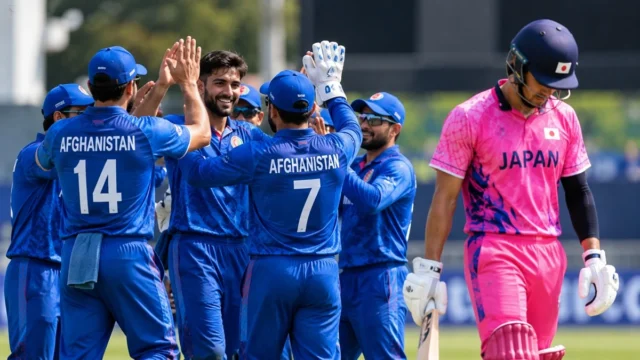
Afghanistan vs Nepal Result: Nepal Beat AFG by 5 Wickets in Asian Games 2026
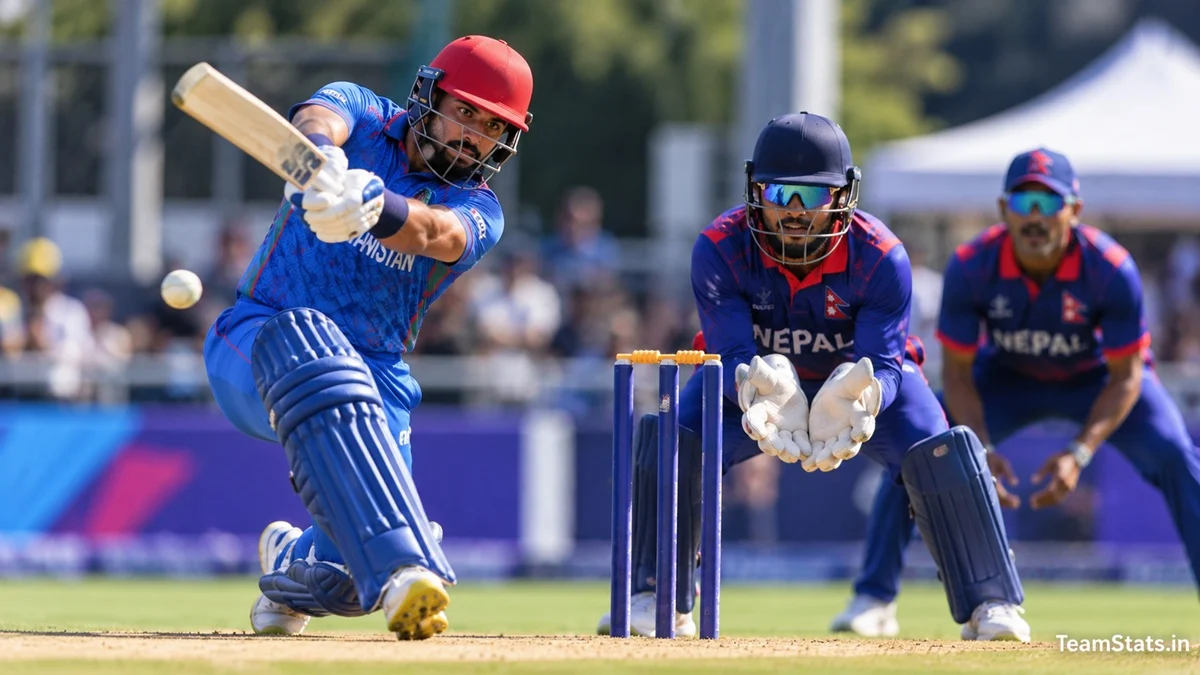
Afghanistan vs Nepal produced one of the most important results of Asian Games 2026 Group A as Nepal defeated Afghanistan by five wickets at Korogi Sports Park in Nisshin, Japan. Afghanistan could manage only 102/7 after choosing to bat first, before Nepal completed the chase at 103/5 in 17.2 overs with 16 balls remaining.
The result gives Nepal an important start to their Asian Games men’s cricket campaign and changes the complexion of Group A. Afghanistan had entered the match after beating Japan by 48 runs, but Nepal’s bowlers produced a much tougher challenge and never allowed the Afghan batting order to establish control.
Kushal Bhurtel was the major difference with the ball, taking four wickets as Afghanistan collapsed through the middle overs. Lalit Rajbanshi added three wickets, while Sundeep Jora and Rohit Paudel then played the key innings that carried Nepal through a potentially tricky chase.
Afghanistan vs Nepal Result & Match Summary
The Afghanistan vs Nepal result was built around Nepal’s bowling performance rather than explosive batting. Afghanistan won the toss and elected to bat, but three early wickets and another collapse in the middle overs left them with a below-par total of 102/7 from their 20 overs.
Nepal also had problems early in their chase. Kushal Bhurtel was dismissed for a duck and Aasif Sheikh made only two, but Nepal did not allow those wickets to develop into a full collapse. Sundeep Jora and Rohit Paudel provided the recovery that ultimately decided the match.
| Match Detail | Information |
|---|---|
| Match | Afghanistan vs Nepal |
| Tournament | Asian Games 2026 Men’s Cricket |
| Group | Group A |
| Date | September 25, 2026 |
| Venue | Korogi Sports Park, Nisshin |
| Toss | Afghanistan won the toss |
| Decision | Afghanistan elected to bat |
| Afghanistan | 102/7 (20 overs) |
| Nepal | 103/5 (17.2 overs) |
| Result | Nepal won by 5 wickets |
| Balls remaining | 16 |
Nepal’s victory was particularly significant because Afghanistan had looked strong against Japan in their opening match. The Afghan bowling attack had successfully defended 129 against the hosts, but a target of 103 gave Nepal considerably more room to absorb early setbacks.
Afghanistan vs Nepal Scorecard: AFG 102/7, NEP 103/5
Afghanistan’s innings never developed the momentum they would have wanted after electing to bat. Mohammad Akram made only two, Hassan Eisakhil was dismissed without scoring and Karim Janat contributed nine, leaving Afghanistan’s more experienced middle order with a substantial rebuilding job.
Faisal Shinozada and Najibullah Zadran responded with 30 runs each. Their partnership gave Afghanistan some stability, but neither batter was able to turn his start into the kind of innings required to push the total towards a more challenging range.
Nangeyalia Kharote added an unbeaten 17 from 15 balls near the end of the innings. Afghanistan eventually finished on 102/7 from 20 overs, scoring at only 5.10 runs per over.
Afghanistan Batting Scorecard
| Batter | Runs | Balls |
|---|---|---|
| Mohammad Akram | 2 | 8 |
| Hassan Eisakhil | 0 | 2 |
| Karim Janat | 9 | 9 |
| Faisal Shinozada | 30 | 33 |
| Najibullah Zadran | 30 | 40 |
| Mohammad Ishaq | 7 | 10 |
| Darwish Rasooli | 0 | 1 |
| Nangeyalia Kharote | 17* | 15 |
| Abdullah Ahmadzai | 1* | 2 |
The scorecard tells the story clearly. Afghanistan received two innings of 30 and a useful late contribution from Kharote, but they lacked the one substantial knock that could have transformed the total.
Kushal Bhurtel Changes Afghanistan vs Nepal Match With the Ball
Kushal Bhurtel entered the match as one of Nepal’s recognised top-order batters, but his decisive contribution came with his leg-spin. He removed Faisal Shinozada, Mohammad Ishaq, Darwish Rasooli and Najibullah Zadran to finish with four wickets.
The timing of those wickets was even more important than the number. Shinozada had reached 30 and was attempting to build Afghanistan’s innings when Bhurtel had him caught by Dipendra Singh Airee, breaking a partnership that had started to provide stability.
Bhurtel then removed Mohammad Ishaq and Darwish Rasooli from successive deliveries. Afghanistan suddenly found themselves losing wickets in a cluster, preventing them from using the final overs as an attacking phase.
Najibullah Zadran eventually became Bhurtel’s fourth victim after making 30 from 40 balls. It completed an outstanding bowling contribution and ensured Afghanistan could not recover sufficiently in the closing overs.
Lalit Rajbanshi Starts Afghanistan’s Collapse
Bhurtel produced the headline bowling figures, but Lalit Rajbanshi’s contribution at the start of the innings was equally valuable. He removed Mohammad Akram, Hassan Eisakhil and Karim Janat, accounting for Afghanistan’s top three batters.
That early damage changed Afghanistan’s approach. Instead of using the powerplay to establish an aggressive platform, Faisal Shinozada and Najibullah Zadran were forced to spend time repairing the innings.
The rebuilding partnership kept Afghanistan alive but also reduced their opportunity to accelerate. By the time Nepal broke through again, the batting side had too little time and too few established batters left to produce a major finish.
Rajbanshi’s three wickets combined with Bhurtel’s four meant that all seven Afghanistan wickets were shared by just two Nepal bowlers. That concentration of wickets explains how effectively Nepal controlled both the beginning and middle of the innings.
Faisal Shinozada and Najibullah Zadran Lead Afghanistan Recovery
At 11/3, Afghanistan were in serious trouble. Faisal Shinozada and Najibullah Zadran therefore had to balance survival with the need to keep the scoreboard moving.
Shinozada scored 30 from 33 balls, including two fours and a six. His innings gave Afghanistan their first meaningful resistance after Nepal’s early strikes.
Najibullah also scored 30, although his innings required 40 deliveries. He struck two boundaries and attempted to provide the experienced presence Afghanistan needed while wickets fell around him.
The problem was that neither batter could continue into the final overs. Once Bhurtel removed them, Afghanistan had little opportunity to turn the recovery into a genuinely competitive total.
Darwish Rasooli’s Difficult Day
Afghanistan captain Darwish Rasooli had made 29 against Japan in the previous match, making him one of the batters expected to provide stability against Nepal. Instead, he was dismissed first ball.
Bhurtel trapped Rasooli lbw immediately after dismissing Mohammad Ishaq. Two wickets from consecutive deliveries changed the shape of Afghanistan’s innings and gave Nepal complete control of the middle phase.
It was a sharp contrast with Afghanistan’s opening Asian Games match, when Rasooli and other middle-order contributors had helped the team reach 129/6. Against Nepal, Afghanistan simply could not put together enough productive partnerships.
That difference ultimately became crucial because Nepal were chasing 27 fewer runs than Japan had been asked to chase one day earlier.
Afghanistan vs Nepal: Nepal Lose Kushal Bhurtel Early
A target of 103 looked manageable, but Nepal’s chase did not begin comfortably. Kushal Bhurtel, having already made the biggest impact with the ball, was dismissed for a duck from the second delivery of Nepal’s innings.
Faridoon Dawoodzai removed Bhurtel, giving Afghanistan exactly the early wicket they needed. Aasif Sheikh then made only two from four balls before Abdullah Ahmadzai dismissed him, creating genuine pressure on Nepal.
Nepal therefore could not simply cruise towards the target from the opening over. They needed their middle order to absorb the pressure and ensure Afghanistan’s bowlers did not turn a small target into a difficult chase.
That responsibility fell largely on Rohit Paudel and Sundeep Jora.
Sundeep Jora Leads Nepal’s Response
Sundeep Jora played the highest-scoring innings of Nepal’s chase, making 34 from 35 balls with three fours and one six. His innings was not a high-strike-rate assault; instead, it gave Nepal stability when another wicket could have brought Afghanistan right back into the contest.
Jora helped Nepal recover after the early dismissals of Bhurtel and Aasif Sheikh. With the required rate remaining manageable, he did not need to take unnecessary risks against Afghanistan’s wicket-taking bowlers.
His innings ended in a run-out, but by then Nepal had made substantial progress towards the target. The chase had moved away from the immediate danger created by those two early wickets.
In a low-scoring T20 match, that kind of controlled innings can be more valuable than a short burst of boundaries. Jora gave Nepal precisely the stability required by the match situation.
Rohit Paudel Stays Until the End
Rohit Paudel played another important role, finishing 33 not out from 32 balls. His four boundaries helped keep Nepal moving while wickets fell at the other end.
Paudel’s presence became increasingly important after Jora was run out. Afghanistan still had an opportunity to create pressure if Nepal lost several quick wickets, but an established batter remaining at the crease prevented the chase from becoming chaotic.
Dipendra Singh Airee contributed 15 from 18 balls before being dismissed with Nepal only one run away from victory. Gulshan Jha then scored the final run to complete the five-wicket win.
Nepal reached 103/5 in 17.2 overs, leaving 16 deliveries unused. It was a controlled finish after what had initially looked like a potentially awkward chase.
Nepal Batting Scorecard
| Batter | Runs | Balls |
|---|---|---|
| Kushal Bhurtel | 0 | 2 |
| Aasif Sheikh | 2 | 4 |
| Rohit Paudel | 33* | 32 |
| Sundeep Jora | 34 | 35 |
| Kushal Malla | 9 | 12 |
| Dipendra Singh Airee | 15 | 18 |
| Gulshan Jha | 1* | 1 |
Nepal did not dominate with the bat, but they did not need to. Jora and Paudel understood that protecting the chase was more important than trying to finish the match quickly.
That distinction mattered because Afghanistan had already demonstrated against Japan that their bowlers could turn a modest target into a winning position once wickets began falling.
Why Afghanistan’s 102 Was Not Enough
Afghanistan’s biggest problem was the combination of early wickets and a slow recovery. Losing three top-order batters cheaply forced Shinozada and Najibullah to prioritise rebuilding, and Nepal’s spinners then struck again before Afghanistan could accelerate.
The result was a total that required Nepal to score only 5.15 runs per over. Even after losing Bhurtel and Sheikh early, Nepal could afford to take time rebuilding the chase.
Afghanistan still created enough moments to make Nepal work for the result. Faridoon Dawoodzai, Abdullah Ahmadzai and Arab Gul took a wicket each, while two Nepal batters were run out.
But with only 102 to defend, Afghanistan needed wickets far more frequently. Nepal’s middle-order partnerships denied them that opportunity.
Afghanistan vs Nepal Bowling Scorecard: Nepal’s Spin Makes the Difference
Nepal’s bowling performance was particularly impressive because the wickets came at exactly the right stages. Rajbanshi dismantled the top order before Bhurtel attacked the rebuilding middle order.
Bhurtel’s four-wicket haul was also notable because Afghanistan had several experienced batters in their lineup. Removing Shinozada and Najibullah after both had reached 30 prevented the innings from developing any late momentum.
Nepal did not need every bowler to take wickets. The supporting attack kept enough pressure on Afghanistan for Bhurtel and Rajbanshi to remain attacking options.
For Afghanistan, this match demonstrated the challenge of facing a Nepal side with considerably more international experience than Japan.
Afghanistan Had Entered After Beating Japan
Afghanistan came into the Afghanistan vs Nepal match after starting their Asian Games campaign with a convincing 48-run victory over Japan. They made 129/6 before bowling Japan out for 81 in 19.3 overs.
Mohammad Akram had scored 34 in that opening match, captain Darwish Rasooli made 29 and Mohammad Ishaq finished unbeaten on 25. Afghanistan then produced an even stronger performance with the ball.
Arab Gul Momand took four wickets for only eight runs, while Nangeyalia Kharote claimed three and Abdullah Ahmadzai took two. That performance had highlighted Afghanistan’s bowling depth.
Readers can see the complete background to that opening fixture in our Afghanistan vs Japan coverage.
Against Nepal, however, Afghanistan never gave the same bowling attack enough runs to defend. The difference between 129 and 102 proved significant.
Nepal Presented a Different Challenge From Japan
The original question before this match was whether Nepal’s greater international experience would make Afghanistan’s second Group A fixture considerably more difficult. The result provided a clear example of how that experience mattered.
Nepal were 12/2 early in the chase and could easily have allowed Afghanistan to build momentum. Instead, their middle order remained composed and played according to the required rate rather than reacting to the pressure.
The same maturity was visible with the ball. Rajbanshi attacked the top order before Bhurtel changed the innings through the middle overs.
Nepal did not require an extraordinary individual batting performance. Several players simply performed the roles required by the match situation.
Kushal Bhurtel’s Unusual Match
Kushal Bhurtel had one of the more unusual performances of the Afghanistan vs Nepal Asian Games 2026 match. He was Nepal’s dominant bowler but then made no contribution with the bat.
His four wickets included both Afghanistan’s top scorers, Faisal Shinozada and Najibullah Zadran. He also dismissed Mohammad Ishaq and captain Darwish Rasooli.
With the bat, however, Bhurtel lasted only two deliveries and was dismissed without scoring. Afghanistan briefly had an opening to put Nepal under pressure.
The fact Nepal still won comfortably enough illustrates the depth of their batting. Jora and Paudel were able to compensate for the failure of their opener.
What Happened to Afghanistan’s Bowling Threat?
Afghanistan’s bowlers were outstanding against Japan, but defending 102 presented a very different task. Every boundary carried more significance, while Nepal could rebuild without allowing the required run rate to become dangerous.
Faridoon Dawoodzai conceded only 10 runs from his three overs and took Bhurtel’s wicket. Abdullah Ahmadzai returned 1/15 from three overs, while Arab Gul conceded 13 from 3.2 overs and took the wicket of Dipendra Singh Airee.
Those figures show that Afghanistan did not bowl badly across the board. The problem was that Nepal had enough time to negotiate the difficult overs and target other opportunities.
Nangeyalia Kharote and Karim Janat went wicketless, while Najibullah Zadran’s single over cost nine runs. Afghanistan therefore could not create the sustained wicket pressure required to defend such a small total.
Afghanistan vs Nepal Head-to-Head Gets Another Chapter
This match also added another chapter to an Asian Games connection between Afghanistan and Nepal. The teams had previously met during the 2014 Asian Games in Incheon, when Afghanistan ended Nepal’s campaign in the quarter-finals.
The cricketing position of both nations has changed substantially since then. Afghanistan became an ICC Full Member and developed into a regular participant at major international tournaments, while Nepal have built a significantly more experienced T20I side.
The 2026 meeting therefore came in a very different context. Nepal were no longer simply attempting to challenge Afghanistan; they entered with enough experienced players to compete across both innings.
Their five-wicket victory in Nisshin provides a notable modern result in that evolving rivalry.
Afghanistan vs Nepal Group A Qualification Scenario
The result makes the Group A picture more interesting. Afghanistan had already collected a win against Japan, while Nepal have now opened their campaign by defeating Afghanistan.
Nepal’s remaining Group A fixture is against Japan on September 26. That match now carries considerable importance for the final positions in the group.
Afghanistan have completed their two Group A matches with one victory and one defeat. Their qualification position therefore depends on the outcome of Nepal’s match against Japan and the competition’s group-ranking criteria.
For the full tournament fixture list and knockout schedule, readers can follow our Asian Games Cricket 2026 schedule.
Net Run Rate Could Still Matter
With only three teams in Group A, margins can become important if teams finish level on points. Afghanistan’s 48-run victory over Japan gave them a useful result in that respect, but the five-wicket defeat against Nepal means the group cannot be assessed simply from wins and losses.
Nepal will know that their final match against Japan can affect both qualification and the final ordering of the group. They will therefore have more to consider than merely reaching the next stage.
For Afghanistan, there is nothing more they can do during the group phase on the field. Their two matches are complete, so attention now turns to the Nepal-Japan result.
This is precisely why the Nepal victory carried more importance than an ordinary isolated T20I result.
What Nepal Did Better Than Afghanistan
The biggest difference was the way Nepal handled difficult phases. When Afghanistan lost early wickets, their recovery consumed a large portion of the innings and they were unable to compensate with a strong finish.
Nepal also lost early wickets, but their target allowed Jora and Paudel to rebuild without taking excessive risks. Both batters kept the chase moving while ensuring Afghanistan could not create a full middle-order collapse.
With the ball, Nepal had two clear wicket-taking performers. Rajbanshi removed the top order and Bhurtel then broke the middle order, giving Afghanistan almost no phase in which they could fully take control.
That combination of early wickets, middle-over breakthroughs and calm chasing ultimately separated the sides.
What Afghanistan Can Take From the Defeat
The result is disappointing for Afghanistan, but it does not erase everything positive from their first two Asian Games matches. Their bowling attack remains capable of creating pressure, as the Japan game demonstrated and several economical spells against Nepal confirmed.
The bigger concern is batting consistency. Afghanistan made 129/6 against Japan and only 102/7 against Nepal, with the latter innings containing too many periods where scoring almost stopped.
Faisal Shinozada and Najibullah Zadran showed that the middle order can rebuild after early wickets. The next step is converting those starts into an innings capable of carrying the total beyond a modest recovery.
Against stronger knockout-stage opposition, Afghanistan would likely need greater contributions from both the top order and captain Darwish Rasooli.
Nepal Show Their Asian Games Credentials
Nepal entered Asian Games 2026 after winning the men’s T20 qualifier earlier in the year. Their first group match in Nisshin showed why they can be a difficult opponent in this format.
They were able to attack Afghanistan through spin, recover from early batting wickets and finish the chase without allowing the required rate to become a problem.
The performance was not flawless. Bhurtel and Sheikh failed at the top, two batters were run out and Afghanistan remained within touching distance for parts of the chase.
But tournament cricket often rewards teams capable of solving problems during a match. Nepal did that better on the day.
What Happens After Afghanistan vs Nepal?
Nepal’s attention now moves quickly to Japan. Their next Group A fixture is scheduled for September 26 at Korogi Sports Park in Nisshin.
For Afghanistan, the group-stage playing schedule is complete after one win and one defeat. They now have to watch the remaining Group A match before their final position becomes clear.
The knockout stage will bring stronger seeded teams into the competition, making group placement particularly relevant. That gives the Nepal-Japan fixture significance beyond simply determining another group result.
For continuing tournament reports and updated cricket stories, readers can follow TeamStats.in and our Cricket News Today section, exactly as in the original article. The original post already used these as its continuing-coverage links.
Afghanistan vs Nepal Result – Final Word
The final Afghanistan vs Nepal result tells a straightforward story: Nepal won the key moments. Afghanistan lost their top order early, recovered through Faisal Shinozada and Najibullah Zadran, but another burst of wickets prevented them from moving beyond 102/7.
Kushal Bhurtel’s four wickets and Lalit Rajbanshi’s three gave Nepal control of the first innings. Even after Bhurtel then fell for a duck in the chase, Sundeep Jora’s 34 and Rohit Paudel’s unbeaten 33 ensured Afghanistan could not turn the early wickets into a comeback.
Nepal eventually reached 103/5 in 17.2 overs to win by five wickets, beginning their Asian Games campaign with an important Group A victory. Afghanistan, meanwhile, finish their group fixtures with one victory against Japan and one defeat against Nepal.
The focus now shifts to Nepal against Japan, a match that will complete the Group A picture and determine what comes next for these teams in the Asian Games 2026 men’s cricket competition.

Related Posts
Sri Lanka vs Nepal Playing 11: Probable XI and Team News for Asian Games Quarter-Final

Sri Lanka vs Nepal Pitch Report: Korogi Sports Park Records, Weather & Asian Games 2026 Quarter-Final
Vaibhav Sooryavanshi Misses Asian Games Debut Chance as India vs Afghanistan Match Is Abandoned

India vs Afghanistan Pitch Report Today: Will Korogi Sports Park Help Spinners in Asian Games Quarter-Final?

Japan National Cricket Team vs Nepal National Cricket Team Standings: Asian Games 2026