India vs Afghanistan Pitch Report: Will Delhi Produce Another High-Scoring T20I?
India vs Afghanistan Pitch Report: How Will Delhi Surface Play in 2nd T20I?
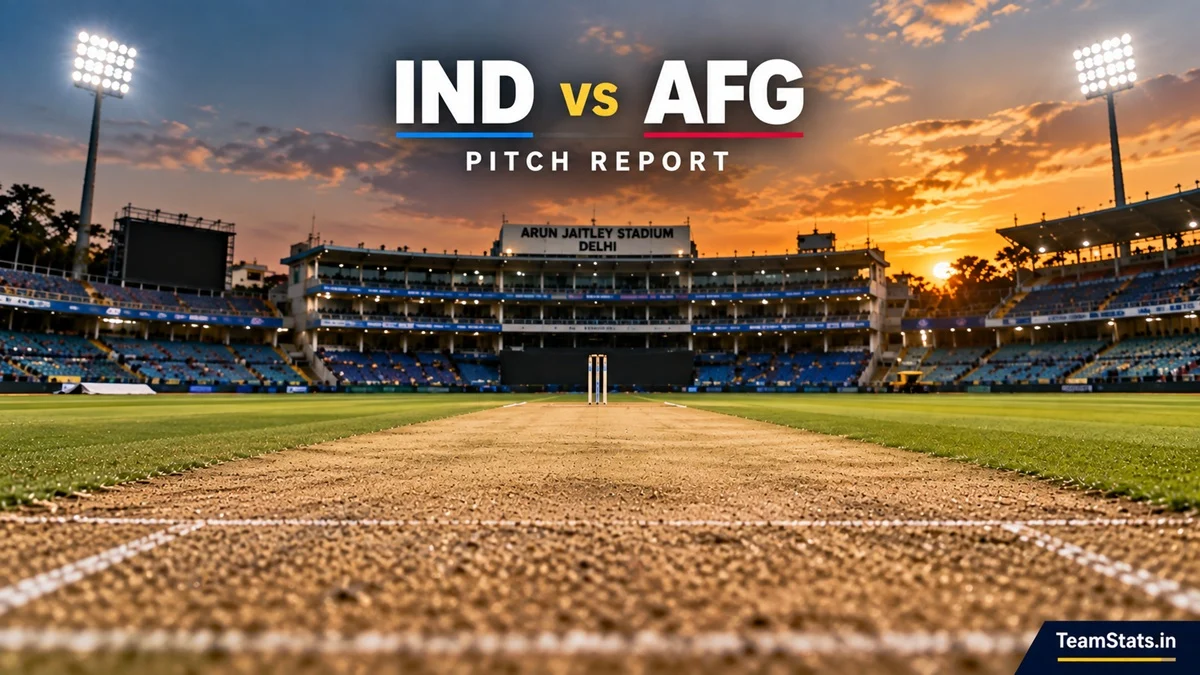
The India vs Afghanistan pitch report points towards another good contest for batters when the two teams meet in the second T20I at the Arun Jaitley Stadium in Delhi on September 15.
And this time, there is no need to rely only on old venue records.
India and Afghanistan played the opening T20I on the same ground just two days ago, giving both teams a fresh understanding of how the Delhi surface is behaving. Afghanistan managed 156/8 before India made the target look considerably smaller, racing to 157/3 in only 13.4 overs.
That first match offered an important clue: once a batter gets set in Delhi, scoring can become very quick.
Looking for today’s India vs Afghanistan Asian Games 2026 pitch report? Read our latest Korogi Sports Park pitch analysis here
India vs Afghanistan 2nd T20I Today Live Updates from Arun Jaitley Stadium in Delhi
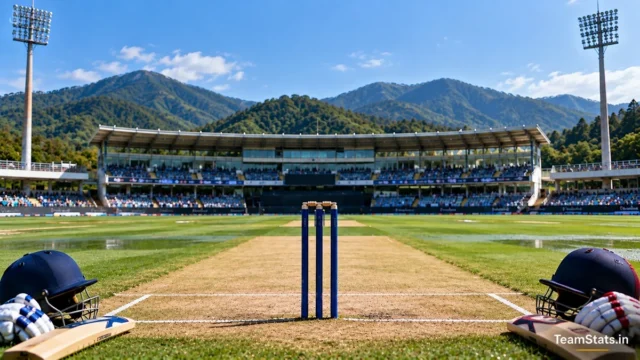
IND vs AFG Pitch Report for 2nd T20I
The Arun Jaitley Stadium surface is expected to remain favourable for stroke-making, with the ground’s relatively short boundaries adding extra pressure on bowlers.
Batters who survive the first few overs should have opportunities to accelerate, particularly square of the wicket and down the ground.
However, calling Delhi a pure batting paradise would be an oversimplification.
The first T20I showed that new-ball bowlers can still create problems. Afghanistan lost four wickets inside the powerplay before Azmatullah Omarzai led their recovery.
As the ball gets older, slower bowlers can also come into the game, especially if the surface becomes slightly dry. The challenge for spinners is that even a small error in length can disappear over the short boundaries.
Quick Pitch Outlook
| Factor | Expected Conditions |
|---|---|
| Batting | Good once batters settle |
| Fast bowlers | Early movement/bounce possible |
| Spinners | Some grip possible as pitch gets older |
| Boundaries | Relatively short |
| Outfield | Generally quick |
| Dew | Could influence second innings |
| Toss preference | Bowling first could be attractive |
| Expected competitive score | Around 170–180 |
What Did the Pitch Do in the 1st T20I?
This is probably the most useful information ahead of tonight’s match.
Afghanistan were sent in to bat in the series opener and struggled badly at the start. They slipped to 41/4 during the powerplay before recovering to 156/8.
Azmatullah Omarzai played the key innings, remaining unbeaten on 64, while Mohammad Nabi contributed 33.
India then completely changed the complexion of the game.
Abhishek Sharma attacked from the beginning and smashed 82 from just 32 deliveries. Ishan Kishan added 42 as India scored 82 runs in the powerplay and completed the chase in only 13.4 overs.
The contrast between Afghanistan’s early struggle and India’s explosive chase tells us something important.
The pitch itself was not impossible to bat on. India’s bowlers used the new ball effectively, while India’s top order later showed how quickly runs could be scored when bowlers missed their areas.
That makes execution more important than simply winning the toss.
Is Arun Jaitley Stadium a Batting or Bowling Pitch?
Recent white-ball evidence leans towards batting.
Historical T20I numbers can vary depending on the dataset and matches included, but recent venue analysis places a competitive first-innings total broadly in the 165–180 range.
Delhi has also produced multiple 200-plus T20I totals, demonstrating that the ground can become extremely difficult for bowlers when conditions are favourable.
Recent IPL seasons provide similar evidence.
The venue’s first-innings scoring levels have generally risen compared with some older seasons, although Delhi can still produce occasional low totals. That variation is one reason judging the exact strip being used is more useful than relying on a single historical average.
For the second India-Afghanistan match, the evidence from Sunday should carry the greatest weight.
And Sunday’s evidence was clear: there are runs available.
Will Spinners Get Help in Delhi?
Yes, but they may have little margin for error.
The Delhi square has traditionally offered assistance to spin, but modern T20 matches at the venue are not automatically low-scoring contests.
Afghanistan have the bowling resources to exploit any grip in the surface. Rashid Khan, Noor Ahmad and Mohammad Nabi can all challenge India’s batters if the ball begins to hold.
India also have Varun Chakaravarthy and Axar Patel as strong spin options.
But the short boundaries change the risk-reward equation.
A spinner who gets his length right can force batters into mistakes. A slightly overpitched or short delivery, however, can easily turn into six runs.
The first match illustrated the danger. Afghanistan’s spinners struggled to contain India’s attacking batters once the chase gathered momentum.
Pace Bowlers Could Be Important Early
The first six overs may again be crucial.
Afghanistan’s collapse to 41/4 in the opening T20I showed that Delhi does offer something to bowlers when the ball is new and hard.
Jasprit Bumrah struck almost immediately, while Arshdeep Singh eventually finished with excellent figures of 3/19.
For Afghanistan, that creates a straightforward challenge: survive India’s initial burst without allowing the required rebuilding phase to consume too many overs.
If Afghanistan can reach the middle overs with wickets intact, the dimensions of the ground should give their power-hitters opportunities later.
India vs Afghanistan Weather Forecast: Will Rain Affect 2nd T20I in Delhi?
What Is a Good First-Innings Score?
Based on the current conditions and recent evidence, 170–180 should be viewed as a competitive range, but it may not necessarily be a winning one.
The first T20I demonstrated why.
Afghanistan’s 156 looked defendable after their recovery, but India demolished the target with 38 balls remaining.
A side batting first would therefore probably want at least 175, with 185-plus providing considerably more protection if the surface remains good and dew arrives later.
A 200-plus total is also possible if one of the top orders gets through the powerplay without significant damage.
The par score could change, however, depending on the exact strip, moisture and weather around match time.
Toss Prediction: Bat or Bowl First?
Bowling first looks like the more attractive option.
India followed exactly that route in the opening game and were rewarded with a comfortable chase.
There are three reasons captains could again prefer chasing:
- The new ball can offer some assistance early.
- Knowing the target makes attacking the short boundaries easier.
- Dew later in the evening could make gripping the ball more difficult for the defending side.
Weather is another factor worth monitoring. Any moisture generated by rain around Delhi could further influence the surface and outfield.
If conditions are damp around the toss, the temptation to bowl first could become even stronger.
India vs Afghanistan 2nd T20I Pitch Verdict
Expect the Arun Jaitley Stadium pitch to favour aggressive batting overall, but the opening overs could still give fast bowlers an opportunity.
The biggest lesson from the first T20I is not simply that Delhi is a high-scoring ground. It is that the conditions can change dramatically within the same match.
Afghanistan struggled to 41/4 before recovering to 156/8. India then attacked from the outset and chased the target in only 13.4 overs.
For the second T20I, 170–180 looks like a reasonable competitive first-innings range, while a team approaching 190 should feel much more comfortable.
But if dew develops and the pitch remains true under lights, even a strong total could come under pressure.
That makes the toss, powerplay and first 30 deliveries potentially more important than the historical venue average.
India already lead the series 1-0. Afghanistan now need to adapt quickly to the same Delhi conditions if they are to stop India from sealing the series in the second match.

Related Posts
India vs Afghanistan Pitch Report Today: Will Korogi Sports Park Help Spinners in Asian Games Quarter-Final?
India vs Afghanistan 3rd T20I Today: Will Vaibhav Sooryavanshi Finally Get His Chance?

India vs Afghanistan 2nd T20I Today: Can India Seal the Series in Delhi?
India vs Japan Pitch Report Today: Sano International Cricket Ground Conditions for Historic T20I

India vs Afghanistan Toss Prediction Today: Why Bowling First Could Be Crucial in Delhi