Vaibhav Sooryavanshi Duleep Trophy Captain: 15-Year-Old Smashes 92 With 7 Sixes, Misses Century by 8 Runs
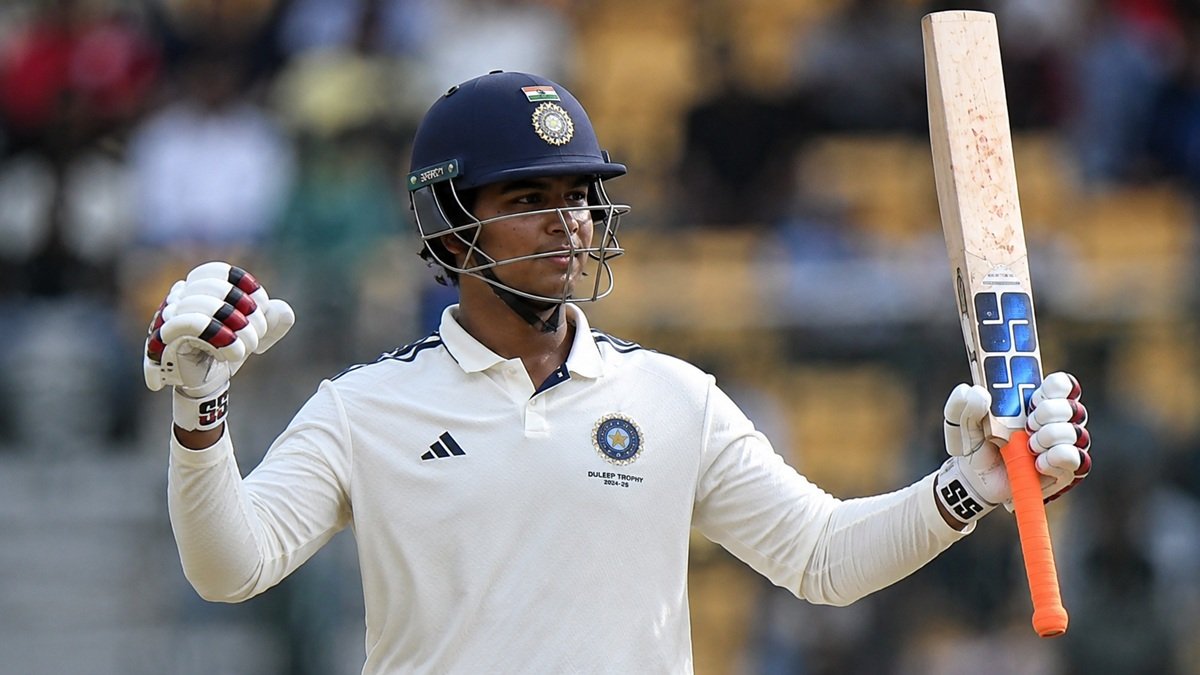
Vaibhav Sooryavanshi Duleep Trophy Captain: 92 Runs, 7 Sixes and a Century Missed by Just 8
A day after unexpectedly taking charge of East Zone in a Duleep Trophy semifinal, Vaibhav Sooryavanshi nearly produced the perfect follow-up with the bat.
The 15-year-old left-hander smashed 92 from 81 balls, including seven fours and seven sixes, against defending champions Central Zone in Bengaluru on Monday. He fell just eight runs short of what would have been a memorable century, but not before turning Day 2 of the semifinal into another landmark day in his rapidly developing career.
Sooryavanshi’s innings came less than 24 hours after regular East Zone captain Ishan Kishan suffered a right-hand injury while wicketkeeping, forcing vice-captain Sooryavanshi to take charge on the field.
The teenager therefore went from captaining senior India internationals on Sunday to smashing seven sixes in a first-class semifinal on Monday.
And although the century disappeared at 92, Sooryavanshi did leave Bengaluru with a record: at 15 years and 157 days, he became the youngest player to score a half-century in Duleep Trophy history.
[duleep_live_score]
East Zone vs Central Zone: Latest Match Situation
Central Zone: 266 all out
Vaibhav Sooryavanshi: 92 off 81 balls – OUT
Fours: 7
Sixes: 7
Fifty: 42 balls
Venue: BCCI Centre of Excellence Ground 1, Bengaluru
Match: Duleep Trophy 2026, First Semifinal
The match remains in progress. The live score box on this page will show the latest East Zone total as the innings develops.
- Vaibhav Suryavanshi IPL 2026 stats
- Vaibhav Sooryavanshi Duleep Trophy Record: 57-Year Mark Falls, Another Escapes by 8 Runs
- Vaibhav Suryavanshi 190 Runs: The Record-Breaking in Vijay Hazare
- Vaibhav Sooryavanshi Duleep Trophy Bowling: 2 Wickets in 4 Balls
- Latest Vaibhav Suryavanshi News
- Shere Punjab Cricket League 2026 Latest Update
92 Runs, 81 Balls and a Century That Looked Within Reach
For much of Monday morning, Sooryavanshi looked capable of turning his first Duleep Trophy fifty into something much bigger.
He did not begin cautiously.
Opening alongside the vastly more experienced Abhimanyu Easwaran, the teenager quickly put Central Zone’s bowlers under pressure. After four overs, he had already moved to 21 from 14 deliveries.
By the time East Zone reached 50 without loss, Sooryavanshi was on 31 from 21 balls.
Then came the moment that could easily have ended the entire story much earlier.
On 40, Sooryavanshi offered a chance that Central Zone failed to convert. Instead of walking back for another promising but unfinished innings, the teenager survived and continued towards fifty.
He reached the landmark from only 42 deliveries.
But this time, fifty wasn’t the end of the story.
Sooryavanshi kept going.
The boundary count climbed. Central Zone changed their plans. The prospect of a maiden Duleep Trophy hundred became increasingly realistic.
Eventually, though, he was dismissed for 92 from 81 balls.
Seven fours.
Seven sixes.
And eight runs separating him from three figures.
Eight Runs Short — But a 57-Year-Old Record Is Broken
Missing a century at 92 will understandably dominate the immediate reaction to the innings.
But Sooryavanshi had already made history before getting anywhere near the nervous nineties.
At 15 years and 157 days, he became the youngest half-centurion in Duleep Trophy history, breaking a record that had stood for roughly 57 years.
That makes the innings more significant than another entry in the growing collection of explosive Sooryavanshi knocks.
This was not an IPL innings.
It was not an age-group match.
And it was not a short white-ball cameo where the teenager could simply attack from the first over knowing there were only a limited number of deliveries available.
This was a Duleep Trophy semifinal against the defending champions with the red ball.
For a player whose ability in the longer format remains one of the most interesting questions surrounding his development, 92 from 81 deliveries carries considerable weight.
Captain Yesterday, 92 Today
The sequence of events makes the innings even more unusual.
Sooryavanshi began the semifinal as East Zone’s vice-captain.
Ishan Kishan was the designated skipper and had chosen to bowl after winning the toss.
During Central Zone’s innings, Kishan suffered an injury to his right hand and had to leave the field. Kumar Kushagra took over the wicketkeeping duties, while the responsibility of leading East Zone passed to Sooryavanshi.
Suddenly, a 15-year-old was setting fields and managing an attack featuring players with international experience.
That included Mohammed Shami and Mukesh Kumar.
A day later, the same teenager was walking out to open East Zone’s innings.
It is difficult to imagine a more eventful 24 hours in a young cricketer’s first-class career.
Sooryavanshi’s DRS Call Showed He Wasn’t Just Wearing the Captain’s Hat
There was another reason his temporary captaincy attracted attention.
Central Zone opener Aryan Juyal had fought his way to 46 when Mukesh Kumar created an opportunity.
East Zone appealed for a caught-behind, but the on-field decision went against them.
The final decision over whether to use DRS rested with the stand-in captain.
Sooryavanshi took the review.
It worked.
The decision was overturned and Juyal was dismissed for 46, with Central Zone at 99/4.
It was only one decision in a long first-class match, but the moment added another layer to the story.
Sooryavanshi wasn’t merely standing in the captain’s position.
He had to make decisions.
One of the biggest ones paid off.
Central Zone’s 266 Gave East Zone an Opening
Central Zone were eventually dismissed for 266 in 80.1 overs.
Rinku Singh provided their most substantial contribution with 60 from 88 balls, while Aryan Juyal made 46.
East Zone’s bowlers prevented several Central Zone batters from turning starts into major scores.
Abhijit Sarkar: 3/38
Mukesh Kumar: 3/56
Mohammed Shami: 2/42
That bowling effort gave East Zone a realistic opportunity to take control of the semifinal with one strong first-innings batting performance.
Sooryavanshi almost immediately provided it.
Seven Sixes Tell Only Half the Story
Seeing seven sixes next to Sooryavanshi’s name will naturally attract attention.
That is already part of his reputation.
What matters more from a red-ball perspective is that he stayed at the crease for 81 deliveries.
Central Zone had enough time to adjust.
Bowlers could change their lengths.
Fields could be moved.
Short-ball plans could be attempted.
The ball could be moved away from his hitting zones.
Yet Sooryavanshi still found a way to reach 92.
That is a different challenge from walking into a T20 innings and attempting to dominate for 20 or 30 balls.
The sixes demonstrate his power.
The 81 deliveries arguably tell us more about his development.
Why This 92 Matters for Sooryavanshi’s First-Class Career
Before this semifinal, Sooryavanshi’s first-class batting numbers had not matched the enormous reputation he had already built in shorter formats.
That was important context.
His talent was not in doubt.
His ability to hit sixes was certainly not in doubt.
But first-class cricket asks different questions.
Can a naturally attacking batter leave deliveries outside off stump?
Can he survive when the ball moves?
Can he adjust once bowlers stop feeding his preferred scoring areas?
Can he build an innings rather than simply produce a burst?
One 92 does not answer every one of those questions.
But it provides considerably more evidence than another 25-ball cameo would have.
And the setting matters.
This came in a semifinal against Central Zone rather than in a low-pressure group fixture.
From 8 Runs in the Quarterfinal to 92 in the Semifinal
The transformation from Sooryavanshi’s previous Duleep Trophy innings makes Monday’s performance even more striking.
Against North East Zone in the quarterfinal, he scored only eight runs.
East Zone hardly needed his runs on that occasion.
Sudip Kumar Gharami made 146, Shahbaz Ahmed struck 167 and East Zone eventually won by an innings and 210 runs.
Sooryavanshi instead found another way to contribute.
Bowling his left-arm spin, he took 2/11 from three overs, striking twice in a short spell.
One match later, his contribution looked completely different.
| Duleep Trophy 2026 moment | Vaibhav Sooryavanshi |
|---|---|
| Quarterfinal batting | 8 runs |
| Quarterfinal bowling | 2/11 |
| Semifinal Day 1 | Took over East Zone captaincy |
| Captaincy highlight | Successful DRS against Aryan Juyal |
| Semifinal Day 2 | 92 off 81 balls |
| Fours | 7 |
| Sixes | 7 |
| Half-century | 42 balls |
| Historic achievement | Youngest Duleep Trophy half-centurion |
| Missed century by | 8 runs |
For someone playing only the early stages of his Duleep Trophy career, that is an extraordinary range of contributions.
From 40 to 92: The Chance Central Zone Will Remember
Central Zone will also know Sooryavanshi’s innings could have been much shorter.
The teenager was given a significant reprieve while on 40.
At that point, a dismissal would have completely changed the narrative.
There would have been no record-breaking fifty.
No nervous nineties.
No seven sixes next to a 92-run score.
Instead, the opportunity went begging.
Sooryavanshi responded by adding another 52 runs.
That is an important part of the innings.
Getting dropped requires luck.
Making the opposition pay requires batting.
He did exactly that.
The Century Would Have Changed the Headline — But Not the Value of the Innings
There will inevitably be disappointment around the number 92.
Eight more runs would have produced the perfect headline.
A 15-year-old stand-in captain scoring a Duleep Trophy semifinal century one day after leading the side would have been extraordinary even by Sooryavanshi’s rapidly rising standards.
His reaction after the dismissal reflected that frustration, with reports noting his visible disappointment after missing three figures.
But evaluating the innings purely through the missing eight runs would be a mistake.
There is not a huge developmental difference between 92 and 100.
The important part is that Sooryavanshi occupied the crease, absorbed pressure, attacked when opportunities appeared and made a substantial first-class score against a strong domestic side.
The century would have changed the statistic.
The 92 may already have changed the conversation.
A 15-Year-Old Captaining Mohammed Shami Is Still Remarkable
The batting performance may now become the biggest story of the semifinal, but what happened on Day 1 should not be forgotten.
Sooryavanshi wasn’t temporarily leading an age-group team.
He was directing an East Zone side containing experienced professional cricketers.
Mohammed Shami has played Test cricket and World Cups for India.
Mukesh Kumar has represented India internationally.
Abhimanyu Easwaran has accumulated a huge body of first-class experience.
And the player temporarily responsible for managing that group was 15 years old.
The circumstances were unusual because Kishan’s injury created the opening, rather than Sooryavanshi being selected as the starting captain.
That distinction matters.
But once the responsibility arrived, he still had to handle it.
His successful DRS decision provided one visible example of how he responded.
What This Innings Does — and Doesn’t — Prove
There will naturally be temptation to make huge conclusions after a performance like this.
That should be resisted.
Sooryavanshi is still 15.
A single 92 does not mean every question about his red-ball technique has disappeared.
Equally, modest numbers from a small sample of previous first-class innings were never enough to conclude that his attacking game could not work in the longer format.
Development rarely happens in a straight line.
The encouraging part is that Monday’s innings showed another version of Sooryavanshi.
Not simply the teenage six-hitter.
Not simply the IPL attraction.
Not simply the player whose age makes every achievement look unusual.
This time he produced a substantial innings in senior red-ball cricket.
That is the part selectors and coaches are likely to find most useful.
East Zone Still Have a Semifinal to Win
Sooryavanshi’s dismissal also shifts the focus back towards the match.
Central Zone’s first-innings 266 gave East Zone a clear target: build a lead and put the defending champions under pressure.
Sooryavanshi’s 92 has already removed a substantial part of that deficit.
But East Zone still need the rest of the batting order to convert his start into a strong first-innings position.
That makes Abhimanyu Easwaran and the middle order particularly important.
If East Zone establish a meaningful lead, Sooryavanshi’s innings could eventually be remembered as one of the performances that shaped the semifinal.
If Central Zone fight back with quick wickets, the missed century and the lost opportunity to bat even deeper could become more significant.
That is why the live match situation matters alongside the individual milestone.
Vaibhav Sooryavanshi’s Duleep Trophy Semifinal at a Glance
In roughly 24 hours, Sooryavanshi has:
- stepped in as East Zone’s on-field captain after Ishan Kishan’s injury;
- successfully used DRS to help dismiss Aryan Juyal;
- opened the batting against Central Zone;
- reached fifty from 42 deliveries;
- become the youngest Duleep Trophy half-centurion at 15 years and 157 days;
- struck seven fours and seven sixes;
- scored 92 from 81 balls;
- and fallen just eight runs short of a century.
That is quite a semifinal already.
Frequently Asked Questions
How many runs did Vaibhav Sooryavanshi score against Central Zone?
Vaibhav Sooryavanshi scored 92 from 81 balls in East Zone’s first innings against Central Zone in the Duleep Trophy 2026 semifinal. His innings included seven fours and seven sixes.
Did Vaibhav Sooryavanshi score a century?
No. Sooryavanshi was dismissed for 92, leaving him eight runs short of a century.
How many sixes did Vaibhav Sooryavanshi hit?
He struck seven sixes during his 92-run innings, along with seven fours.
How quickly did Vaibhav Sooryavanshi reach fifty?
Sooryavanshi completed his half-century from 42 balls.
What record did Vaibhav Sooryavanshi break?
At 15 years and 157 days, he became the youngest batter to score a half-century in Duleep Trophy history, breaking a record that had stood for decades.
Is Vaibhav Sooryavanshi the East Zone captain?
Ishan Kishan is East Zone’s designated captain, while Sooryavanshi was named vice-captain. The 15-year-old took over the on-field leadership after Kishan suffered an injury during the semifinal against Central Zone.
What did Sooryavanshi do as captain?
One of his standout decisions was a successful DRS review against Central Zone opener Aryan Juyal. The original not-out decision was overturned, dismissing Juyal for 46.
How much did Central Zone score?
Central Zone were bowled out for 266 in 80.1 overs in their first innings.
Where is the Central Zone vs East Zone semifinal being played?
The match is being played at the BCCI Centre of Excellence Ground 1 in Bengaluru.
Captain Yesterday, 92 Today: Sooryavanshi’s Biggest Red-Ball Statement Yet
Twenty-four hours can completely change a cricket story.
On Sunday, Vaibhav Sooryavanshi Duleep Trophy captain became the headline because a 15-year-old had unexpectedly found himself directing East Zone after Ishan Kishan’s injury.
On Monday, his batting became the bigger story.
92 runs. 81 balls. Seven fours. Seven sixes. A historic half-century record. And only eight runs separating him from a Duleep Trophy hundred.
The missed century will hurt.
But the bigger question surrounding Sooryavanshi was never whether he could hit a cricket ball a long way. He has already provided plenty of evidence of that.
The more interesting question was whether his aggressive game could produce substantial innings against the red ball when bowlers had time to adjust and attack his weaknesses.
Against the defending champions, in a Duleep Trophy semifinal, Sooryavanshi has just produced his strongest answer yet.
Yesterday, the story was that he was captaining at 15.
Today, the 92 might matter even more.

Related Posts
Vaibhav Sooryavanshi Misses Asian Games Debut Chance as India vs Afghanistan Match Is Abandoned
Shubman Gill Century vs West Indies: India Captain Hits 110, Crosses 3,000 ODI Runs
Abhishek Sharma Smashes 30-Ball Century as Records Tumble in Delhi
India vs Afghanistan 3rd T20I Today: Will Vaibhav Sooryavanshi Finally Get His Chance?
David Miller 142 vs Australia: Career-Best Century Powers South Africa to ODI Series Win