India Women Beat Bangladesh by 40 Runs as Shafali Verma Fires Them Into Asia Cup 2026 Final
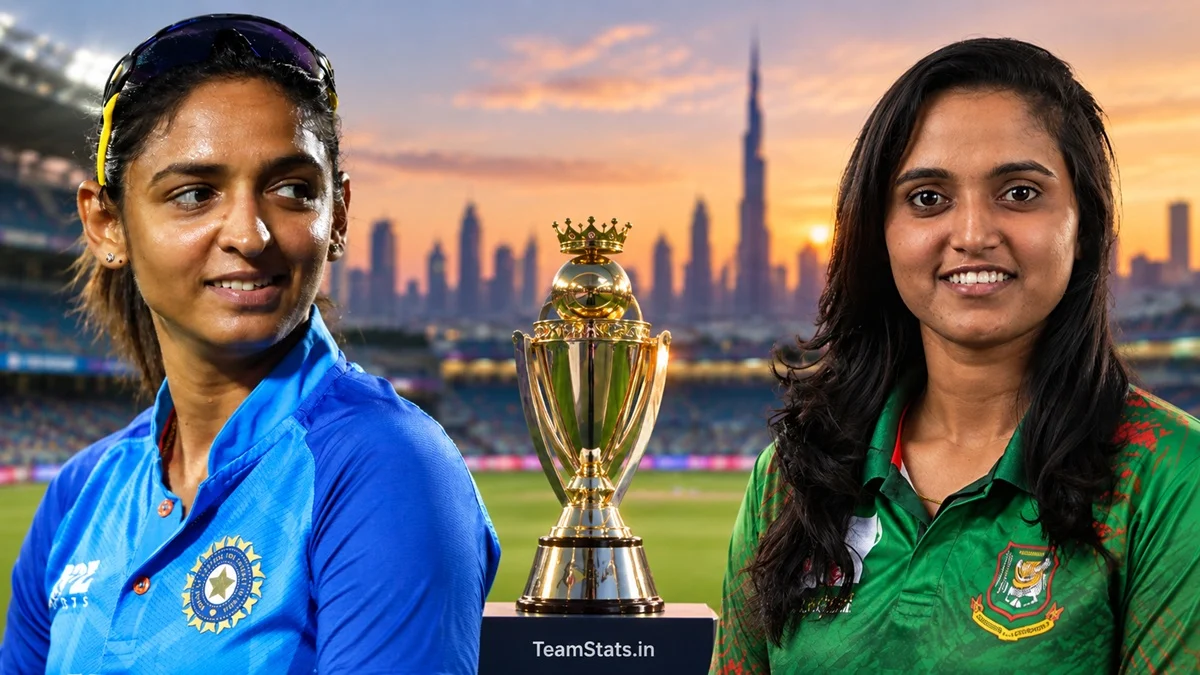
India Women Beat Bangladesh by 40 Runs to Reach Women’s Asia Cup 2026 Final
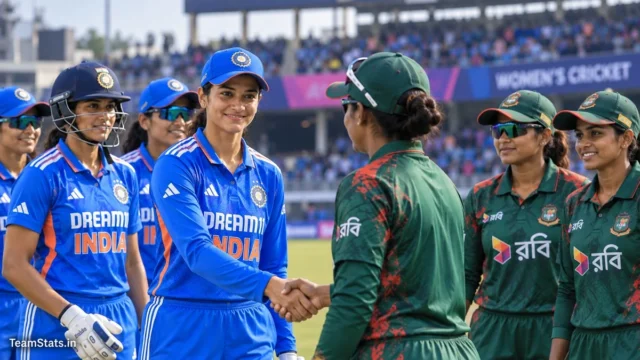
India Women are through to the Women’s Asia Cup 2026 final after defeating Bangladesh Women by 40 runs in the first semi-final at the Dubai International Cricket Stadium.
India were made to work harder than the final margin suggests.
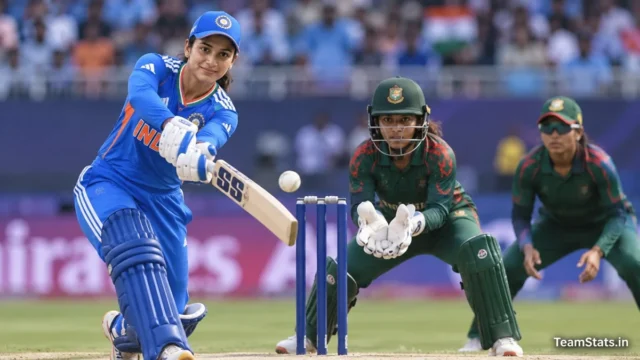
After Bangladesh won the toss and elected to field, India lost Smriti Mandhana early and had to rebuild on a surface where fluent stroke-making was not always easy. Shafali Verma responded with a match-defining 64 from 40 balls, before useful late contributions helped India reach 149/6 in 20 overs.
Bangladesh never found the sustained momentum required in the chase.
India’s bowlers kept taking control of the required rate, with Deepti Sharma claiming 3/26 and Nandani Sharma adding two wickets as Bangladesh finished on 109/7.
The result sends unbeaten India into the September 13 final and extends what has already been a dominant tournament.
India Women vs Bangladesh Women Semi-Final Result
| Match Detail | Result |
|---|---|
| India Women | 149/6 (20 overs) |
| Bangladesh Women | 109/7 (20 overs) |
| Result | India won by 40 runs |
| Player of the Match | Shafali Verma |
| Venue | Dubai |
| Stage | Semi-Final 1 |
The victory means India have now reached another Women’s Asia Cup final without losing a match in the tournament.
The Women’s Asia Cup Standings 2026 page tracks the complete Group A and Group B points table, NRR and qualification picture, while Women’s Asia Cup Stats 2026 covers the tournament’s leading run-scorers, wicket-takers and major records.
India Women’s National Cricket Team vs Bangladesh Women’s National Cricket Team Stats & Records
India Women’s National Cricket Team vs Bangladesh Women’s National Cricket Team Matches
Shafali Verma Delivers When India Need Her Most
India’s biggest performance of the semi-final came from Shafali Verma.
Smriti Mandhana had been India’s most productive batter during the group stage, but she was dismissed for only 2 from five balls in the semi-final.
That immediately changed the complexion of the innings.
Shafali responded by taking responsibility.
She scored:
| Shafali Verma | Figure |
|---|---|
| Runs | 64 |
| Balls | 40 |
| Fours | 7 |
| Sixes | 3 |
| Strike Rate | 160.00 |
It was not a flawless innings.
Bangladesh gave Shafali multiple lives in the field, and those missed opportunities ultimately proved expensive.
But knockout cricket is often decided by which team takes its chances.
Shafali made Bangladesh pay.
Her 64 represented almost 43% of India’s total of 149, which shows just how important the innings was on a night when several Indian batters struggled to dominate.
She also added an important 50-run partnership with Pratika Rawal, stabilising the innings after Mandhana’s early departure.
By the time Shafali was finally dismissed, India had recovered from their difficult start and had a platform from which the lower middle order could attack.
India Find Runs Despite Losing Mandhana Early
India’s batting performance was very different from some of their explosive group-stage displays.
There was no huge total.
There was no dominant opening partnership.
Instead, India had to find different ways to reach a defendable score.
India’s Main Batting Contributions
| Batter | Runs |
|---|---|
| Shafali Verma | 64 (40) |
| Harmanpreet Kaur | 24* (28) |
| Richa Ghosh | 21 (16) |
| Pratika Rawal | 20 (24) |
| Deepti Sharma | 13 (6) |
Harmanpreet Kaur played an important anchoring role after Shafali’s dismissal.
Her unbeaten 24 from 28 balls was not a high-strike-rate innings, but it allowed India to retain stability while Richa Ghosh and Deepti Sharma provided the late acceleration.
Richa struck two sixes in her 21.
Deepti then produced a rapid 13 from only six deliveries, including a four and a six.
Those late runs mattered.
India moved from a potentially vulnerable total towards 149/6, giving their bowlers a target they could attack.
Bangladesh’s Missed Chances Prove Costly
Bangladesh will look back at their fielding as one of the defining areas of the semi-final.
Shafali was offered multiple chances during her innings.
Against a batter capable of changing a T20 match within a few overs, those mistakes carried a heavy price.
This is particularly significant because Bangladesh’s bowling plan was not ineffective.
They removed Mandhana early.
They prevented India from racing beyond 170 or 180.
They kept pressure on several batters.
But creating chances and completing them are two different things.
In a semi-final, the difference can decide an entire tournament.
Bangladesh created enough opportunities to make India’s innings considerably more difficult.
They simply did not convert enough of them.
India’s 149 Was Better Than It Looked
At first glance, 149/6 did not look like an overwhelming total.
India had previously scored 193/5 against Hong Kong, while their batting had been one of the strongest units throughout the competition.
But conditions in Dubai made context important.
The pitch was not offering effortless scoring, and Bangladesh had already demonstrated during the group stage that they were comfortable turning matches into low-scoring contests.
That made India’s total more competitive than the raw number suggested.
The bigger question was whether Bangladesh’s batting could handle India’s bowling attack.
The answer was no.
Bangladesh Chase Never Truly Takes Control
Bangladesh needed 150 runs to reach the final.
What they required above everything else was a strong start.
Instead, India steadily increased the pressure.
Bangladesh reached 109/7 from their 20 overs, finishing 40 runs short.
Bangladesh’s Leading Scores
| Batter | Runs |
|---|---|
| Shorna Akter | 22 |
| Dilara Akter | 21 |
No Bangladesh batter reached 30.
That became the central problem.
A chase of 150 does not necessarily require one enormous individual innings, but it usually requires at least one substantial partnership.
Bangladesh never produced one large enough to put India under sustained pressure.
Boundaries became harder to find, the required rate continued climbing and India’s bowlers were able to attack without being forced into defensive plans.
Deepti Sharma Takes Control With the Ball
If Shafali Verma was the defining figure with the bat, Deepti Sharma played that role with the ball.
She finished with:
4 overs, 3 wickets for 26 runs.
Nandani Sharma also made a major impact, taking 2/10 from two overs.
Shree Charani and Prema Rawat picked up one wicket each.
India’s Key Wicket-Takers
| Bowler | Wickets |
|---|---|
| Deepti Sharma | 3 |
| Nandani Sharma | 2 |
| Shree Charani | 1 |
| Prema Rawat | 1 |
India therefore did not rely on a single bowler.
That has been one of their biggest strengths throughout this Asia Cup.
Opponents cannot simply survive one dangerous spell and expect the pressure to disappear.
India can attack through different phases of the innings.
Shafali Overtakes Mandhana in Tournament Run Chart
The semi-final also produced an important change in the Women’s Asia Cup 2026 batting race.
Shafali entered the match with 104 runs.
Her 64 against Bangladesh took her tournament total to 168 runs from four innings.
Smriti Mandhana, who entered the semi-final as the leading run-scorer, added only two and moved to 154 runs.
That means Shafali has now moved ahead of Mandhana.
| India Batter | Runs |
|---|---|
| Shafali Verma | 168 |
| Smriti Mandhana | 154 |
This is a notable shift from the group stage.
Before the semi-final, Mandhana had 152 runs and Shafali had 104.
One knockout innings changed the order completely.
More importantly for India, their two openers have now combined for 322 runs in the tournament.
That gives the opposition in the final a very clear tactical problem: removing one opener does not necessarily remove India’s biggest batting threat.
Deepti Sharma Moves to 11 Wickets
Deepti’s three-wicket semi-final performance also strengthened her position among the tournament’s leading bowlers.
She entered the match with eight wickets.
After taking 3/26 against Bangladesh, she now has 11 wickets from four matches.
That gives India something particularly valuable heading into the final:
one of the tournament’s leading run-scorers at the top of the batting order and one of its leading wicket-takers controlling the middle overs.
The latest numbers can be followed in our Women’s Asia Cup Stats 2026 article as the tournament moves into its final stage.
The Biggest Difference From India’s Group-Stage Wins
India had dominated their group.
They finished with three wins from three and a remarkable +5.471 net run rate.
Against Hong Kong, they won by 137 runs.
Against Pakistan, they dismissed their opponents for only 55 before completing a seven-wicket victory.
The semi-final asked a different question.
Could India still win comfortably when their most prolific group-stage batter failed and their batting total remained below 150?
They could.
That may be more valuable heading into a final than another straightforward 190-plus batting performance.
India have now shown they can win through explosive batting, dominant bowling and, against Bangladesh, by defending a competitive rather than enormous total.
What Changed Without Jemimah Rodrigues?
One of the major talking points before the semi-final was Jemimah Rodrigues’ absence.
Pratika Rawal had been brought into the squad, and the change raised questions about how India’s batting would respond if the established top order came under pressure.
That situation actually arrived.
Mandhana fell for two.
Shafali eventually departed after making 64.
India then required the middle order to take the innings through the final overs.
Harmanpreet, Richa and Deepti combined to ensure the innings did not collapse.
That is an encouraging sign before the final because India’s middle order received the kind of pressure test it had rarely faced during a dominant group stage.
Why This Win Matters More Than the 40-Run Margin
The scoreboard says India won by 40 runs.
The more useful takeaway is how they won.
Before the match, India’s biggest potential vulnerability was relatively clear.
Mandhana and Shafali had contributed a huge percentage of the team’s runs during the group stage, meaning the middle order had rarely been required to rescue a difficult situation.
Bangladesh removed Mandhana almost immediately.
Yet India still reached 149.
Then the bowlers defended it comfortably.
That makes India slightly less predictable going into the final.
They no longer need the same route to victory every time.
India Reach Another Women’s Asia Cup Final
India have now secured their place in the Women’s Asia Cup 2026 final on September 13 in Dubai.
Their opponent will come from the second semi-final between Sri Lanka Women and Pakistan Women.
India have already faced Pakistan once in this tournament.
That group-stage meeting was completely one-sided, with India bowling Pakistan out for 55 and winning by seven wickets.
Sri Lanka would present a different challenge.
They also came through the group stage unbeaten and finished first in Group B.
Either way, India will enter the final with four consecutive victories.
The Women’s Asia Cup tournament now comes down to one final match for Harmanpreet Kaur’s side.
What India Can Take Into the Final
India have several positives coming out of this semi-final.
Shafali is in outstanding form.
Deepti continues to take wickets.
The middle order has now spent meaningful time under knockout pressure.
The bowling attack has demonstrated it can defend a total below 150.
But there are also areas India will want to clean up.
Losing Mandhana early exposed how dependent the innings can become on Shafali.
India were also fortunate that Bangladesh failed to take several chances.
A stronger opponent in the final may not offer the same margin for error.
That makes the semi-final both a convincing victory and a useful warning.
Final Word
India Women entered the semi-final as favourites.
They leave it as finalists.
But the 40-run victory over Bangladesh revealed more about this Indian team than another one-sided group-stage win might have done.
Smriti Mandhana failed.
Shafali Verma responded with 64.
The middle order found enough late runs.
India posted 149/6.
Then Deepti Sharma and the bowling attack made that total look much bigger by restricting Bangladesh to 109/7.
Shafali is now up to 168 tournament runs, while Deepti has reached 11 wickets.
Those are excellent individual numbers.
The more important number, however, is four.
Four matches. Four India wins.
One more victory on September 13 would turn an unbeaten campaign into a Women’s Asia Cup title.
FAQs
Who won India Women vs Bangladesh Women semi-final?
India Women defeated Bangladesh Women by 40 runs in the first Women’s Asia Cup 2026 semi-final.
What was the India Women vs Bangladesh Women semi-final score?
India scored 149/6 in 20 overs before restricting Bangladesh to 109/7.
Who was Player of the Match?
Shafali Verma was Player of the Match after scoring 64 from 40 balls, including seven fours and three sixes.
How many runs did Shafali Verma score against Bangladesh?
Shafali scored 64 runs from 40 balls at a strike rate of 160.
How many wickets did Deepti Sharma take?
Deepti Sharma took 3/26 from four overs against Bangladesh.
Has India qualified for the Women’s Asia Cup 2026 final?
Yes. India’s 40-run semi-final victory secured their place in the final on September 13 in Dubai.
Who will India play in the Women’s Asia Cup 2026 final?
India will face the winner of the second semi-final between Sri Lanka Women and Pakistan Women.
How many runs has Shafali Verma scored in Women’s Asia Cup 2026?
After her 64 in the semi-final, Shafali has 168 runs from four innings.
How many wickets does Deepti Sharma have in Women’s Asia Cup 2026?
Deepti has 11 wickets from four matches after taking three wickets against Bangladesh.

Related Posts
Shafali Verma Century: 49-Ball Hundred Creates Asian Games History in Semi-Final

India Women vs Bangladesh Women Asian Games 2026: Semi-Final, Playing XI & Time
India Women’s National Cricket Team vs Bangladesh Women’s National Cricket Team Matches
India Women’s National Cricket Team vs Bangladesh Women’s National Cricket Team Players Roles & Latest Squads
India Women’s National Cricket Team vs Bangladesh Women’s National Cricket Team Stats & Records