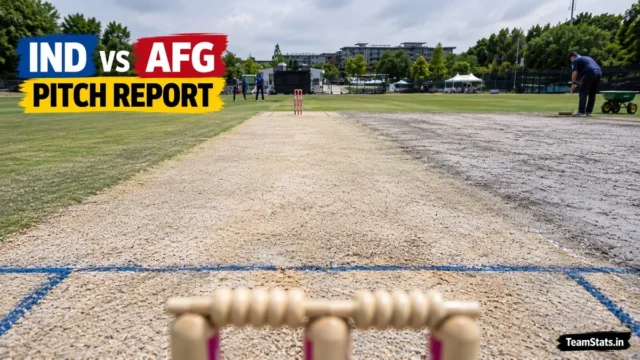
India vs Afghanistan Toss Prediction Today: Why Bowling First Could Be Crucial in Delhi
India vs Afghanistan Toss Prediction Today – 2nd T20I at the Arun Jaitley Stadium in Delhi
The India vs Afghanistan toss prediction today points towards one clear tactical preference: the captain winning the toss could seriously consider bowling first in the second T20I at the Arun Jaitley Stadium in Delhi.
India and Afghanistan meet on September 15 with the hosts leading the three-match series 1-0. More importantly, both teams already have fresh evidence from the same venue.
India won the toss and elected to field in the opening T20I on September 13. Afghanistan struggled badly with the new ball before recovering to 156/8, and India then chased 157 in only 13.4 overs to win by seven wickets.
That result does not guarantee that chasing will be easier again tonight, but it gives the captains a strong reason to think carefully before choosing to bat first.
The conditions themselves are covered in our India vs Afghanistan pitch report, while the latest India vs Afghanistan weather forecast is also worth checking before the toss because moisture and any late weather changes could influence the decision.
India vs Afghanistan Toss Prediction: Bowl First or Bat First?
Our prediction: the toss-winning captain is more likely to choose bowling first.
This is a prediction rather than a certainty. The final decision will depend on the exact pitch, overhead conditions and any moisture around the ground when the captains walk out for the toss.
Still, there are several reasons why chasing appears attractive in Delhi.
The most convincing evidence came only two days ago.
India asked Afghanistan to bat first and immediately put them under pressure. Afghanistan were reduced to 41/4 in the powerplay and later slipped further before Azmatullah Omarzai and Mohammad Nabi led a recovery.
Omarzai’s unbeaten 64 helped Afghanistan reach 156/8, but that total did not prove enough.
India responded with 82/1 in the powerplay and finished the chase with 38 balls remaining. Abhishek Sharma was the biggest difference, smashing 82 from only 32 deliveries.
The contrast was striking: Afghanistan struggled against the new ball, while India found scoring considerably easier during the chase.
Why Bowling First Could Be Crucial in Delhi
There are three major factors behind the bowling-first prediction.
1. The New Ball Can Create Early Problems
The first T20I demonstrated that the Delhi surface should not simply be labelled a flat batting pitch.
Afghanistan’s top order struggled badly during the opening six overs. India’s seamers were able to attack while the ball was new, and Afghanistan spent much of the innings recovering from that early damage.
That could again encourage the toss-winning captain to bowl.
If there is even a small amount of moisture in the surface or assistance under the lights, taking early wickets can completely change a T20 innings.
Afghanistan will be particularly conscious of this after their first-match collapse.
2. Chasing Worked Perfectly in the First Match
There is a psychological element too.
India already know that chasing at this venue can work.
They did not merely chase 157 in the opener—they completed the target in 13.4 overs.
Abhishek Sharma’s aggressive batting was obviously the major reason, but Delhi’s relatively short boundaries also mean that a target can quickly come under pressure when a batting side gets ahead of the required rate.
Recent venue data also leans towards chasing: one current venue dataset lists teams bowling first as winners in 10 of 15 completed matches, compared with five wins for teams batting first. The same dataset gives an average first-innings score of 165.
Those numbers are useful context, although tonight’s exact strip and conditions matter more than historical averages.
Could Dew Influence the Toss?
Dew is another factor captains will assess shortly before the match.
If significant dew develops during the second innings, defending can become more difficult. A wet ball is harder for bowlers—particularly spinners—to grip consistently, while the ball can skid onto the bat more comfortably.
That does not mean heavy dew is guaranteed tonight.
It simply means that if the captains or ground staff see clear signs of dew developing before the toss, it strengthens the argument for chasing.
This is also why the India vs Afghanistan Playing XI matters. Team composition, particularly the balance between pace and spin, can influence how each captain responds to the conditions.
What Happens if Afghanistan Win the Toss?
Afghanistan have an interesting decision.
Batting first would allow them to set the tempo without scoreboard pressure, but the first T20I showed the danger of exposing their top order to India’s new-ball attack.
If Afghanistan win the toss, bowling first may be their safer option.
It would allow Rashid Khan, Noor Ahmad and the rest of the attack to work with a relatively dry ball early in the game, while their batters would know exactly what is required during the chase.
Afghanistan also need victory to keep the series alive.
India’s dominant opening-match win extended their advantage in this matchup, and readers can see the wider numbers in the India vs Afghanistan head-to-head record in T20Is.
What Should India Do if They Win the Toss?
India have even more reason to repeat the first-match strategy.
Their bowlers successfully exploited the early conditions before the batting unit demolished the target.
Why change a formula that worked so convincingly?
There is an argument for batting first if India want to test themselves while defending a total, particularly with a 1-0 series advantage. But from a purely match-winning perspective, fielding first again appears the more attractive choice.
The BCCI and Afghanistan Cricket Board confirmed that all three T20Is are being played at Arun Jaitley Stadium, with matches scheduled for September 13, 15 and 17. That means both teams can use first-match evidence rather than relying only on historical venue trends.
Fans can see the complete schedule in the Afghanistan vs India T20I Series 2026 guide or check the official BCCI series announcement.
Does Winning the Toss Mean Winning the Match?
No.
Toss predictions are often given too much importance.
India’s victory in the first T20I was not simply because they won the toss. Arshdeep Singh took 3/19, Afghanistan lost early wickets, and Abhishek produced an extraordinary 82 from 32 balls.
Execution still matters considerably more than the coin toss.
Afghanistan could bat first tonight and still win if their top order handles India’s opening spell and posts a sufficiently large total. Equally, a side choosing to chase can quickly find itself under pressure if it loses early wickets.
For broader context on how these teams compare beyond one match, the Afghanistan vs India team stats and records provide a deeper statistical view of the rivalry.
IND vs AFG 2nd T20I Toss Prediction – Quick Verdict
| Toss Factor | Prediction |
|---|---|
| Preferred choice | Bowl first |
| Main reason | New-ball assistance + chasing advantage |
| First T20I toss | India won, chose to field |
| Afghanistan 1st T20I score | 156/8 |
| India’s chase | 157/3 in 13.4 overs |
| Dew factor | Worth monitoring |
| Series position | India lead 1-0 |
The strongest argument for bowling first is simple: it already worked extremely well on the same ground two days ago.
India exploited the new ball before chasing comfortably, while Afghanistan experienced first-hand how difficult an innings can become after losing early wickets.
The toss-winning captain should still inspect the pitch and assess the weather immediately before making a decision. But unless conditions change significantly, bowling first looks like the stronger tactical option for the India vs Afghanistan 2nd T20I in Delhi.
The match is also important for the wider series. India can seal it tonight, while Afghanistan need a victory to force a deciding third T20I on September 17.
The series dates and Delhi venue are officially confirmed by the BCCI.
For official tournament and international cricket updates, readers can also follow the International Cricket Council.
Final toss call: Win the toss, bowl first — but the actual toss winner cannot be predicted reliably from cricket data because the coin toss itself is random.

Related Posts
India vs Afghanistan 2nd T20I Today: Can India Seal the Series in Delhi?
India vs Afghanistan Pitch Report: Will Delhi Produce Another High-Scoring T20I?
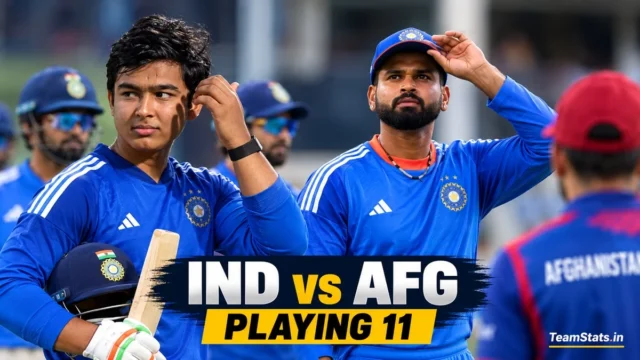
India vs Afghanistan Playing XI: Match Abandoned, India Reach Asian Games 2026 Semi-Final
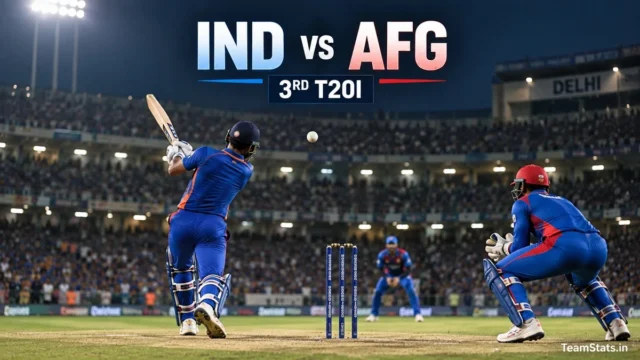
India vs Afghanistan 3rd T20I Today: Will Vaibhav Sooryavanshi Finally Get His Chance?
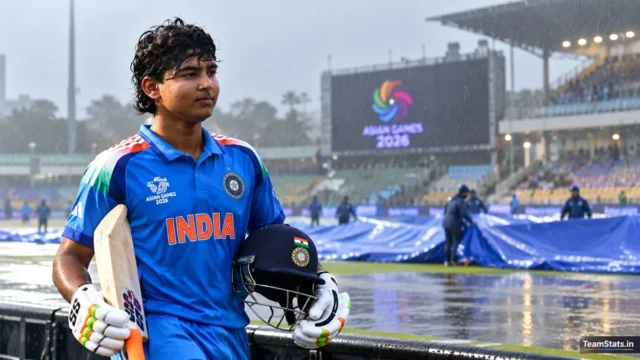
Vaibhav Sooryavanshi Misses Asian Games Debut Chance as India vs Afghanistan Match Is Abandoned