‘Muh Chhupake Jao’: Wasim Akram Slams Pakistan’s Mindset After Razaullah’s Hero Welcome
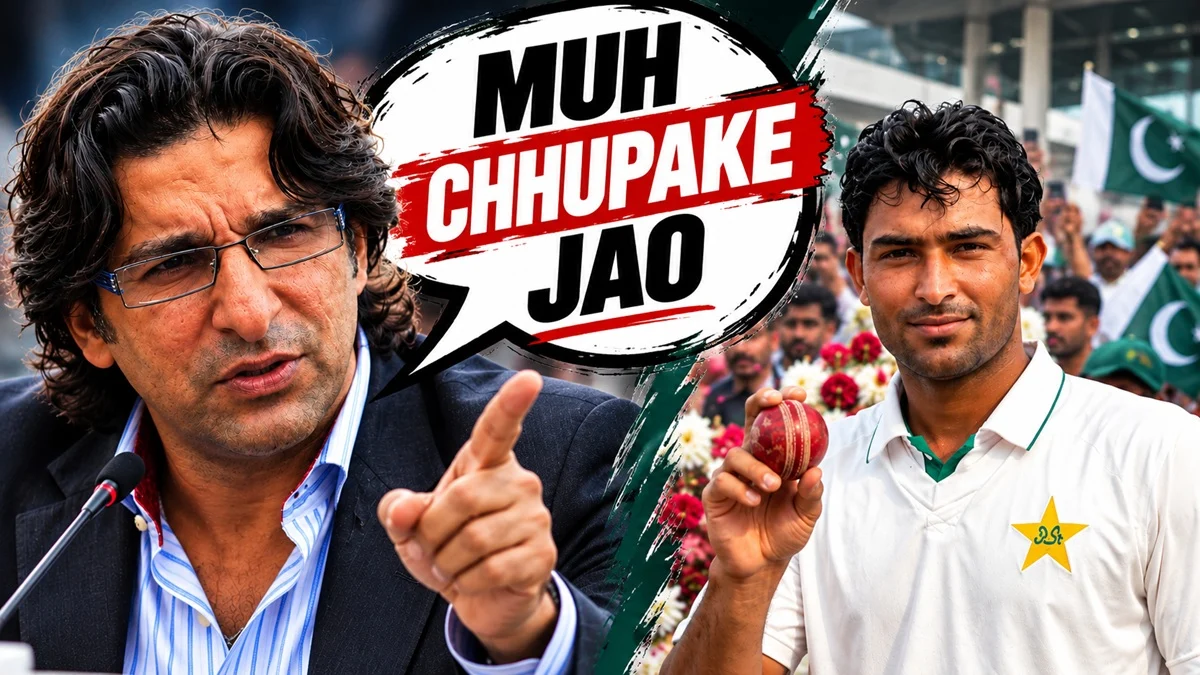
Wasim Akram has questioned the celebrations surrounding Pakistan fast bowler Razaullah after the youngster returned home from the team’s difficult tour of England. Razaullah had enjoyed a memorable Test debut, but Pakistan lost the three-match series 3-0, leaving Akram unhappy with the scale of the reception.
The former Pakistan captain’s “Muh chhupake jao” remark has quickly attracted attention. But his criticism was about much more than one young player or one welcome ceremony — Akram was questioning the standards Pakistan cricket sets for itself after a heavy series defeat.
Why Did Wasim Akram Say ‘Muh Chhupake Jao’?
Razaullah returned to Pakistan as one of the few success stories from the England tour. Supporters gathered to welcome the young fast bowler, with the reception including flowers and garlands after his impressive performance at Edgbaston.
Akram, however, saw the situation differently. Speaking at a charity event in Manchester alongside Waqar Younis, he questioned why such a huge celebration was taking place when Pakistan had just returned from a 3-0 Test series defeat.
His point was not that Razaullah had played badly. Akram was concerned about celebrating an individual performance so heavily when the team itself had been comprehensively beaten.
That is where the “Muh chhupake jao” remark came from. Akram felt Pakistan should be reflecting on what went wrong in England rather than behaving as though the tour had produced something to celebrate.
Razaullah Had Given Pakistan Something to Celebrate
There is a reason, however, why Pakistani fans were excited about Razaullah. The 21-year-old arrived at Edgbaston with very little international experience and was making his Test debut with Pakistan already 2-0 down in the series.
It did not take him long to announce himself. Razaullah dismissed Joe Root with only his fourth delivery in Test cricket, trapping the England batter LBW with a ball reported to be travelling at around 143kph.
For a young fast bowler making his debut in England, that alone would have made the match memorable. Razaullah was not finished, though, and his biggest surprise came with the bat later in the Test.
81 Runs, Nine Sixes and a Remarkable Fightback
Pakistan were in serious trouble in their second innings when Razaullah walked out to bat. Instead of simply trying to survive, the young bowler attacked England and produced an innings few would have expected from a lower-order debutant.
Razaullah smashed 81 from 63 balls, including nine sixes and four fours. He also put together a 121-run ninth-wicket partnership with Mohammad Abbas, giving Pakistan an unexpected fightback and forcing England to bat again.
His fifty came from only 43 deliveries, while the nine sixes made the innings even more remarkable. Combined with the four wickets he had taken earlier in the Test, it was an extraordinary individual debut despite Pakistan eventually losing the match.
| Razaullah at Edgbaston | Performance |
|---|---|
| Second-innings runs | 81 |
| Balls | 63 |
| Sixes | 9 |
| Fours | 4 |
| First-innings wickets | 4 |
| First Test wicket | Joe Root |
The Edgbaston crowd gave Razaullah a standing ovation after his innings. A player who had been largely unknown outside Pakistan’s domestic cricket circles suddenly became one of the most talked-about names in the team.
That helps explain the reception when he returned home. Fans were celebrating the arrival of an exciting young player; Akram was looking at the same situation from the perspective of Pakistan’s overall performance.
The Problem for Wasim Akram: Pakistan Lost 3-0
Whatever Razaullah achieved individually, Pakistan’s tour ended badly. England won the third Test by eight wickets, completing a clean sweep and leaving Pakistan without a victory across the three-match series.
The margins also tell the story. Pakistan lost the opening Test by an innings and 103 runs, went down by 194 runs in the second and then lost the final Test by eight wickets.
| Test | Result |
|---|---|
| 1st Test | England won by an innings and 103 runs |
| 2nd Test | England won by 194 runs |
| 3rd Test | England won by 8 wickets |
| Series | England won 3-0 |
By the time the final Test arrived, Pakistan had already made major changes. Seven players were removed from the squad after the opening two defeats, while changes were also made to the coaching setup during a turbulent tour.
Razaullah came into the side in the middle of that situation and managed to make an immediate impression. His emergence was positive, but it could not hide the problems exposed by three consecutive defeats.
Pakistan’s latest whitewash also adds another chapter to a rivalry that has produced very different results over the years. Our England Cricket Team vs Pakistan National Cricket Team stats page tracks their Test, ODI and T20I meetings, while the latest WTC Points Table 2026 shows how results such as these affect the wider 2025–27 Test Championship race.
Akram’s Main Concern Was Pakistan’s Mindset
Akram’s comments make more sense when viewed in that wider context. He was not questioning whether Razaullah deserved praise for his performance; his concern was how quickly an individual success appeared to overshadow a poor result for the team.
The former fast bowler argued that Pakistan’s problems cannot simply be fixed by appointing another coach or changing a few players. In his view, the standards and expectations around the national team also need to change.
That distinction matters. A 21-year-old producing four wickets and an 81-run innings on Test debut is clearly a significant achievement, particularly in difficult circumstances.
Akram was looking at something different: what should Pakistan cricket consider success? For him, an outstanding debut should not make a 3-0 series defeat feel any less serious.
Wasim Akram Also Had Questions for Babar Azam
Razaullah was not the only subject Akram discussed after the England series. He also questioned Babar Azam following comments from the Pakistan captain about some of the personnel changes made during the tour.
Babar had indicated that he was not aware beforehand of certain changes. Akram questioned how the captain of the national team could be disconnected from decisions involving the players around him.
The two comments point towards the same broader concern. Akram appears far more worried about Pakistan’s leadership, decision-making and cricketing culture than about the performance of one young fast bowler.
Who Is Razaullah?
Razaullah’s rise has happened quickly. The 21-year-old had only limited first-class experience before receiving his opportunity against England, but his pace had already made him an interesting prospect in Pakistan domestic cricket.
At Edgbaston, he showed why selectors were willing to take that chance. Dismissing Joe Root almost immediately was an impressive introduction, and taking four wickets gave Pakistan something they badly needed from a new fast bowler.
Then came the 81 from 63 balls. Nine sixes from a debutant fast bowler were not something anyone expected, and suddenly Razaullah was being discussed for his batting as much as his bowling.
One Test does not establish an international career, of course. But it was enough to make Razaullah one of the few Pakistan players to leave England with his reputation significantly enhanced.
Why ‘Muh Chhupake Jao’ Has Become the Talking Point
The reaction to Akram’s comment comes from the contrast at the centre of the story. Pakistan had a terrible series, while Razaullah had a remarkable debut. Both things can be true at the same time.
Supporters who welcomed Razaullah were celebrating a 21-year-old who had taken four wickets, dismissed Joe Root and then smashed 81 with nine sixes. After a difficult tour, he represented something positive for Pakistan cricket.
Akram was judging the situation by a different standard. For him, the headline from England was still Pakistan 0, England 3, regardless of how impressive one individual had been.
That is why “Muh chhupake jao” has travelled much further than an ordinary post-series comment. Behind those three words is a bigger argument about Pakistan cricket — whether individual performances should be celebrated after a heavy team defeat, and how high the national side should set its standards.
Rajani Kant
Rajani Kant is a cricket writer and editor at TeamStats.in, covering cricket statistics, team records, player performances, match results and important developments from international cricket. His focus is on presenting cricket information in a clear, useful and easy-to-understand format.
Visit TeamStats.in →Related Posts
Shubman Gill Suffers Injury Scare Ahead of IND vs WI 1st ODI After Blow to Elbow

India National Under-19 Cricket Team vs Pakistan National Under-19 Cricket Team Timeline
Abhishek Sharma Stats: T20I Runs, Centuries, Strike Rate & Records After 30-Ball Hundred
Sri Lanka vs Nepal Playing 11: Probable XI and Team News for Asian Games Quarter-Final
Bangladesh vs Malaysia Playing 11 & Playing XI: Probable Teams for Asian Games 2026 Quarter-Final