Afghanistan National Cricket Team vs Japan National Cricket Team Players 2026
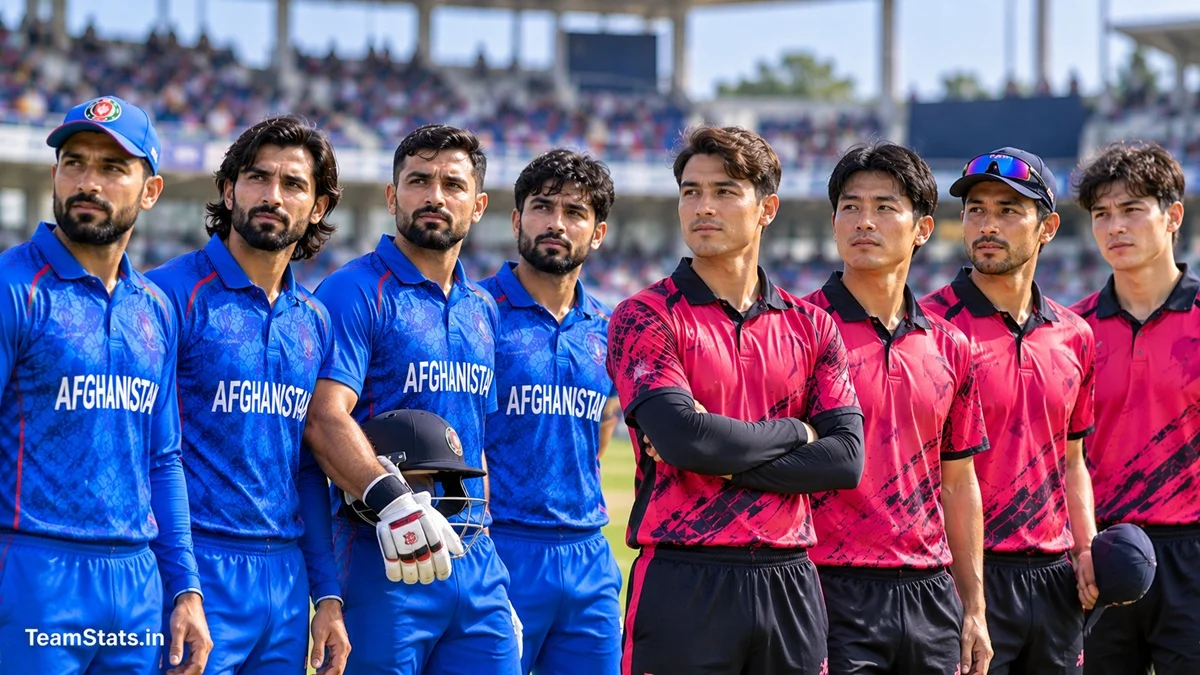
The Afghanistan National Cricket Team vs Japan National Cricket Team players come from two very different cricket systems. Afghanistan’s setup now combines established internationals with a growing group of young players, while Japan continue to build depth through domestic, youth and East Asia-Pacific cricket.
Their 2026 Asian Games meeting offered a good example of that contrast. Afghanistan selected experienced names such as Najibullah Zadran and Karim Janat alongside emerging players, while Japan retained a core that had already represented the country in international and Asian Games cricket.
This page focuses specifically on the players, squad composition, captains, wicketkeepers, batters, all-rounders and bowlers involved in Afghanistan vs Japan cricket. For the wider history and head-to-head story, see our Afghanistan National Cricket Team vs Japan National Cricket Team main matchup page.
Afghanistan National Cricket Team vs Japan National Cricket Team Players – Quick Look
Both teams selected 15-player squads for the men’s Asian Games 2026 competition. Afghanistan’s selection had a noticeable youth-development angle, with ICC reporting that six players were in line to make their international debuts when the squad was announced.
Japan’s squad had more continuity from its previous Asian Games campaign. The Japan Cricket Association confirmed that ten members of the selected group had also featured at the delayed 2022 Asian Games in Hangzhou.
| Team | Captain | Key Experienced Players | Squad Size |
|---|---|---|---|
| Afghanistan | Darwish Rasooli | Najibullah Zadran, Karim Janat | 15 |
| Japan | Kendel Kadowaki-Fleming | Reo Sakurano-Thomas, Benjamin Ito-Davis, Wataru Miyauchi | 15 |
That difference makes the player comparison particularly interesting. Afghanistan were introducing new talent from a deeper Full Member system, while Japan were relying heavily on a group that had developed together through Associate-level international cricket.
Afghanistan National Cricket Team Players vs Japan
Afghanistan named Darwish Rasooli captain of their Asian Games side. The squad was deliberately different from simply sending the country’s regular senior first-choice XI.
Experienced internationals remained part of the group, however. Najibullah Zadran and Karim Janat provided senior experience around a collection of younger players trying to establish themselves at international level.
Afghanistan Squad
| Player | Primary Role |
|---|---|
| Darwish Rasooli (C) | Batter |
| Mohammad Akram | Batter |
| Hassan Eisakhil | Batter |
| Najibullah Zadran | Batter |
| Faisal Shinozada | Batter |
| Imran Mir | Batter |
| Khalid Taniwal | Batter |
| Mohammad Ishaq | Wicketkeeper-Batter |
| Ismat Alam | Batting All-rounder |
| Karim Janat | Bowling All-rounder |
| Farmanullah Safi | Bowling All-rounder |
| Nangeyalia Kharote | Bowling All-rounder |
| Abdullah Ahmadzai | Bowler |
| Faridoon Dawoodzai | Bowler |
| Arab Gul Momand | Bowler |
The 15-player group shows how Afghanistan approached the tournament. There was enough senior experience to provide stability, but a substantial part of the squad represented the next layer of Afghan cricket.
That makes this squad useful beyond one tournament. Players such as Mohammad Akram, Hassan Eisakhil, Mohammad Ishaq and Arab Gul received an opportunity to perform in an international environment alongside more established teammates.
Darwish Rasooli – Afghanistan Captain
Darwish Rasooli was given one of the most important roles in this Afghanistan squad. He was not simply selected as a top-order batter; Afghanistan trusted him with the captaincy of a relatively young group.
That responsibility became visible immediately against Japan. Rasooli contributed 29 from 27 balls when Afghanistan’s innings needed stability, helping the team recover after losing wickets through the middle overs.
His role in this team is therefore broader than individual batting numbers. Rasooli represents the bridge between Afghanistan’s emerging players and a national system that now expects to compete successfully in major Asian competitions.
Najibullah Zadran Brings Senior Experience
Najibullah Zadran was one of the most recognisable Afghanistan players selected for the Asian Games. His presence gave the batting group an experienced international option alongside several less-established names.
He did not have a major individual impact against Japan, making seven runs in Afghanistan’s 129/6. His importance to the squad, however, goes beyond one innings.
For younger batters, sharing a dressing room with a player who has already spent years in international cricket provides valuable experience. That is particularly useful when a tournament squad has deliberately been built around emerging talent.
Karim Janat Adds All-Round Balance
Karim Janat provides Afghanistan with flexibility because he can contribute in more than one phase of a T20 match. He is capable of batting in the middle order while also offering a bowling option.
Against Japan, Janat scored 21 from 23 deliveries. His innings helped Afghanistan recover after the early dismissal of Hassan Eisakhil and contributed to an important partnership with Mohammad Akram.
For a tournament squad, players with multiple skills make team selection easier. Janat’s experience also gives Afghanistan another senior figure around the younger members of the side.
Mohammad Ishaq – Afghanistan’s Wicketkeeper-Batter
Mohammad Ishaq was Afghanistan’s wicketkeeper in the opening match against Japan. His ability to contribute with the bat gives Afghanistan an additional option in the lower middle order.
Ishaq made an unbeaten 25 from 17 balls against Japan. His late acceleration helped Afghanistan reach 129/6 after the innings had threatened to stall.
That innings demonstrated why wicketkeeper-batters are so valuable in modern T20 cricket. Afghanistan did not need Ishaq merely to keep wicket; they also needed him to add runs quickly at the end of the innings.
Mohammad Akram Gets an Important Opportunity
Mohammad Akram was included among Afghanistan’s emerging batting options. Against Japan, he received an immediate opportunity at the top of the order.
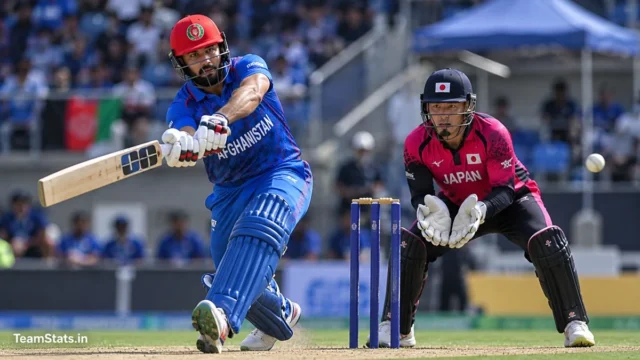
Akram responded with 34 from 29 balls, the highest Afghanistan score of the match. His innings included two fours and two sixes and provided the main batting foundation for the eventual total.
For Afghanistan, performances like this are one of the main benefits of selecting a developmental tournament squad. Young players can be tested internationally without removing every experienced player from the team around them.
Arab Gul Makes an Immediate Impact
Arab Gul Momand was one of Afghanistan’s younger bowling selections. His performance against Japan quickly made him one of the players to watch in the squad.
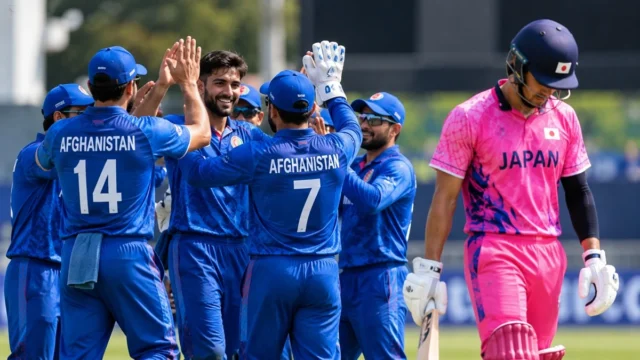
Afghanistan dismissed Japan for 81 after setting 130 to win, with their bowling unit taking control of the chase. The result gave Afghanistan a 48-run victory in their opening Group A match.
For the detailed numerical records from that match, our Afghanistan National Cricket Team vs Japan National Cricket Team Stats page is the better place to follow batting and bowling benchmarks.
That separation keeps this article focused on who the players are and the roles they bring to their teams rather than duplicating the Stats page.
Nangeyalia Kharote Strengthens Afghanistan’s Spin Options
Nangeyalia Kharote gives Afghanistan another all-round option and strengthens a cricketing area in which the country has developed considerable depth.
His presence allows Afghanistan to adjust the balance of the XI depending on conditions. A player who can contribute with both bat and spin is particularly useful in T20 tournaments where teams may face different surfaces within a short period.
Against Japan, Kharote was part of the attack that successfully defended 129. His role also illustrates the wider depth Afghanistan have developed beyond the country’s biggest international names.
Afghanistan’s Emerging Players Matter
The most interesting feature of this Afghanistan squad is the number of players still establishing themselves internationally. ICC specifically highlighted the emphasis on emerging talent when the team was announced.
That approach makes sense for a country whose player pool has expanded considerably. Afghanistan no longer need every tournament squad to depend entirely on the same group of senior stars.
The Asian Games therefore provide both a medal opportunity and a development opportunity. Players who perform here can strengthen their case for future selection in Afghanistan’s broader international setup.
Readers following Afghanistan’s wider cricket programme can also explore TeamStats’ Afghanistan vs India coverage for another view of the country’s international player depth.
Japan National Cricket Team Players vs Afghanistan
Japan entered the Asian Games with Kendel Kadowaki-Fleming as captain. The 15-player squad included ten players who had also represented Japan at the previous Asian Games, providing the hosts with a relatively settled core.
Japan’s squad was not built around internationally famous names. Instead, its strength comes from players who have developed together through the country’s domestic system and Associate international cricket.
Japan Squad
| Player | Primary Role |
|---|---|
| Kendel Kadowaki-Fleming (C) | Batter |
| Lachlan Yamamoto-Lake | Batter |
| Wataru Miyauchi | Wicketkeeper-Batter |
| Alexander Shirai-Patmore | Wicketkeeper-Batter |
| Benjamin Ito-Davis | Batting All-rounder |
| Ibrahim Takahashi | Batting All-rounder |
| Reo Sakurano-Thomas | Batting All-rounder |
| Declan Suzuki-McComb | Batter |
| Shoma Sugaya-Slater | Bowling All-rounder |
| Charlie Hara-Hinze | Bowler |
| Makoto Taniyama | Batter |
| Jake Kusuda-Nairn | Batting All-rounder |
| Alester Kadowaki-Fleming | Batter |
| Tsuyoshi Takada | Batter |
| Kohei Kubota | Batter |
Japan Cricket Association’s official announcement lists the same 15-player group, with Jake Kusuda selected in a Japan national squad for the first time.
That mix gives Japan continuity while also introducing another player into the national environment. For a developing cricket nation, retaining an experienced core while gradually expanding the player pool is particularly important.
Kendel Kadowaki-Fleming – Japan Captain
Kendel Kadowaki-Fleming is central to Japan’s current men’s team. The Japan Cricket Association lists him as a left-handed batter who can also bowl right-arm off-spin.
He made his Japan debut against Indonesia in October 2022 and has since become an important part of the national side. His captaincy gives Japan continuity across major international assignments.
Against Afghanistan, Kadowaki-Fleming led a team facing a considerably more established cricket nation. Those fixtures are valuable because they test both his batting and his ability to manage the side under greater pressure.
Reo Sakurano-Thomas Offers Two Skills
Reo Sakurano-Thomas gives Japan flexibility as a batting all-rounder. Players capable of covering multiple roles are particularly valuable for Associate teams working with smaller international player pools.
He was also involved prominently in the Afghanistan match. Japan’s attack kept Afghanistan to 129/6, providing their batting side with a realistic chase before Afghanistan’s bowlers took control.
Sakurano-Thomas has become part of Japan’s developing senior core. His ability to contribute in different phases makes him particularly useful in T20 cricket.
Benjamin Ito-Davis
Benjamin Ito-Davis is another all-round option in Japan’s setup. He was selected in the Asian Games squad and made the playing XI against Afghanistan.
Ito-Davis contributed with the ball by dismissing Afghanistan top-scorer Mohammad Akram. That wicket helped Japan prevent Afghanistan from turning a solid position into a much larger total.
His value comes from being able to influence more than one phase of the match. Japan need players of this type as they look to become more competitive against stronger international opposition.
Ibrahim Takahashi
Ibrahim Takahashi was selected as one of Japan’s all-round options and played against Afghanistan. His bowling became particularly important in restricting Afghanistan’s middle order.
Takahashi removed Karim Janat and Najibullah Zadran during Afghanistan’s innings. Those wickets helped prevent the visitors from building momentum through the middle overs.
For Japan, that is an encouraging sign. Developing bowlers who can take wickets against players with substantial international experience is essential if the team wants to close the gap against higher-ranked opposition.
Shoma Sugaya-Slater
Shoma Sugaya-Slater provides Japan with another bowling all-rounder. He was one of the players retained from the country’s established international group for the Asian Games.
Against Afghanistan, Sugaya-Slater dismissed captain Darwish Rasooli. Japan eventually took six Afghanistan wickets, showing that their bowling attack could create genuine problems even against the more experienced side.
The next step for Japan is turning those bowling performances into complete team performances. Restricting stronger opposition matters much more when the batting side can successfully chase the resulting target.
Charlie Hara-Hinze Connects Youth and Senior Cricket
Charlie Hara-Hinze is particularly interesting because his development connects Japan’s youth and senior pathways. The Japan Cricket Association lists him as a left-handed batter and left-arm orthodox bowler who has also represented Japan at Under-19 level.
He made his senior international debut against Maldives in February 2024. That progression from age-group cricket into the national side is exactly the kind of pathway Japan need to strengthen.
For a developing cricket nation, sustainable improvement cannot depend only on one generation of senior players. Younger cricketers need a visible route from junior cricket into the national team.
Japan’s Wicketkeeping Options
Japan selected both Wataru Miyauchi and Alexander Shirai-Patmore in the group. Cricbuzz classifies both as wicketkeeper-batters, giving the squad more than one option behind the stumps.
Shirai-Patmore performed the wicketkeeping role against Afghanistan. Miyauchi was also included in the playing XI, which allowed Japan to retain additional batting flexibility.
Having multiple wicketkeeping options is useful in tournament cricket. It gives selectors protection against injury while allowing them to choose the batting combination that best suits a particular opponent.
Afghanistan vs Japan Playing XI
The first modern T20I between these sides provides the clearest picture of which players were actually trusted in the opening matchup.
Afghanistan combined senior names with several emerging players. Japan relied heavily on their established core and selected multiple all-rounders to give the XI additional flexibility.
| Afghanistan Playing XI | Japan Playing XI |
|---|---|
| Mohammad Akram | Lachlan Yamamoto-Lake |
| Hassan Eisakhil | Wataru Miyauchi |
| Karim Janat | Kendel Kadowaki-Fleming (C) |
| Darwish Rasooli (C) | Alexander Shirai-Patmore |
| Najibullah Zadran | Benjamin Ito-Davis |
| Mohammad Ishaq (WK) | Ibrahim Takahashi |
| Ismat Alam | Reo Sakurano-Thomas |
| Abdullah Ahmadzai | Declan Suzuki-McComb |
| Faridoon Dawoodzai | Shoma Sugaya-Slater |
| Nangeyalia Kharote | Charlie Hara-Hinze |
| Arab Gul Momand | Makoto Taniyama |
This table is intentionally limited to player names rather than recreating the entire match card. Batting scores, bowling figures and dismissal information belong on the Stats and Scorecard pages.
That distinction is important for the cluster. Someone searching for Afghanistan vs Japan players should find squads and player roles here without needing to scroll through a full scorecard.
Afghanistan vs Japan Players by Role
Looking at both squads by role helps explain how the teams were constructed. Afghanistan’s group contains a strong mix of specialist batters, all-rounders and developing bowlers.
Japan’s selection leans heavily on multi-skilled players. That is common in T20 cricket and particularly valuable for an Associate team looking to maximise flexibility within a 15-player squad.
| Role | Afghanistan Examples | Japan Examples |
|---|---|---|
| Captain/Batter | Darwish Rasooli | Kendel Kadowaki-Fleming |
| Wicketkeeper | Mohammad Ishaq | Alexander Shirai-Patmore, Wataru Miyauchi |
| Experienced Batter | Najibullah Zadran | Kendel Kadowaki-Fleming |
| All-rounder | Karim Janat, Ismat Alam | Benjamin Ito-Davis, Ibrahim Takahashi |
| Spin/All-round Option | Nangeyalia Kharote | Charlie Hara-Hinze |
| Specialist Bowling | Arab Gul, Abdullah Ahmadzai | Shoma Sugaya-Slater |
The table is more useful than trying to rank players across teams that operate at very different international levels. Afghanistan’s greater exposure naturally gives several of their players more high-level experience.
Japan’s objective is different. Their squad needs to keep developing enough depth that international selection becomes increasingly competitive.
Afghanistan’s Experience vs Japan’s Continuity
Afghanistan and Japan approached their player selections from different starting points. Afghanistan could afford to leave out several globally recognised senior players and still field a competitive side.
That is a sign of the depth now available within Afghan cricket. Emerging players can receive international opportunities without the entire team becoming inexperienced.
Japan’s advantage is continuity. Ten players from their 2026 Asian Games squad had previous Asian Games experience, according to the Japan Cricket Association.
For Japan, keeping a core together can help compensate for having fewer high-level fixtures. Players become familiar with each other’s roles and can develop as a unit across successive international tournaments.
Which Afghanistan Players Are Missing?
One thing readers may immediately notice is that this Afghanistan group does not contain every famous player associated with the country’s senior side.
That is deliberate. ICC described the selection as one with a clear focus on emerging talent, and six members were initially in line for international debuts.
The absence of some first-choice senior stars creates opportunities for the next generation. Afghanistan can use competitions such as the Asian Games to test whether those players are ready for larger international roles.
This is also why the Players page should not be presented as a permanent list of every Afghanistan cricketer. It reflects the relevant squad and players around the Afghanistan-Japan matchup and should be updated when future squads change.
Which Japan Players Should Be Watched?
Kadowaki-Fleming remains important because of his combination of batting and captaincy. Japan need their senior players to provide stability when facing teams with significantly greater international experience.
Sakurano-Thomas, Ito-Davis and Takahashi add all-round flexibility. Hara-Hinze is worth following because his youth-to-senior progression represents the pathway Japan want more players to follow.
The opening match also demonstrated that Japan’s bowling group can challenge stronger opponents. Taking six Afghanistan wickets while restricting them to 129 was a meaningful performance even though the chase ultimately failed.
Rather than identifying a single “best” player, the more useful question is whether Japan can continue developing several players capable of influencing international matches.
How the Player Pools Reflect Each Cricket System
Afghanistan’s current player depth would have been difficult to imagine when the country was still climbing through the World Cricket League. The national programme can now select different combinations for different competitions.
Japan remain at an earlier stage of that process. The player pool is smaller, making domestic development and youth progression particularly important.
The gap between the sides therefore goes beyond individual ability. Afghanistan’s players are emerging from a system with considerably more exposure to high-level international and franchise cricket.
Japan’s players need more fixtures against stronger opposition to accelerate that learning. The 2026 programme has already given the team valuable exposure, including a historic T20I against India shortly before the Asian Games.
Why Afghanistan vs Japan Players Could Change Quickly
This page should not become a static squad list. Both teams are likely to introduce new players as their international programmes develop.
Afghanistan have enough depth for young performers to push into future squads. The Asian Games group itself demonstrates how quickly opportunities can open when selectors choose to rest or rotate established stars.
Japan’s player pool can also change as its youth and domestic systems expand. Jake Kusuda’s first national-team selection for the Asian Games is a good example of another player entering that pathway.
Future Afghanistan-Japan meetings may therefore feature substantially different XIs. This article should be updated around each new matchup while preserving useful player history from earlier meetings.
Afghanistan vs Japan Players and the Wider Asian Games
The Afghanistan-Japan fixture was part of Group A at the Asian Games, with Nepal completing the three-team group. The top two teams were scheduled to progress to the quarter-finals.
Squad depth therefore matters because the tournament does not end with one matchup. Teams progressing from the group stage face increasingly difficult opposition as the competition develops.
For updated tournament positions, use the Asian Games Cricket Points Table 2026 rather than duplicating changing standings inside this Players article.
Readers can also follow TeamStats.in and our Cricket News Today section for new team announcements, injuries, playing XI updates and other cricket developments.
Afghanistan National Cricket Team vs Japan National Cricket Team Players FAQs
Who is the captain of Afghanistan against Japan?
Darwish Rasooli captained Afghanistan’s Asian Games 2026 team. ICC confirmed him as captain when Afghanistan announced their 15-member squad.
Who is the captain of Japan?
Kendel Kadowaki-Fleming captained Japan. He is a left-handed batter who can also bowl right-arm off-spin.
Who is Afghanistan’s wicketkeeper?
Mohammad Ishaq was Afghanistan’s wicketkeeper in the first T20I against Japan. He also contributed an unbeaten 25 with the bat.
Who kept wicket for Japan against Afghanistan?
Alexander Shirai-Patmore was Japan’s designated wicketkeeper in the playing XI against Afghanistan. Wataru Miyauchi was another wicketkeeper-batter selected in the side.
Did Afghanistan select all of their biggest senior players?
No. Afghanistan’s Asian Games squad had a clear emerging-talent focus, with several younger players included alongside experienced internationals such as Karim Janat and Najibullah Zadran.
Which Afghanistan players should be watched?
Darwish Rasooli, Mohammad Akram, Mohammad Ishaq and Arab Gul are among the notable names from the opening matchup, while Karim Janat and Najibullah Zadran provide greater international experience.
Which Japan players should be watched?
Captain Kendel Kadowaki-Fleming is central to the team, while Reo Sakurano-Thomas, Benjamin Ito-Davis, Ibrahim Takahashi and Charlie Hara-Hinze provide useful batting or all-round options.
How many players were selected by Afghanistan and Japan?
Both Afghanistan and Japan selected 15-player squads for the men’s Asian Games cricket competition.
Afghanistan vs Japan Players: Two Different Stages of Development
The Afghanistan National Cricket Team vs Japan National Cricket Team players comparison shows just how different the two cricket systems currently are.
Afghanistan can combine recognised internationals such as Najibullah Zadran and Karim Janat with a substantial group of emerging players. The selection of Darwish Rasooli as captain further demonstrated the team’s willingness to give greater responsibility to its next group of cricketers.
Japan rely more heavily on continuity. Ten members of their Asian Games squad had previous experience at the competition, while younger players continue moving through the country’s developing cricket pathway.
Neither approach should be judged from one match alone. Afghanistan are already operating from a deeper Full Member player pool, whereas Japan are still expanding the number of cricketers capable of competing consistently at international level.
Future meetings should make this comparison even more interesting. As new players emerge, this page can track how both squads change without duplicating the detailed numerical records covered by the Stats article or the full match data reserved for the Scorecard page.

Related Posts
Afghanistan vs Japan Timeline: Complete Cricket History & Key Matches
Afghanistan vs Japan Match Scorecard: AFG 129/6, JPN 81
Afghanistan National Cricket Team vs Japan National Cricket Team Stats & Records
Afghanistan National Cricket Team vs Japan National Cricket Team: Head to Head, Matches & History
Afghanistan vs Japan Asian Games 2026: Arab Gul Takes 4/8 as Afghanistan Win by 48 Runs