Afghanistan vs Japan Timeline: Complete Cricket History & Key Matches
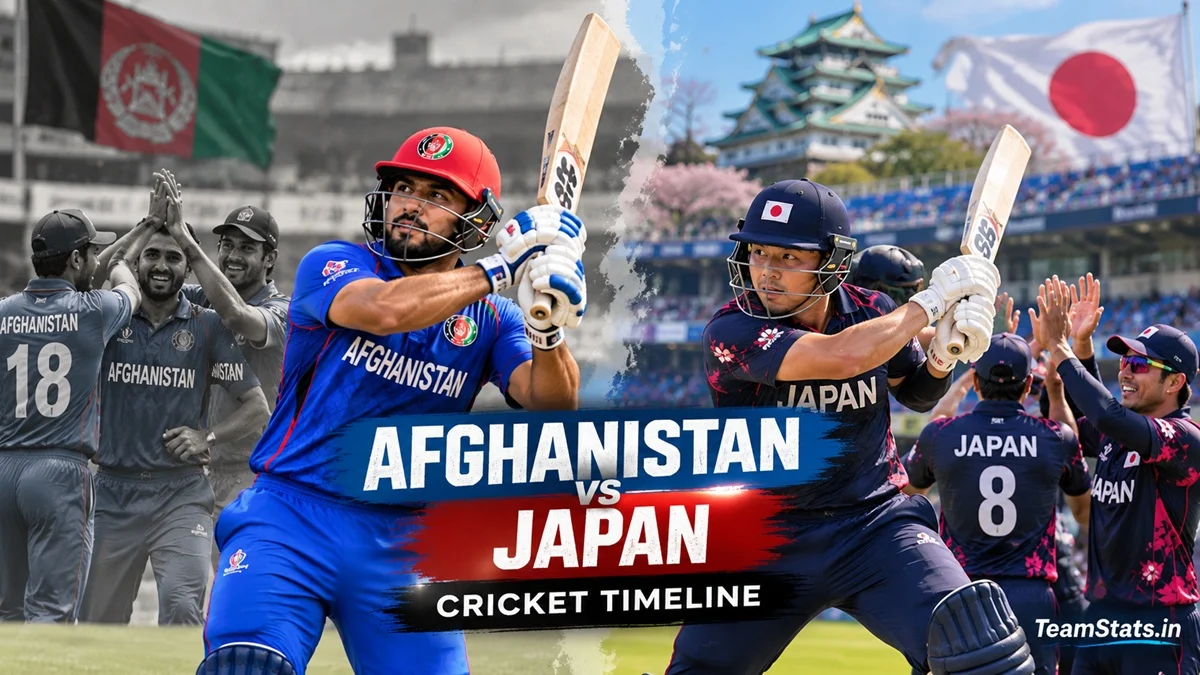
The Afghanistan National Cricket Team vs Japan National Cricket Team timeline is not built around a long list of matches. These two teams have met only occasionally, but their meetings connect two very different cricket journeys — Afghanistan’s rapid rise through the international system and Japan’s slower development as an emerging cricket nation.
That is what makes this timeline interesting beyond the results themselves. Afghanistan and Japan were competing at the same level in an ICC development tournament in 2008, but by the time they met again at the 2026 Asian Games, Afghanistan had become a Full Member with years of World Cup experience.
Their story therefore works better as a cricket timeline than as a conventional rivalry. It shows where the two teams started, when their paths crossed, how Afghanistan moved rapidly up the international ladder, and why their latest meeting looked very different from the first.
For a broader introduction to both sides and their overall matchup, our Afghanistan vs Japan cricket overview covers the teams, recent meeting and wider head-to-head context.
Afghanistan vs Japan Timeline at a Glance
| Year | Key moment | Why it matters |
|---|---|---|
| 2008 | Afghanistan vs Japan in ICC WCL Division Five | First important recorded meeting between the sides |
| 2008 | Afghanistan win Division Five | Beginning of Afghanistan’s rapid international climb |
| 2015 | Afghanistan reach ODI World Cup | Team moves onto the global stage |
| 2017 | Afghanistan become ICC Full Member | Major change in the status of the two teams |
| 2026 | Asian Games bring them together again | First modern T20I chapter |
| 24 Sep 2026 | Afghanistan beat Japan by 48 runs | Afghanistan take the latest meeting |
The gap between the two major meetings is almost as important as the matches themselves. Afghanistan changed enormously during those 18 years, while Japan continued building its domestic structure and gaining opportunities through Asian and ICC development competitions.
There is also an important statistical distinction to remember. The 2008 game was a 50-over World Cricket League match, whereas the 2026 Asian Games encounter was a T20I, so the two results should not simply be combined and presented as a two-match T20I head-to-head.
Before Afghanistan and Japan First Met
Cricket in Japan is much older than its current international profile might suggest. The sport was being played there during the nineteenth century, but for a long period it remained a relatively small game compared with sports such as baseball.
Organised cricket gradually became stronger, and Japan entered the ICC system before beginning to compete more regularly in regional events. The East Asia-Pacific pathway became particularly important because it gave Japanese players a route into higher levels of international competition.
Afghanistan’s cricket story developed in a very different way. The national side emerged much later but moved through the international structure at remarkable speed, turning lower-division qualification tournaments into stepping stones towards ODI, T20I and eventually Test status.
Those two paths crossed in a meaningful way in 2008.
23 May 2008 – Afghanistan and Japan Meet in Jersey
Afghanistan faced Japan on 23 May 2008 during the ICC World Cricket League Division Five tournament in Jersey. At that point, the two teams were sharing the same development competition, something that feels remarkable when viewed from the perspective of Afghanistan’s later rise.
Afghanistan batted first and were dismissed for 179 in 35.4 overs. Karim Sadiq played the most important innings with 47 from 46 balls, while Nawroz Mangal and Mohammad Nabi both made useful contributions of 22.
Japan had their own standout performer with the ball. Takuro Hagihara took 5 wickets for 25 runs, preventing Afghanistan from turning a promising position into a much larger total and giving Japan a realistic target to chase.
| 2008 Match | Score |
|---|---|
| Afghanistan | 179 all out |
| Japan | 87 all out |
| Result | Afghanistan won by 92 runs |
| Afghanistan top scorer | Karim Sadiq – 47 |
| Japan best bowler | Takuro Hagihara – 5/25 |
Japan could not build the same momentum with the bat and were eventually dismissed for 87. Hasti Gul took 3/22 for Afghanistan, while Karim Sadiq’s earlier contribution with the bat helped him earn the Player of the Match award.
Afghanistan won by 92 runs, but the result is only part of why this game matters today. It provides a snapshot of a time when Afghanistan and Japan were still competing in the same tier of the global cricket development structure.
2008 Became a Turning Point for Afghanistan
Afghanistan did not stop with victory over Japan. They went on to win World Cricket League Division Five, and that tournament became one of the early stages of a much bigger climb through international cricket.
The progress that followed was unusually fast. Afghanistan moved through the World Cricket League structure, gained higher-level international opportunities and began competing against teams that had been established in world cricket for much longer.
That makes the 2008 Japan match more interesting with hindsight. It was not simply an isolated lower-division result; it came during the period when Afghanistan were beginning a journey that would eventually take them to World Cups and Full Member status.
Japan Follow a Different Development Path
Japan did not experience the same rapid rise, but its cricket programme continued to develop. Regional competitions remained important, while domestic participation and the national-team pathway gradually provided more players with international experience.
This difference in development explains why Afghanistan and Japan did not build a regular bilateral rivalry after 2008. Afghanistan quickly moved into a different level of international competition, while Japan continued to work through the Associate and regional structure.
The absence of regular matches is therefore part of the Afghanistan National Cricket Team vs Japan National Cricket Team timeline, rather than a gap that needs to be filled with unrelated events. Their paths simply separated for a long period.
Afghanistan Reach the 2015 World Cup
One of the clearest signs of Afghanistan’s progress came when the team qualified for the 2015 ODI World Cup. Only seven years had passed since Afghanistan and Japan had met in World Cricket League Division Five.
Playing at a global World Cup completely changed Afghanistan’s international profile. The team was no longer simply trying to progress through development divisions; it was now competing on cricket’s biggest limited-overs stage.
For Japan, the focus remained on regional growth and qualification pathways. By this point, the difference between where the two sides stood internationally was much greater than it had been during their 2008 meeting.
2017 – Afghanistan Become a Full Member
Another major milestone arrived in June 2017 when Afghanistan, alongside Ireland, was granted Full Member status by the International Cricket Council. It was one of the biggest moments in Afghanistan’s cricket history because it also opened the door to Test cricket.
The speed of the transformation becomes obvious when the timeline is viewed from the Japan match. Afghanistan had gone from World Cricket League Division Five in 2008 to ICC Full Member status in less than a decade.
Japan remained on a different cricket pathway, but that contrast makes the story more compelling. When the teams eventually met again, it was no longer a contest between two sides sitting at roughly the same stage of the international structure.
Eighteen Years Pass Before Another Major Meeting
For years, Afghanistan and Japan had little reason to meet regularly. Afghanistan’s schedule increasingly involved Full Members and major ICC tournaments, while Japan’s fixtures were largely shaped by regional and Associate competitions.
That changed when cricket at the 2026 Asian Games created a natural opportunity for their paths to cross again. Japan were the host nation, while Afghanistan arrived as an established international side with significantly more top-level experience.
Fans following the wider competition can also check the Asian Games Cricket 2026 schedule for the tournament structure and other fixtures.
24 September 2026 – Afghanistan and Japan Meet Again
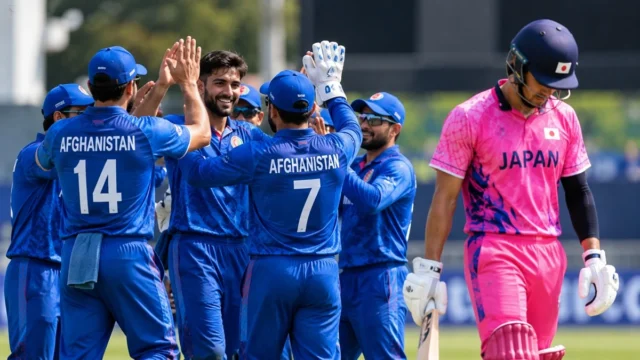
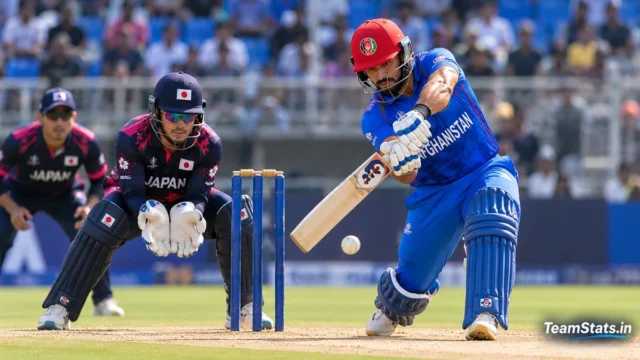
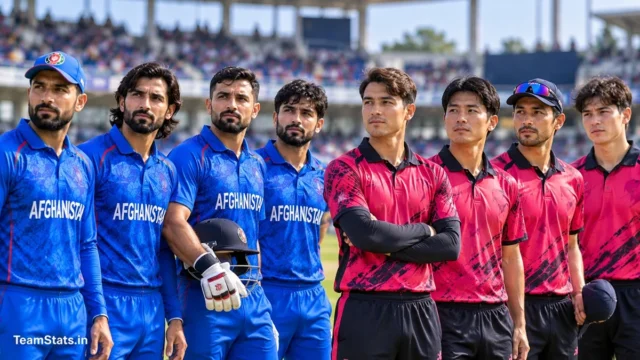
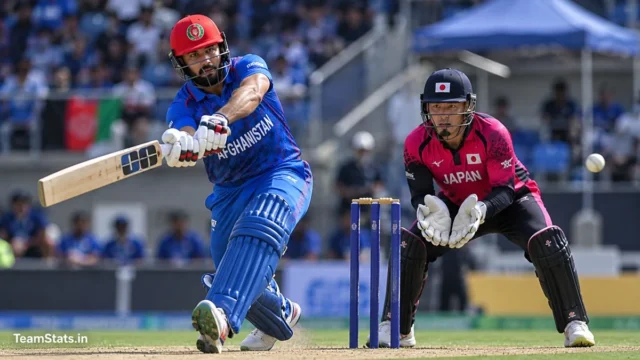
Afghanistan and Japan finally met again on 24 September 2026 at Korogi Sports Park in Nisshin. This time the setting was completely different: instead of a World Cricket League development event in Jersey, the teams were playing T20 cricket at a major continental multi-sport competition.
Japan won the toss and chose to bowl first. Afghanistan were expected to carry the greater international experience, but Japan did a good job of preventing the innings from developing into a huge total.
Afghanistan finished on 129/6 from their 20 overs. Mohammad Akram top-scored with 34 from 29 balls, captain Darwish Rasooli made 29, and Mohammad Ishaq’s unbeaten 25 from 17 balls provided useful runs towards the end of the innings.
Japan Keep Afghanistan to 129/6
For Japan, restricting Afghanistan to 129 was an encouraging first half of the match. Shoma Sugaya-Slater and Ibrahim Takahashi took two wickets each, while the rest of the attack avoided allowing Afghanistan a long period of uncontrolled scoring.
The target of 130 was not impossible in T20 cricket, which meant the game still had some tension at the halfway stage. Japan needed a stable start, however, because Afghanistan had enough bowling options to make recovery difficult after early wickets.
That is exactly where the match began to move decisively in Afghanistan’s favour.
Afghanistan’s Bowlers Take Control
Japan never managed to establish the partnership needed to take control of the chase. Reo Sakurano-Thomas made 23 and Benjamin Ito-Davis scored 17, but wickets kept interrupting the innings before a sustained chase could develop.
Arab Gul Momand produced the defining bowling spell, taking 4 wickets for only 8 runs from his four overs. Nangeyalia Kharote added three wickets and Abdullah Ahmadzai took two as Afghanistan steadily removed Japan’s batting options.
Japan were eventually bowled out for 81 in 19.3 overs, giving Afghanistan a 48-run victory. A first-innings total that had looked manageable became comfortable once Afghanistan’s bowling attack took control.
For the complete batting card, bowling figures, partnerships and fall of wickets, see our Afghanistan vs Japan Match Scorecard.
How Different Were the Two Afghanistan vs Japan Meetings?
The 2008 and 2026 games produced the same winner, but almost everything surrounding those matches had changed. Afghanistan were a developing side in the first meeting and an ICC Full Member by the time of the second.
| Comparison | 2008 | 2026 |
|---|---|---|
| Competition | ICC WCL Division Five | Asian Games |
| Venue | Jersey | Japan |
| Match type | 50-over | T20I |
| Afghanistan score | 179 | 129/6 |
| Japan score | 87 | 81 |
| Result | Afghanistan won by 92 runs | Afghanistan won by 48 runs |
| Afghanistan’s position | Developing international side | ICC Full Member |
Japan’s situation was different too. The 2026 Asian Games gave the national team the chance to face a much more experienced Afghanistan side at home, something that was not part of a regular bilateral schedule.
This is why comparing only the winning margins does not tell the complete story. The wider cricket environment around Afghanistan and Japan changed dramatically during the 18 years separating their two important meetings.
Afghanistan vs Japan: Historical Record vs T20I Record
One area that can easily create confusion is the head-to-head record. Afghanistan’s 2008 victory over Japan is part of the historical timeline, but it should not be counted as a T20I because that match was played in the 50-over World Cricket League competition.
The 2026 Asian Games encounter belongs to their modern T20I record. As a result, readers looking specifically for T20I statistics should treat the current sample as extremely small rather than combining matches from different formats.
We have separated those numbers on the Afghanistan vs Japan Stats page, where team totals, individual performances and format-specific records can be compared without mixing the two eras.
Players Also Show How Much the Afghanistan National Cricket Team vs Japan National Cricket Team Timeline Changed
The names involved in the two matches tell their own story. Afghanistan’s 2008 side included players such as Karim Sadiq, Nawroz Mangal, Mohammad Nabi and Asghar Stanikzai, several of whom became important figures during the country’s rise.
By 2026, a new generation was representing Afghanistan. Darwish Rasooli captained the side, with Mohammad Akram, Karim Janat, Najibullah Zadran, Mohammad Ishaq, Nangeyalia Kharote and Arab Gul Momand among the players involved against Japan.
Japan had also developed a new generation of players for the Asian Games. The complete squad comparison, player roles and team composition are covered on our Afghanistan vs Japan Players page rather than repeating full squad lists here.
What the Afghanistan National Cricket Team vs Japan National Cricket Team Timeline Tells Us About Afghanistan
Afghanistan’s side of this story is one of rapid progression. The team that faced Japan in a Division Five tournament eventually moved through the international system and established itself at major ICC events.
That journey makes the 2008 fixture a useful historical marker. Looking only at Afghanistan’s current status can make it easy to forget how recently the national side was competing at the lower levels of the World Cricket League.
The Japan meeting captures that earlier stage particularly well. Eighteen years later, the same matchup took place with Afghanistan approaching the contest from a completely different position in world cricket.
What the Afghanistan National Cricket Team vs Japan National Cricket Team Timeline Tells Us About Japan
Japan’s story is less dramatic but still important. Cricket remains a developing sport in the country, and international tournaments provide valuable opportunities for players to face opposition from different levels of the game.
The 2026 Asian Games created exactly that kind of opportunity. Keeping Afghanistan to 129/6 showed some competitiveness with the ball, even though the batting side could not turn that performance into a successful chase.
For Japan, future matches against stronger Asian teams can provide another measure of progress. One result against Afghanistan cannot define the direction of Japanese cricket, particularly when modern senior meetings between the teams remain so limited.
Afghanistan vs Japan Key Timeline
2008: Afghanistan and Japan compete in the same group at ICC World Cricket League Division Five in Jersey. Afghanistan win their direct meeting by 92 runs and later finish the tournament as champions.
2015: Afghanistan appear at the men’s ODI World Cup for the first time. Their position in international cricket is now significantly different from where it had been during the 2008 Japan match.
2017: Afghanistan receive ICC Full Member status. Less than a decade after playing Japan in Division Five, Afghanistan become eligible to play Test cricket.
2026: The Asian Games bring the teams back together after a long gap. Japan host the competition, creating a new setting for a matchup that had largely disappeared from the international calendar.
24 September 2026: Afghanistan score 129/6 and dismiss Japan for 81. The 48-run victory becomes the first major modern T20I chapter in the Afghanistan-Japan story.
Could Afghanistan and Japan Meet More Often?
Regular bilateral series between Afghanistan and Japan are unlikely to be the main source of future meetings in the immediate term. Their most natural opportunities are likely to come through Asian competitions, multi-team tournaments or other events where qualification places both teams in the same group.
Another meeting would also make the statistical side of this matchup more meaningful. At present, one modern senior T20I is simply too small a sample to describe a developed T20 rivalry or draw strong long-term conclusions.
That is why this page will remain useful as an evergreen timeline. Every genuine future meeting can be added chronologically without rewriting the history that came before it.
The latest tournament positions should remain separate from this historical page. Readers looking for the current competition picture can use the Asian Games Cricket Points Table 2026.
Afghanistan vs Japan Timeline FAQs
When did Afghanistan and Japan first play each other?
One important recorded senior meeting came on 23 May 2008 during ICC World Cricket League Division Five in Jersey. Afghanistan scored 179 before bowling Japan out for 87 to complete a 92-run victory.
That match is important because Afghanistan were still moving through the ICC development pathway at the time. It came years before the country became a Full Member.
Did Afghanistan and Japan play before the 2026 Asian Games?
Yes. Afghanistan and Japan had already faced each other in the 2008 ICC World Cricket League Division Five tournament, so the Asian Games game was not their first-ever cricket meeting.
The two matches belong to very different eras, however. The 2008 contest was a 50-over match, while their 2026 Asian Games meeting was played as a T20I.
Who won Afghanistan vs Japan in 2008?
Afghanistan won the 2008 match by 92 runs. Karim Sadiq top-scored for Afghanistan with 47, while Japan’s Takuro Hagihara produced an excellent bowling performance with figures of 5/25.
Japan were unable to chase 180 and were dismissed for 87. Hasti Gul took three wickets for Afghanistan during the successful defence.
Who won Afghanistan vs Japan in 2026?
Afghanistan won by 48 runs on 24 September 2026. They posted 129/6 from 20 overs before dismissing Japan for 81 in 19.3 overs.
Arab Gul Momand was central to the result with 4/8. Japan had managed to keep Afghanistan’s batting total under control, but the chase never developed enough momentum.
Is the 2008 match included in Afghanistan vs Japan T20I stats?
No. The 2008 World Cricket League Division Five game was a 50-over contest and should be treated as part of the teams’ broader historical record.
The 2026 Asian Games game belongs to the modern T20I record. Keeping the formats separate avoids creating misleading head-to-head numbers.
How many times have Afghanistan and Japan played?
The historical timeline includes their 2008 World Cricket League encounter and the 2026 Asian Games meeting discussed above. However, those games should not be presented as two T20Is because they were played in different formats and competitive contexts.
As more matches are played, this timeline can be expanded. For now, the limited number of meetings is itself an important part of understanding the matchup.
Afghanistan vs Japan Timeline: The Story So Far
The Afghanistan National Cricket Team vs Japan National Cricket Team Stats tells a bigger story than two match results. When Afghanistan defeated Japan in 2008, the teams were sharing the same World Cricket League division and neither had the international position Afghanistan enjoys today.
By their next major meeting in 2026, Afghanistan had become an ICC Full Member and an experienced global tournament side. Japan were playing at home at the Asian Games, providing a fascinating comparison with the circumstances surrounding their first encounter 18 years earlier.
Afghanistan won both of the important meetings covered in this timeline, but the changing cricket landscape between them is the real story. Future matches will add new chapters, while the history from Jersey in 2008 to Japan in 2026 gives this matchup an unusual place in international cricket.
For more cricket records, timelines, results and current coverage, readers can explore TeamStats.in and our regularly updated Cricket News Today section.

Related Posts
Afghanistan National Cricket Team vs Japan National Cricket Team: Head to Head, Matches & History
India National Cricket Team vs New Zealand National Cricket Team Timeline: Complete History & Records
Afghanistan vs Japan Match Scorecard: AFG 129/6, JPN 81
Afghanistan National Cricket Team vs Japan National Cricket Team Players 2026
Afghanistan National Cricket Team vs Japan National Cricket Team Stats & Records