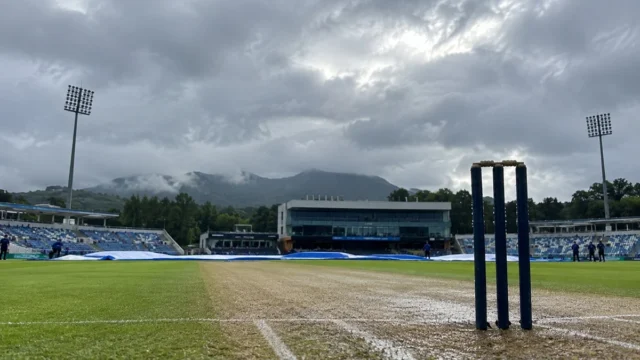
East Zone in Duleep Trophy Final After 14 Years: Vaibhav Sooryavanshi, Shami Spark Historic Run
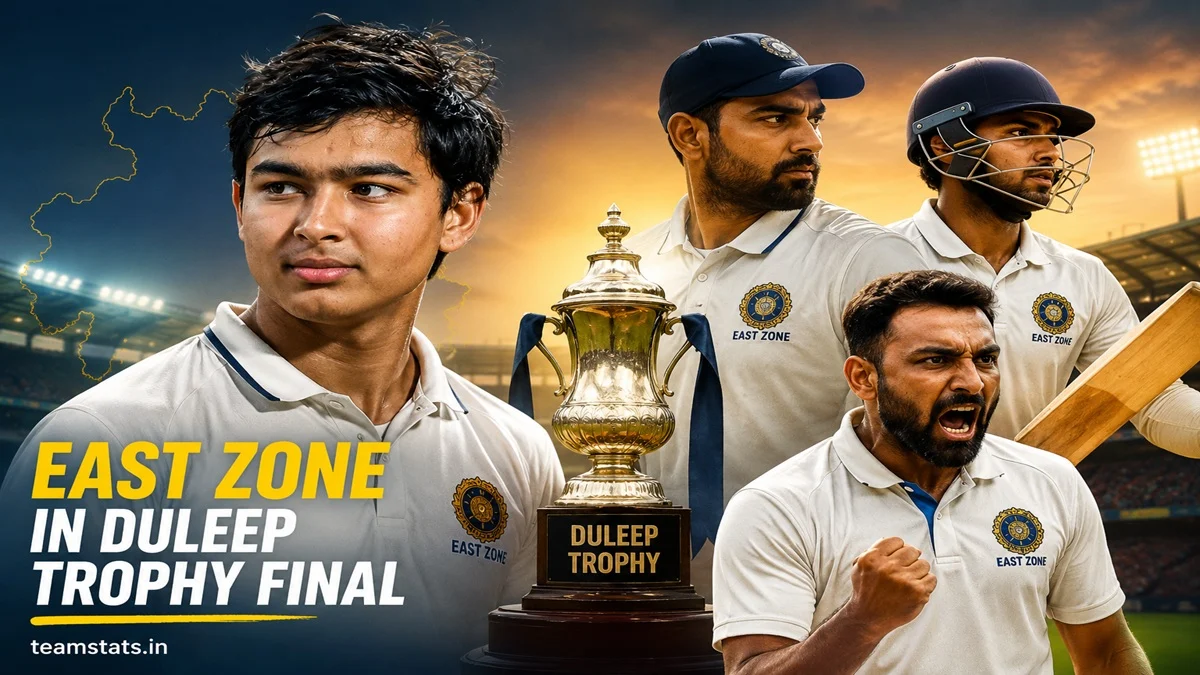
East Zone in Duleep Trophy Final After 14 Years: Vaibhav Sooryavanshi, Ishan Kishan and Bengal Pace Duo Power Historic Run
East Zone are back where they have not been for almost 14 years — the Duleep Trophy final.
And they did not get there by sneaking through on a first-innings lead or waiting for time to run out.
Ishan Kishan’s East Zone knocked out defending champions Central Zone by four wickets, completing a 159-run chase on the third day of their semifinal in Bengaluru.
The scorecard reads: Central Zone 266 and 158, East Zone 266 and 162/6.
But the story behind East Zone in Duleep Trophy Final 2026 is much richer than those four numbers.
A 15-year-old Vaibhav Sooryavanshi scored 132 runs across the match. Mukesh Kumar and Mohammed Shami combined to destroy Central Zone’s second innings. Captain Ishan Kishan walked into a chase that was beginning to become uncomfortable and finished unbeaten on 39.
And now East Zone are heading to Chennai for their first Duleep Trophy final since 2012-13 — the season in which they won the title.
North Zone vs South Zone Duleep Trophy: From 80/5 to Tilak Varma’s 167 Runs Without Dismissal
East Zone vs Central Zone Semifinal Result
| Match Detail | Result |
|---|---|
| Central Zone | 266 & 158 |
| East Zone | 266 & 162/6 |
| Result | East Zone won by 4 wickets |
| Venue | BCCI CoE, Bengaluru |
| Player of the Match | Mukesh Kumar |
East Zone will now play the five-day Duleep Trophy final at the M.A. Chidambaram Stadium, Chennai, from September 6 to 10. The BCCI shifted the final from Bengaluru to Chennai specifically to allow spectators to attend the match.
14 Years Later, East Zone Are Back in the Duleep Trophy Final
This is what makes the victory historic.
East Zone’s previous appearance in a Duleep Trophy final came in 2012-13.
They did not merely reach that final.
They won the trophy.
So when Ishan Kishan’s team completed the chase against Central Zone, it ended an absence stretching across more than a decade.
The context makes the achievement even bigger.
Central Zone entered this semifinal as the defending champions.
East Zone have now eliminated them and put themselves one victory away from repeating something the region last accomplished in 2012-13.
Read Also – Latest Cricket News Live Today
Latest News- Vaibhav Sooryavanshi Duleep Trophy Bowling
Latest Stats- England Cricket Team vs Pakistan National Cricket Team Stats
News Live Today- Cricket Team Stats 2026 Today
How East Zone Reached the Duleep Trophy Final 2026
Their route to Chennai has been emphatic.
East Zone began their tournament against North East Zone in the quarter-final.
They scored a massive 467 and then dismissed North East Zone for 146 and 111, winning by an innings and 210 runs.
Then came the much harder test against Central Zone.
This time there was no enormous first-innings advantage.
In fact, the first innings could not separate the teams at all.
Central Zone: 266
East Zone: 266
Exactly level.
The semifinal effectively became a second-innings contest.
And that is when East Zone’s experienced fast bowlers took control.
Mukesh Kumar and Mohammed Shami Changed the Semifinal
Central Zone started their second innings knowing the match was effectively level.
They were dismissed for only 158.
Mukesh Kumar returned figures of:
4/44
Mohammed Shami took:
3/56
Together, the two Bengal fast bowlers accounted for seven of Central Zone’s ten wickets.
That’s 70% of the entire innings.
Their combined figures were:
7 wickets for 100 runs
But Mukesh’s contribution was even bigger when the whole match is considered.
He finished with seven wickets across the semifinal and was named Player of the Match.
This was not simply a batting-driven qualification.
East Zone reached the final because their attack created a winning position.
Central Zone Were 97/8 — That Tells the Real Story
Central Zone eventually reached 158, but even that total required lower-order resistance.
At one stage, the defending champions had collapsed to 97/8.
Harsh Dubey and Arshad Khan then put together a 43-run ninth-wicket partnership that pushed the innings beyond 150.
Without that stand, East Zone could have been chasing something closer to 120.
Instead, they were set 159 to win.
Not a huge target.
But on a pitch where wickets were falling and Harsh Dubey was finding turn, it was not automatic either.
Vaibhav Sooryavanshi’s 92 Was More Important Than a Missed Century
The headline innings of East Zone’s first innings came from Vaibhav Sooryavanshi.
He made:
92 from 81 balls
with:
7 fours
7 sixes.
He missed a first-class century by eight runs.
But concentrating on those missing eight runs would miss what his innings actually did for East Zone.
His strike rate was:
92 ÷ 81 × 100 = 113.58
For a first-class semifinal, that is an extremely aggressive scoring rate.
And his boundaries produced:
7 fours = 28 runs
7 sixes = 42 runs
Total boundary runs:
70
So approximately:
76.1% of Sooryavanshi’s 92 runs came in boundaries.
That is a remarkably high boundary contribution in a multi-day match.
Vaibhav’s Innings Also Came With a Warning
East Zone appeared to be in a commanding position during their first innings.
They reached 161/0.
Then everything changed.
East Zone collapsed from 161 without loss to 266 all out.
That means their final ten wickets produced only:
266 − 161 = 105 runs
The collapse cost them the opportunity to take a potentially decisive first-innings lead.
Instead, the two sides finished exactly level at 266.
That sequence is important when analysing East Zone’s chances in the final.
Their ceiling is clearly high.
Their top order can dominate.
But the semifinal also showed how quickly a commanding position can disappear.
Vaibhav Sooryavanshi Changed His Game in the Chase
The second innings revealed something arguably more interesting about the teenager than his 92.
East Zone needed 159.
The obvious expectation was another ultra-aggressive Sooryavanshi innings.
Instead, he adjusted.
He scored 40 from 43 balls.
According to the match report, Sooryavanshi was only 15 from his first 30 deliveries before accelerating.
Think about that progression.
First 30 balls:
15 runs
Remaining 13 balls:
25 runs
His strike rate across the opening 30 deliveries was just:
50.00
Across his final 13 deliveries:
192.31
That ability to change gears is arguably more significant than another 30-ball assault would have been.
East Zone did not need him to chase 159 in 20 overs.
They needed him to build a platform.
He did.
Sooryavanshi Scored 132 Runs in the Semifinal
Combine his two innings:
92 + 40 = 132 runs
Across:
81 + 43 = 124 balls
That gives a combined scoring rate of:
132 ÷ 124 × 100 = 106.45
His two contributions were completely different.
First innings: 92 off 81 — attack
Second innings: 40 off 43 — initially absorb pressure, then accelerate
That contrast may be one of the most encouraging signs for East Zone heading into the final.
And across the tournament so far, Cricbuzz lists Sooryavanshi with 140 runs from three innings at 46.67.
For a 15-year-old playing a major Indian first-class competition, those numbers ensure he will enter the Chennai final as one of its biggest attractions.
The 61-Run Opening Stand Put East Zone Ahead
Sooryavanshi and Abhimanyu Easwaran added 61 for the first wicket in the chase.
Against a target of 159, that partnership accounted for:
61 ÷ 159 × 100 = 38.4% of the target
before Central Zone took their first wicket.
That matters because small fourth-innings targets can become dangerous when early wickets fall.
At 61 without loss, East Zone had removed a large portion of the requirement.
But Central Zone were not finished.
Harsh Dubey Nearly Turned 159 Into a Trap
East Zone’s chase eventually became considerably more uncomfortable than their opening partnership suggested.
Harsh Dubey took 4/53 and exploited the conditions to bring Central Zone back into the contest.
East Zone slipped into a position where the match was no longer straightforward.
When Ishan Kishan arrived, the score was 93/3, meaning East still required another 66 runs.
This is where the captain’s innings becomes important.
Ishan Kishan’s 39* Was Worth More Than the Number Suggests
Kishan finished:
39 not out from 41 balls.
In isolation, 39 from 41 might not look like an innings that belongs prominently in a match report.
In context, it absolutely does.
East Zone were chasing a modest target on a surface where Dubey was causing problems.
Kishan did not simply defend until the target disappeared.
He counterattacked the bowler creating the greatest danger.
Against Dubey, Kishan used the reverse sweep and also came down the pitch to hit him for six.
It was a calculated response.
Instead of allowing Central Zone’s main threat to dictate the chase, the East Zone captain forced him to defend as well.
That’s leadership expressed through batting rather than words.
Captain Ishan Kishan Has Taken East Zone Back to the Final
Kishan’s role in this campaign deserves attention beyond his semifinal score.
He entered the competition as East Zone captain.
Now he has led them to their first final in almost 14 years.
And he was there at the end when qualification was secured.
East Zone eventually reached:
162/6 in 39.3 overs
to win by four wickets.
The winning runs came from Mohammed Shami.
That produced a fitting image: one of India’s most experienced fast bowlers at the crease as East Zone completed a victory built heavily around their pace attack.
The Bengal Connection Behind East Zone’s Success
There is another layer to this East Zone team.
Mukesh Kumar and Mohammed Shami both represent Bengal in domestic cricket.
Abhimanyu Easwaran is another Bengal stalwart.
Sudip Kumar Gharami is also part of the batting group.
Against Central Zone, that established domestic core combined with younger talent such as Sooryavanshi.
It gives East Zone an interesting balance.
They are not simply a youth-heavy side.
Nor are they dependent entirely on senior internationals.
They have both.
That combination could be especially valuable in a five-day final.
East Zone Have Already Taken 40 Wickets in Two Matches
Consider their tournament path.
Against North East Zone, East Zone dismissed their opponents twice:
146 all out
111 all out
That’s 20 wickets.
Against Central Zone:
266 all out
158 all out
Another 20 wickets.
So East Zone have taken the full 40 opposition wickets available across their first two matches.
That may be the most important team statistic heading into Chennai.
In multi-day knockout cricket, taking 20 wickets is often the hardest part.
East Zone have done it twice already.
Mukesh Kumar Has Nine Wickets in the Tournament
Cricbuzz’s current tournament statistics list Mukesh Kumar with:
9 wickets from two matches.
He is therefore averaging:
4.5 wickets per match
through East Zone’s first two fixtures.
And seven of those wickets came in the semifinal.
If conditions at Chepauk favour spin more heavily, the balance of East Zone’s attack could change.
But Mukesh and Shami give Kishan something every captain wants in a final: experienced fast bowlers capable of creating wickets rather than simply controlling runs.
East Zone’s Tournament So Far
| Stage | East Zone Result |
|---|---|
| Quarter-final | Beat North East Zone by innings & 210 runs |
| Semi-final | Beat Central Zone by 4 wickets |
| Final | September 6-10, Chennai |
Two matches.
Two very different victories.
The quarter-final was overwhelming.
The semifinal required East Zone to recover from a first-innings collapse, bowl out the defending champions cheaply and then handle fourth-innings pressure.
That variety of winning experiences may be more useful going into a final than two straightforward victories.
From 467 to 266 — East Zone Have Won in Different Ways
Against North East Zone, East Zone made 467.
Against Central Zone, they made 266 in the first innings.
A difference of 201 runs.
Yet they won both matches.
That is significant.
It suggests their path to victory is not dependent on posting 400-plus every time.
When the batting output dropped dramatically in the semifinal, the bowlers compensated.
And when the chase became tricky, Kishan finished it.
A strong knockout team needs more than one route to victory.
East Zone have already demonstrated at least two.
What East Zone Must Fix Before the Duleep Trophy Final
For all the positives, there is one obvious warning sign.
161/0 to 266 all out.
Losing ten wickets for 105 runs after such a strong start could have cost East Zone the semifinal.
Against a stronger bowling performance in the final, they may not get another opportunity to recover.
The middle order therefore becomes one of the biggest areas to watch at Chepauk.
Sooryavanshi cannot be expected to provide a major score every innings.
Neither can the bowlers repeatedly rescue the team after batting collapses.
If East Zone combine the stability of their quarter-final batting with the bowling intensity shown against Central Zone, they become extremely difficult opponents.
Why Chepauk Changes the Equation
The final is not another four-day match at Bengaluru’s Centre of Excellence.
It will be a five-day fixture at M.A. Chidambaram Stadium in Chennai from September 6-10.
That introduces a different tactical challenge.
A fifth day increases the time available to force a result.
Conditions will be different.
Workload management becomes more important.
And spin could become increasingly influential as the match develops.
East Zone’s selection and bowling balance could therefore matter almost as much as current form.
The BCCI’s decision to move the match to Chennai also means supporters will be able to attend, giving the final a very different atmosphere from the earlier matches at the CoE.
One Match From Repeating 2012-13
This is where East Zone’s story comes full circle.
The last time they reached the final was 2012-13.
They won it.
Now, after almost 14 years without appearing in the title match, they have another opportunity.
Different players.
Different format and context.
Different venue.
But the same possibility.
One more victory and East Zone’s return to the Duleep Trophy final becomes a return to the Duleep Trophy title.
Five Numbers Behind East Zone’s Run to the Final
14 years — approximate wait since East Zone’s previous Duleep Trophy final appearance.
132 runs — Vaibhav Sooryavanshi’s semifinal aggregate.
7 wickets — Mukesh Kumar’s semifinal haul.
7 wickets — combined second-innings wickets for Mukesh and Shami.
40 wickets — all available opposition wickets taken by East Zone across their quarter-final and semifinal.
Those numbers tell the story better than any single individual performance.
East Zone have reached Chennai through explosive young batting, experienced fast bowling and enough composure to survive a difficult chase.
Vaibhav Sooryavanshi Could Be the Final’s Biggest Attraction
There is no escaping the attention around Sooryavanshi.
At 15, every major performance produces headlines.
But the semifinal offered something more substantial than another age record.
It showed two versions of his batting.
The 92 demonstrated his ability to dominate.
The 40 demonstrated an ability to modify his tempo according to the situation.
That second skill will become increasingly important as opposition teams develop plans specifically for him.
A five-day final at Chepauk presents another completely different examination.
And that makes his next innings particularly intriguing.
East Zone in Duleep Trophy Final: Why This Team Can Win It
East Zone have several reasons for confidence.
They have taken 20 wickets in each match.
They have an experienced new-ball attack.
They have a captain capable of counterattacking under pressure.
They have Abhimanyu Easwaran’s first-class experience at the top.
They have Sooryavanshi’s unpredictability and scoring power.
And perhaps most importantly, they have already experienced a difficult knockout match where momentum changed repeatedly.
The semifinal was not perfect.
That may actually help them.
East Zone now know exactly what can happen when a dominant batting position is thrown away.
They also know they can recover from it.
Final Word
East Zone in Duleep Trophy Final 2026 is not simply a story about ending a 14-year wait.
It is about how they ended it.
Vaibhav Sooryavanshi attacked his way to 92 and then adjusted his natural game to make 40 in the chase.
Mukesh Kumar produced seven wickets across the match.
Mohammed Shami helped rip through Central Zone with three second-innings wickets.
And when Harsh Dubey threatened to transform a target of 159 into something much more dangerous, captain Ishan Kishan responded with an unbeaten 39.
East Zone have gone from an innings-and-210-run quarter-final demolition to a pressure-filled four-wicket semifinal victory.
Now Chennai awaits.
The last time East Zone reached this stage, they lifted the trophy.
Fourteen years later, they are one match away from doing it again.
FAQs
Is East Zone in the Duleep Trophy Final 2026?
Yes. East Zone defeated defending champions Central Zone by four wickets in the semifinal to qualify for the Duleep Trophy 2026-27 final.
When did East Zone last reach the Duleep Trophy final?
East Zone’s previous final appearance was in the 2012-13 season, when they went on to win the trophy.
How many runs did Vaibhav Sooryavanshi score in the semifinal?
Sooryavanshi scored 92 in the first innings and 40 in the second, giving him 132 runs across the semifinal.
How many wickets did Mukesh Kumar take?
Mukesh Kumar took seven wickets in the semifinal, including 4/44 in Central Zone’s second innings, and was named Player of the Match.
How many runs did Ishan Kishan score in the chase?
East Zone captain Ishan Kishan scored an unbeaten 39 from 41 balls as his team successfully chased 159.
Where will the Duleep Trophy 2026 final be played?
The final will be played at the M.A. Chidambaram Stadium in Chennai from September 6 to September 10, 2026.
Who will East Zone play in the Duleep Trophy final?
As of September 2, East Zone’s opponent is still to be confirmed from the other semifinal. The current official tournament listing therefore shows East Zone versus TBC for the final.

Related Posts
Vaibhav Sooryavanshi Misses Asian Games Debut Chance as India vs Afghanistan Match Is Abandoned
India vs Afghanistan 3rd T20I Today: Will Vaibhav Sooryavanshi Finally Get His Chance?
India vs Afghanistan Playing XI: Match Abandoned, India Reach Asian Games 2026 Semi-Final
Sri Lanka vs Nepal Playing 11: Probable XI and Team News for Asian Games Quarter-Final
Bangladesh vs Malaysia Playing 11 & Playing XI: Probable Teams for Asian Games 2026 Quarter-Final