North Zone vs South Zone Duleep Trophy: From 80/5 to Final — How Tilak Varma Turned the Match
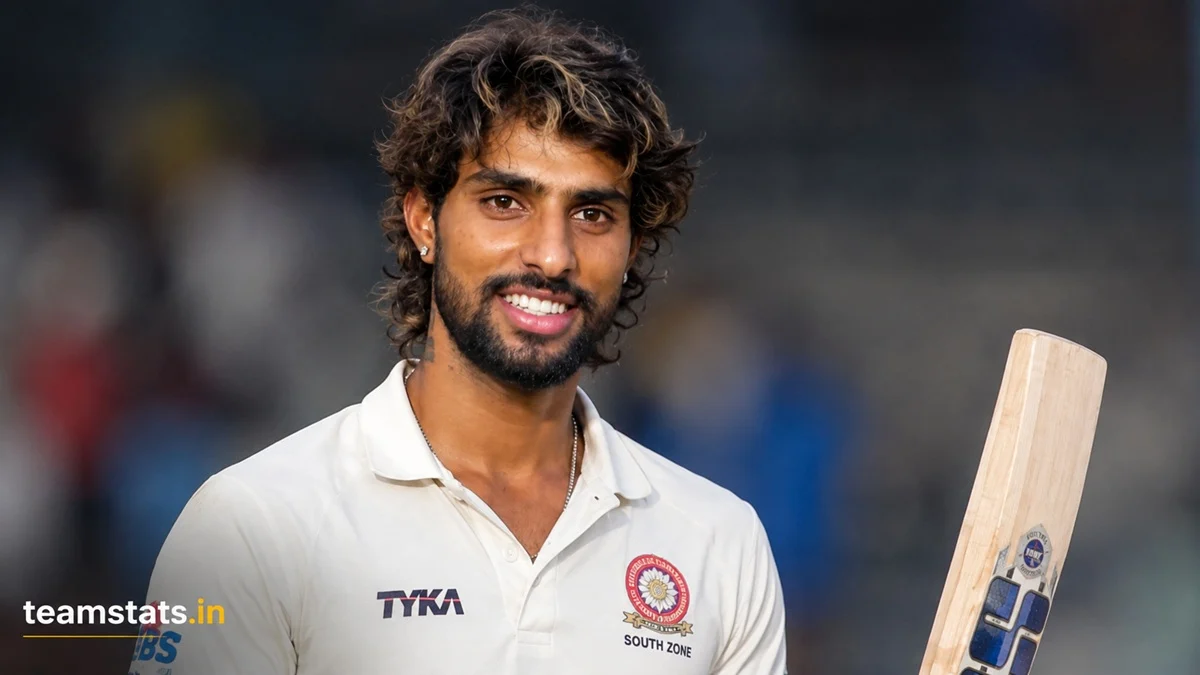
North Zone vs South Zone Duleep Trophy: Tilak Varma’s 167 Runs Without Dismissal Send South Zone Into Duleep Trophy Final
South Zone are through to the Duleep Trophy 2026 final, but their seven-wicket victory over North Zone looks far more comfortable on the final scorecard than it felt during the match.
At one stage, South Zone were 80/5.
North Zone had already scored 195. South were still 115 runs behind, half their batting line-up was gone, and the semifinal appeared to be moving firmly in North Zone’s direction.
What followed changed everything.
Captain Tilak Varma scored an unbeaten 116, Shreyas Gopal made 87, and their 175-run partnership dragged South Zone from serious trouble to 312.
South suddenly had a 117-run first-innings lead.
North Zone responded with 297 in their second innings, but MD Nidheesh’s five-wicket haul prevented the target from becoming much larger.
South needed 181.
Tilak walked out again.
This time he made 51 not out, completing the chase at 182/3 and sending South Zone into a Duleep Trophy final against East Zone.
The final result of North Zone vs South Zone Duleep Trophy 2026 semifinal was a seven-wicket South Zone victory.
The real story was how dramatically the match changed after 80/5.
North Zone vs South Zone Duleep Trophy Semifinal Result
| Match Detail | Score |
|---|---|
| North Zone | 195 & 297 |
| South Zone | 312 & 182/3 |
| Result | South Zone won by 7 wickets |
| Player of the Match | Tilak Varma |
| Venue | BCCI CoE Ground 2, Bengaluru |
South Zone will now face East Zone in the Duleep Trophy final at the MA Chidambaram Stadium in Chennai from September 6.
North Zone Started With 195 — And South’s Bowlers Had Already Done Their Job
North Zone won the toss and elected to bat.
Their first innings never really developed into a commanding total.
Qamran Iqbal provided the resistance with 76 from 182 balls, hitting ten fours and one six.
But wickets kept falling around him.
North Zone were eventually dismissed for:
195 in 59.1 overs.
Vidwath Kaverappa was the major reason they could not push towards 250.
He returned:
4/25 from 12.1 overs
at an economy rate of just:
2.05 runs per over.
Kaverappa accounted for Qamran Iqbal, Nishant Sindhu, Abid Mushtaq and Anshul Kamboj.
At that point, South Zone had done the difficult part.
A first-innings total of 195 was manageable.
Then their batting collapsed.
Read Also – Latest Cricket News Live Today
Latest News- Vaibhav Sooryavanshi Duleep Trophy Bowling
News Live Today- Cricket Team Stats 2026 Today
80/5: The Moment North Zone Had Control
South Zone’s response began badly.
Ricky Bhui made 42 and Narayan Jagadeesan contributed 43, but wickets arrived regularly.
Then two wickets in quick succession changed the innings completely.
R Smaran was dismissed for 27.
K Himateja followed without scoring.
The scoreboard:
80/5.
North Zone’s 195 suddenly looked much bigger.
South still needed 115 runs just to draw level.
Gurnoor Brar was causing serious damage and would eventually finish with 4/88.
Arshdeep Singh and Anshul Kamboj also picked up two wickets each.
At 80/5, North Zone were not merely ahead.
They had an opportunity to take control of the semifinal.
Then Tilak Varma and Shreyas Gopal came together.
Tilak Varma’s 116* Was a Captain’s Innings in the Truest Sense
Tilak Varma did not produce the type of innings normally associated with his T20 reputation.
There was no attempt to counterattack recklessly.
He stayed.
And stayed.
And stayed.
Tilak eventually finished:
116 not out from 250 balls
with nine fours.
Strike rate:
46.40.
In a T20 match, that strike rate would be alarming.
In this semifinal, it was exactly what South Zone required.
South did not need a 70-ball hundred.
They needed someone who could stop the collapse.
Tilak faced 250 deliveries.
That is 41.4 overs worth of balls faced by one batter.
He absorbed the pressure long enough for the entire match to change around him.
Shreyas Gopal’s 87 Was Almost as Important
Tilak was Player of the Match, but South Zone’s recovery could not have happened without Shreyas Gopal.
Gopal scored:
87 from 169 balls
with 11 fours.
His strike rate was:
51.48
Again, this was not about scoring quickly.
It was about survival, rebuilding and gradually taking control.
Tilak and Gopal added:
175 runs
for the sixth wicket.
Consider where that partnership began:
80/5
And where it ended:
255/6
By then South Zone were already 60 runs ahead.
A potential first-innings disaster had become a position of control.
The 175-Run Partnership Accounted for 56% of South Zone’s Total
This is where the numbers show how important the partnership really was.
South Zone scored:
312
Tilak-Gopal partnership:
175
Therefore:
175 ÷ 312 × 100 = 56.1%
One partnership contributed more than 56% of South Zone’s entire first innings.
Even more striking is what happened after 80/5.
South Zone’s remaining five wickets added:
312 − 80 = 232 runs
The first five wickets produced 80.
The last five produced 232.
That’s a difference of:
152 runs.
The lower half of South Zone’s innings effectively produced 2.9 times as many runs as the first five wickets.
That is the numerical turning point of the semifinal.
From 115 Runs Behind to a 117-Run Lead
At 80/5, South Zone trailed by:
195 − 80 = 115 runs
By the end of the innings, they led by:
312 − 195 = 117 runs
That means South Zone generated a 232-run swing after losing their fifth wicket.
Exactly the same number as the runs added by the final five wickets.
This is why looking only at South Zone’s 312 misses the story.
They did not simply outscore North Zone.
They completely reversed the position of the semifinal from a point where North had a genuine chance to take a significant first-innings advantage.
Tilak and Gopal Scored 203 of South Zone’s 312 Runs
Tilak:
116
Gopal:
87
Combined:
203 runs
Percentage of South Zone’s innings:
203 ÷ 312 × 100 = 65.1%
Two players therefore produced almost two-thirds of South Zone’s first-innings total.
And one of them never got out.
That concentration of runs tells us both something positive and something South Zone will need to consider before the final.
Their recovery was outstanding.
But their top and middle order cannot assume Tilak and Gopal will rescue them from 80/5 again.
North Zone Fought Back in the Second Innings
A 117-run deficit could easily have ended the contest.
North Zone refused to disappear.
Their second innings was much stronger.
Sanat Sangwan made 76 from 148 balls, while Ayush Doseja contributed a half-century.
Nishant Sindhu and Anshul Kamboj also added valuable lower-order resistance.
North eventually reached:
297.
That erased South Zone’s 117-run advantage and set a target of:
181.
It was competitive.
But considering South had once been 80/5, North Zone would probably have imagined something very different earlier in the semifinal.
MD Nidheesh’s Five-Wicket Haul Prevented a Much Bigger Target
If Tilak and Gopal changed the match with the bat, MD Nidheesh ensured North Zone could not change it back.
Nidheesh finished North’s second innings with:
5/56 from 16.3 overs
including two maidens.
His economy:
approximately 3.39.
More importantly, he removed key batters and then cleaned up the tail.
North began the fourth day at 256/7.
They managed another 41 runs before being dismissed for 297.
Nidheesh removed Anshul Kamboj for 36 and then finished off Gurnoor Brar and Arshdeep Singh.
That prevented North from pushing the target beyond 200.
Why 181 Was Very Different From 220
This is an important part of the match that can get lost in a conventional scorecard summary.
North Zone’s lower order had already shown resistance.
Anshul Kamboj and Nishant Sindhu put together a 60-run partnership.
If that stand had lasted another 10 overs, or if the final three wickets had added another 40-50 runs, South could have been chasing around 220-230.
In a fourth innings of a first-class semifinal, that changes the psychological equation considerably.
Instead, Nidheesh kept the target at 181.
That allowed South to approach the chase with patience.
South Zone Did Not Chase 181 Like a T20 Target
South Zone’s chase was almost the opposite of the batting style many modern players are associated with.
They took:
43.1 overs
to reach:
182/3
Run rate:
4.22.
There was no need for unnecessary risk.
Ricky Bhui made a useful:
42 from 53 balls
and helped establish a 64-run opening partnership with Narayan Jagadeesan.
That partnership alone completed:
64 ÷ 181 × 100 = 35.4%
of the chase requirement.
The early platform was important because North needed wickets to make 181 feel difficult.
South denied them that immediate opening.
North Zone Opened the Door at 102/3
North eventually found a way back.
Ricky Bhui fell for 42.
Shaik Rasheed was bowled for just 1.
Jagadeesan was then stumped for 43.
South Zone:
102/3.
Still required:
79 runs.
Not a crisis.
But enough for North Zone to believe that another two quick wickets could change the chase.
Tilak Varma was already at the crease.
This time, he found R Smaran as his partner.
And the door closed again.
Tilak Varma Finished What He Started
Tilak had already faced 250 balls for his first-innings century.
He now played another:
79 deliveries
in the chase.
He finished unbeaten on:
51 from 79
with eight fours.
R Smaran remained unbeaten on:
32 from 42 balls.
Together they added an unbroken 79-run partnership.
And there is a neat numerical symmetry here.
When they came together, South needed 79 runs.
Their partnership was 79 unbeaten.
They completed the job without giving North another wicket.
Tilak Varma Was Never Dismissed in the Semifinal
This may be the best individual statistic from the entire match.
First innings:
116 not out
Second innings:
51 not out
Match aggregate:
167 runs
Dismissals:
0
Balls faced:
250 + 79 = 329
So Tilak batted for 329 deliveries across the semifinal without being dismissed.
That’s nearly:
54.5 overs worth of deliveries.
His overall scoring rate:
167 ÷ 329 × 100 = 50.76
But strike rate is almost irrelevant here.
The bigger point is that North Zone had 329 opportunities to dismiss South Zone’s captain and never managed it.
He was there when South were 80/5.
And he was there when South reached the final.
That is why his Player of the Match award requires very little explanation.
Tilak Was Involved in 254 Runs of Partnerships
There is another way to quantify his influence.
His partnership with Shreyas Gopal:
175
His unbeaten partnership with R Smaran:
79
Total:
254 runs
Those are just two major stands.
One rescued the first innings.
The other finished the match.
For a captain, it is difficult to have a more direct impact on a knockout result.
The Difference Between the Teams Wasn’t Just 117 Runs
South Zone’s first-innings lead was obviously important.
But the deeper difference was what happened when each team reached pressure points.
South at 80/5 responded with a 175-run partnership.
North Zone’s second innings later slipped from a promising position and they could not produce a recovery of similar magnitude.
On Day 3, North lost several wickets in a short span before their lower order helped push the total towards 300.
The difference was not that North never fought back.
They did.
The difference was that South’s biggest recovery was match-defining, while North’s recoveries only kept them competitive.
Vidwath Kaverappa + Nidheesh: Nine Wickets Across North’s Two Innings
South Zone’s bowling deserves more credit than the Tilak narrative may allow.
First innings:
Kaverappa 4/25
Second innings:
Nidheesh 5/56
Combined:
9 wickets for 81 runs
Those two performances came in different innings from different bowlers.
That is significant.
South were not dependent on one bowler producing ten wickets across the match.
When North batted first, Kaverappa was the major destroyer.
When North needed to build a match-saving second-innings total, Nidheesh took over.
That variety gives South another reason for confidence ahead of the final.
Gurnoor Brar Was North Zone’s Biggest First-Innings Threat
North Zone did have an outstanding bowling performance of their own.
Gurnoor Brar took:
4/88 from 23 overs.
His wickets were central to South’s collapse to 80/5.
Arshdeep Singh added:
2/59
and Anshul Kamboj:
2/58.
North’s pace attack had created the exact position they needed.
The frustration will be that they could not break the Tilak-Gopal partnership before it became enormous.
One wicket during that stand might have changed the entire semifinal.
Why the Final Scoreline Is Slightly Misleading
South Zone won by seven wickets.
That sounds dominant.
In the fourth innings, it was.
Across the entire match, however, there was a point when North Zone were in a genuinely strong position.
Had South been dismissed around 140 after falling to 80/5, North could have taken a first-innings advantage of approximately 50 runs.
Instead:
South made 312.
The difference between those hypothetical outcomes is enormous.
This semifinal was therefore not a four-day procession.
It was a match that pivoted dramatically around one sixth-wicket partnership.
The 175-Run Stand Is the Number That Explains Everything
There are many impressive numbers in the North Zone vs South Zone Duleep Trophy semifinal.
Tilak’s 116*.
Nidheesh’s 5/56.
Kaverappa’s 4/25.
Tilak’s match aggregate of 167 without dismissal.
But if one number explains the result, it is:
175.
Without the Tilak-Gopal stand, South probably do not reach 312.
Without 312, there is no 117-run first-innings lead.
Without that lead, North’s 297 creates a far more demanding fourth-innings target.
And without a manageable target, Tilak’s second innings becomes a completely different challenge.
The partnership did not merely rescue an innings.
It reshaped everything that followed.
South Zone vs East Zone Is Now Confirmed
The semifinal victory sets up:
South Zone vs East Zone
in the Duleep Trophy 2026 final.
The match is scheduled at MA Chidambaram Stadium, Chennai, from September 6 to 10, with a 9:30 AM start listed in the tournament schedule.
East Zone qualified by defeating defending champions Central Zone by four wickets in the other semifinal.
That creates an intriguing final.
South arrive with Tilak Varma at the centre of their campaign.
East arrive with a combination of experienced players and teenage batting sensation Vaibhav Sooryavanshi.
The individual storyline almost writes itself:
Tilak Varma vs Vaibhav Sooryavanshi.
But the final will be much bigger than two batters.
Chennai Will Present a Different Test
The semifinal was played at the BCCI Centre of Excellence Ground 2 in Bengaluru.
The final moves to the MA Chidambaram Stadium in Chennai.
That matters.
Different surface.
Different conditions.
A five-day final rather than another four-day semifinal.
Potentially a larger role for spin as the match develops.
South have Shreyas Gopal and Tanay Thyagarajan among their options, while East will have their own combinations to consider.
South’s semifinal victory demonstrates that they can recover from a batting collapse.
The final will test whether they can avoid needing such a recovery in the first place.
South Zone’s Biggest Warning Before the Final
The victory should not hide:
80/5.
A final against East Zone may not offer the same escape route.
Tilak cannot be expected to bat through every crisis.
Shreyas Gopal cannot be expected to produce another 87 from No. 7 every time the top order fails.
South therefore have a straightforward area to improve before Chennai:
their first five wickets need to contribute more.
The first five wickets in the semifinal produced only 80 runs.
The final five produced 232.
That imbalance is unsustainable over repeated knockout matches.
But South Zone Have Now Proved Something More Valuable
Perfect teams are rare.
Teams capable of recovering from imperfect situations are much more dangerous.
South Zone have now experienced:
- being 80/5;
- trailing by 115;
- building a 175-run rescue partnership;
- taking a 117-run first-innings lead;
- watching North fight back to 297;
- chasing a fourth-innings target;
- losing three wickets;
- and still completing the match comfortably.
That sequence gives them something a straightforward innings victory cannot provide:
evidence that they can win when the match goes badly first.
Seven Numbers That Tell the Story
80/5 — South Zone’s first-innings crisis.
175 — Tilak Varma and Shreyas Gopal’s sixth-wicket partnership.
232 — runs added after South lost their fifth wicket.
117 — South Zone’s eventual first-innings lead.
5/56 — MD Nidheesh’s second-innings figures.
167 — Tilak Varma’s match runs without being dismissed.
7 wickets — South Zone’s winning margin.
Together, those numbers tell a much better story than simply saying South Zone beat North Zone.
What North Zone Will Regret Most
North Zone can point to several moments.
They could have scored more than 195.
They could have broken the Tilak-Gopal partnership earlier.
They could have pushed their second innings beyond 300.
They could have taken another wicket after South reached 102/3.
But their biggest missed opportunity remains obvious.
They had South Zone at:
80/5
with a 115-run advantage still intact.
That was the moment.
Knock South over for 130 or 140 and the semifinal changes completely.
Instead, South’s next wicket did not fall until the score had reached 255.
By then, the match had moved to the other side.
Final Word
The scorecard will permanently record:
South Zone beat North Zone by seven wickets.
It should also remember:
80/5.
Because that is where this semifinal was really decided.
Not at 182/3 in the chase.
Not when Nidheesh completed his five-wicket haul.
Not even when South reached 312.
The decisive phase began when Tilak Varma and Shreyas Gopal looked at a scoreboard reading 80/5 and refused to let the innings disappear.
Their 175-run partnership transformed a 115-run deficit into the foundation for a 117-run first-innings lead.
Nidheesh then ensured North’s second-innings recovery stopped at 297.
And when South needed 181 to reach the final, Tilak returned to finish the job himself.
116 not out.
51 not out.
167 runs.
329 balls.
Zero dismissals.
South Zone entered the semifinal with Tilak Varma as their captain.
They leave it with Tilak as the player who was standing at the crease during their biggest crisis — and still standing when their place in the Duleep Trophy final was secured.
Now Chennai awaits.
And so does East Zone.
FAQs
Who won North Zone vs South Zone Duleep Trophy semifinal?
South Zone defeated North Zone by seven wickets in Bengaluru to qualify for the Duleep Trophy 2026 final.
What was the North Zone vs South Zone score?
North Zone scored 195 and 297, while South Zone made 312 and 182/3.
How many runs did Tilak Varma score?
Tilak Varma scored 116 not out in the first innings and 51 not out in the chase, finishing the semifinal with 167 runs without being dismissed.
Who was Player of the Match?
South Zone captain Tilak Varma was named Player of the Match.
How many wickets did MD Nidheesh take?
Nidheesh took 5/56 in North Zone’s second innings, helping dismiss them for 297.
Who will South Zone play in the Duleep Trophy final?
South Zone will face East Zone in the final.
When is the Duleep Trophy 2026 final?
The final is scheduled from September 6 to September 10, 2026 at the MA Chidambaram Stadium in Chennai.
How big was Tilak Varma and Shreyas Gopal’s partnership?
Tilak and Shreyas Gopal added 175 runs for the sixth wicket after South Zone had fallen to 80/5

Related Posts
Sri Lanka vs Nepal Playing 11: Probable XI and Team News for Asian Games Quarter-Final

Bangladesh vs Malaysia Playing 11 & Playing XI: Probable Teams for Asian Games 2026 Quarter-Final
Sri Lanka vs Nepal Pitch Report: Korogi Sports Park Records, Weather & Asian Games 2026 Quarter-Final
India vs Afghanistan Playing XI: Match Abandoned, India Reach Asian Games 2026 Semi-Final

David Miller 142 vs Australia: Career-Best Century Powers South Africa to ODI Series Win