First-Ever ICC Women’s Champions Trophy 2027 Venue Announced: India Named Host as Mumbai, Vadodara Confirmed
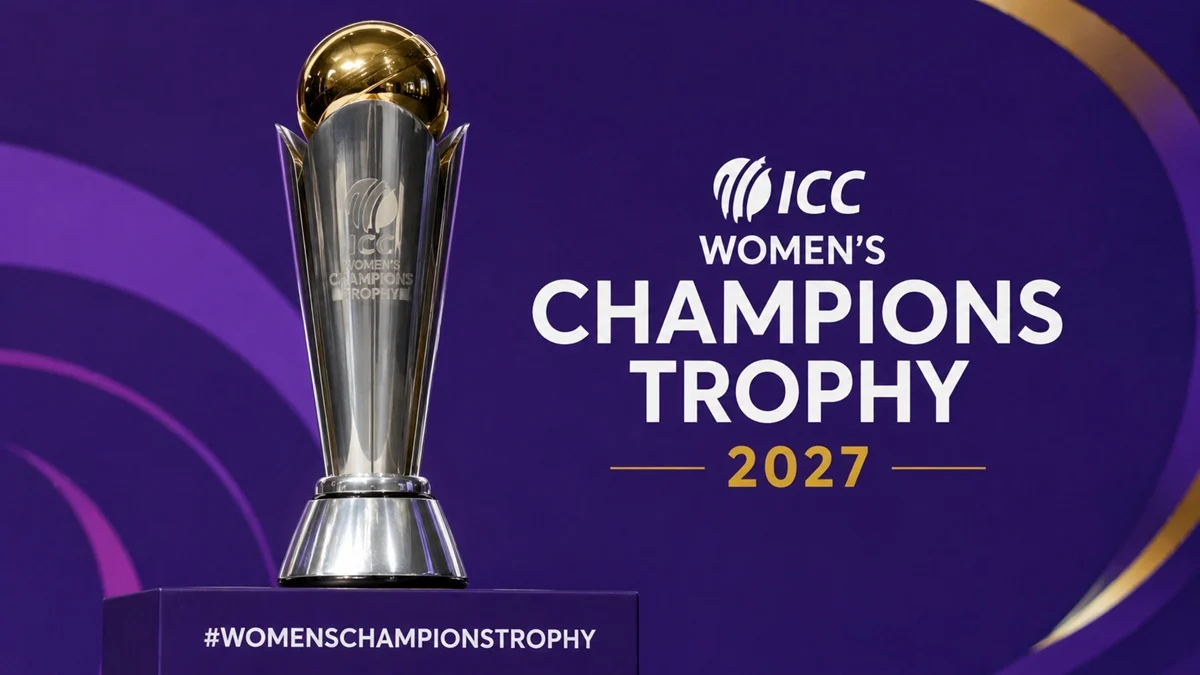
First-Ever ICC Women’s Champions Trophy 2027 Venue Announcement: Mumbai and Vadodara to Host Historic Tournament
The stage is officially set for a new chapter in women’s international cricket.
The International Cricket Council has confirmed the venues and dates for the first-ever ICC Women’s Champions Trophy, with India selected to host the historic six-team competition in February 2027.
The inaugural ICC Women’s Champions Trophy 2027 will be played from February 14 to February 28, with the entire tournament taking place across two venues — the Cricket Club of India (CCI) in Mumbai and the Vadodara International Cricket Stadium in Vadodara.
The venue announcement is particularly significant because this will not simply be another edition of an established ICC tournament. It will be the first Women’s Champions Trophy ever played, meaning Mumbai and Vadodara will become the first two cities in cricket history to stage matches in the competition.
India was not originally scheduled to host the event. The tournament had initially been awarded to Sri Lanka, but the ICC has moved it to India while Sri Lanka Cricket continues implementing governance reforms identified during the ICC Annual Conference in July.
Australia, England, India, New Zealand, South Africa and Sri Lanka will compete for the inaugural title.
All six teams qualified according to their positions in the ICC Women’s T20I Team Rankings at the July 6 qualification cut-off. The competition will be played in the T20I format, with every team facing the other five once before the top two sides advance directly to the final on February 28.
ICC Women’s Champions Trophy 2027 Venue Announcement: Key Details
| Tournament Detail | Confirmed Information |
|---|---|
| Tournament | ICC Women’s Champions Trophy 2027 |
| Edition | Inaugural / First-ever |
| Host country | India |
| Start date | February 14, 2027 |
| Final | February 28, 2027 |
| Format | T20I |
| Teams | 6 |
| Host cities | Mumbai and Vadodara |
| Mumbai venue | Cricket Club of India (CCI) |
| Vadodara venue | Vadodara International Cricket Stadium |
| Competition format | Single round-robin + final |
| Finalists | Top two teams after league stage |
| Qualified teams | Australia, England, India, New Zealand, South Africa, Sri Lanka |
| Original host | Sri Lanka |
The ICC has said that the complete match schedule and ticketing information will be released later, so individual fixtures and the venue for each specific match should not yet be treated as confirmed.
Mumbai and Vadodara Named as First Women’s Champions Trophy Venues
For a tournament making its debut, the venue announcement carries extra historical significance.
The Cricket Club of India in Mumbai and the Vadodara International Cricket Stadium will become the first grounds to host ICC Women’s Champions Trophy cricket.
That distinction will remain permanently attached to both venues regardless of where future editions are staged.
Mumbai hardly needs an introduction as a cricketing city. The Cricket Club of India is one of the country’s historic cricket institutions, with its famous ground widely known as the Brabourne Stadium.
Vadodara, meanwhile, represents a different side of the hosting plan. Its International Cricket Stadium provides the tournament with a modern venue in Gujarat and allows the event to extend beyond India’s most established metropolitan cricket centres.
Concentrating the competition in two cities also makes sense for such a compact event.
The entire tournament runs for only 15 days, and there are six participating teams. Limiting travel between venues can help teams spend more time preparing and recovering rather than repeatedly moving across the country.
It should also allow organisers to build a recognisable tournament atmosphere around two host cities.
Why the 2027 Venue Announcement Is Historic
The words “first-ever” matter here.
Men’s cricket has had a Champions Trophy for decades, but there has never previously been an ICC Women’s Champions Trophy.
The February 2027 competition therefore starts its record book from zero.
There is no defending champion.
There is no previous highest run-scorer.
There is no all-time leading wicket-taker.
There is no previous final.
And there is no former Women’s Champions Trophy venue.
Mumbai and Vadodara will be the places where all of those records begin.
The first ball, first boundary, first six, first wicket, first century and ultimately the first champion will all come during the tournament in India.
For that reason, the confirmation of the two venues is more than a routine scheduling announcement.
It establishes where the first chapter of the competition will be written.
India Replaces Sri Lanka as Host of First Women’s Champions Trophy
There is another major story behind the venue announcement.
India was not the original host.
Sri Lanka had initially been scheduled to stage the inaugural competition.
The ICC, however, confirmed that the tournament has been moved to India while Sri Lanka Cricket continues to make the required reforms outlined at the ICC Annual Conference in July.
Once a replacement host became necessary, the ICC evaluated three candidates:
Bangladesh, India and South Africa.
According to the governing body, those candidates were considered against its established host-evaluation criteria before India was recommended as the replacement.
The ICC Board subsequently ratified India as host.
This means the tournament has undergone a substantial change relatively close to its scheduled start, moving from Sri Lanka to two Indian cities.
One thing has not changed, however: Sri Lanka remain in the tournament as a participating team.
Losing hosting rights did not remove Sri Lanka from the competition because qualification was determined separately through the Women’s T20I rankings.
Which Six Teams Have Qualified for the Women’s Champions Trophy 2027?
The inaugural tournament will feature:
Australia
England
India
New Zealand
South Africa
Sri Lanka
These are not six teams selected simply by invitation.
The ICC confirmed that qualification was determined by the Women’s T20I Team Rankings at the July 6 cut-off date.
That ranking-based qualification method is an important part of the identity of the new tournament.
Only six places are available.
For teams around the qualification boundary, therefore, bilateral T20I results can have consequences beyond an individual series. Ranking position can determine whether a country reaches an ICC global competition at all.
That creates another competitive layer within the women’s international calendar.
Why Pakistan Will Not Play the 2027 Women’s Champions Trophy
Pakistan are not among the six participating countries.
That absence may attract attention because India is hosting the tournament, but the key point is straightforward:
Pakistan did not qualify for the inaugural edition.
The six places went to Australia, England, India, New Zealand, South Africa and Sri Lanka according to the rankings at the qualification cut-off.
So Pakistan’s absence should not be presented as a consequence of India becoming the replacement host.
The qualified field had already been determined through the ranking criteria.
That distinction is especially important when covering an India-hosted ICC event because venue-related speculation can easily overshadow the actual qualification rules.
Women’s Champions Trophy 2027 Will Be Played in T20I Format
One of the most interesting aspects of the competition is its format.
The inaugural Women’s Champions Trophy will be a T20I tournament.
This makes it fundamentally different from the men’s Champions Trophy, which is associated with 50-over international cricket.
The six-team women’s event instead creates a short, high-intensity global competition.
Each side will have only five league matches in which to secure a place in the final.
That format also reflects the increasingly important role of T20 cricket in the growth of the women’s game.
Domestic leagues have expanded, international T20 competition has intensified, and the format provides a relatively compact window for staging a global event.
The Champions Trophy adds another elite prize without simply duplicating the structure of the Women’s T20 World Cup.
How Will the ICC Women’s Champions Trophy 2027 Format Work?
The structure is unusually simple for a modern global tournament.
There are six teams in one group.
Every team plays every other team once.
That gives each country five league matches.
With six teams, the round-robin phase therefore produces:
15 league matches.
After all league games have been completed, the teams finishing first and second in the standings will qualify directly for the final.
There are no semi-finals.
The final will take place on February 28, 2027.
That means the inaugural tournament is expected to consist of:
15 league matches + 1 final = 16 matches.
The format creates an interesting competitive dynamic.
In many ICC tournaments, a team can qualify for a semi-final and then effectively reset its campaign.
That will not happen here.
Finishing third after five matches means elimination.
Finishing second means playing for the trophy.
There is no additional knockout match separating those positions.
Every League Match Could Carry Major Weight
The absence of semi-finals should make consistency particularly important.
Five matches is not a long league campaign.
Two early defeats could immediately place a strong team under pressure, particularly if several teams remain tightly grouped in the standings.
Net run rate could also become crucial if teams finish level on points, depending on the final tournament playing conditions.
For the favourites, that means there is little opportunity to ease into the competition.
Australia cannot assume that reputation alone will carry them through.
India cannot rely solely on home conditions.
England, New Zealand, South Africa and Sri Lanka will know that one major win could dramatically change the table.
The result should be a tournament where meaningful matches begin almost immediately.
India Will Enter the Tournament as ODI World Champions
The venue announcement also gives India an opportunity that would have seemed unlikely when Sri Lanka was originally named host.
India can now pursue the first Women’s Champions Trophy title on home soil.
And they will do so carrying the status of reigning ICC Women’s Cricket World Cup champions.
India won the 2025 ODI World Cup, a landmark achievement in the history of the country’s women’s team. The ICC itself highlighted India’s current world-champion status when announcing the 2027 Champions Trophy details.
Hosting another major women’s tournament so soon afterwards creates a fascinating opportunity.
The Champions Trophy is a different format, of course.
Success in 50-over cricket does not guarantee success in T20Is.
But playing in familiar Indian conditions and in front of home supporters should make India one of the central teams in the tournament narrative.
If India reach the February 28 final, the prospect of becoming the competition’s first champion at home could create one of the biggest occasions in Indian women’s cricket since the 2025 World Cup triumph.
Australia Arrive With a Different World Title
India will not be the only current world champion in the field.
Australia reclaimed the ICC Women’s T20 World Cup title in England in July 2026, making them the reigning champions in the same international format that will be used at the Champions Trophy.
That creates a particularly compelling contrast.
India: reigning ODI world champions.
Australia: reigning T20 world champions.
Women’s Champions Trophy: an entirely new trophy neither country has ever won.
Australia’s status makes them an obvious team to watch, but the format offers little protection against an upset.
A six-team league containing only leading-ranked sides means there should be fewer low-pressure fixtures than in a larger tournament.
England, New Zealand and South Africa Cannot Be Overlooked
It would be a mistake to frame the tournament purely as India versus Australia.
England have a deep history in women’s international cricket and remain one of the sport’s major powers.
New Zealand have repeatedly produced players capable of changing T20 matches with both bat and ball.
South Africa’s rise across recent global tournaments has made them increasingly dangerous in knockout and high-pressure cricket.
Sri Lanka add another intriguing dimension, particularly because they were originally supposed to host the event.
The six-team format means every one of these countries will face each other.
There are no separate groups where two favourites might avoid meeting before the knockout stage.
India versus Australia will happen in the league.
India versus England will happen.
Australia versus England will happen.
South Africa will face all three.
Every major matchup is built directly into the format.
What Makes the Cricket Club of India Important?
The selection of the Cricket Club of India in Mumbai gives the inaugural tournament a venue with considerable cricketing heritage.
The CCI’s Brabourne Stadium has hosted international cricket across eras and has also been used extensively in women’s cricket and franchise competitions.
Mumbai itself offers another advantage: cricket already occupies a major place in the city’s sporting culture.
For the first edition of a new tournament, that matters.
A new ICC competition needs more than matches; it needs visibility, crowds and an identity.
Hosting games in Mumbai gives the ICC access to one of the largest cricket audiences in the world.
And because this is the first Women’s Champions Trophy, any landmark performance at the venue immediately becomes part of the competition’s permanent history.
Vadodara Gets a Major Place in Women’s Cricket History
The Vadodara International Cricket Stadium is equally important to the hosting plan, but for different reasons.
Rather than placing the entire competition in one established metropolitan centre, the ICC has divided the event between Mumbai and Vadodara.
That gives Gujarat a major role in launching the new tournament.
For Vadodara, hosting the first edition creates a historical association that cannot later be recreated.
Even if the Champions Trophy expands or travels to different countries in future editions, Vadodara will always remain one of its original host cities.
The decision also illustrates how India’s expanding cricket infrastructure allows major tournaments to be distributed beyond a small group of traditional grounds.
Why Only Two Venues Could Actually Help the Tournament
At first glance, two venues may seem limited for a global event.
But the Champions Trophy is not a 10- or 12-team competition.
There are only six teams and a short two-week window.
In that context, two venues can be an advantage.
Reduced travel means teams can establish stable training and accommodation bases.
Broadcast operations can be concentrated.
Tournament branding can remain visible in both host cities throughout the competition.
Supporters can also follow multiple teams without constantly moving between distant parts of the country.
For an inaugural edition, keeping operations relatively compact may help the tournament develop a stronger identity.
Full Match Schedule Has Not Yet Been Announced
There is one particularly important point for fans searching for fixtures.
The venues and tournament dates are confirmed, but the complete match-by-match schedule is not yet available.
The ICC has explicitly said that ticketing information and the full schedule will follow in due course.
So, as of the September 2 venue announcement, we know:
The tournament starts on February 14.
It ends with the final on February 28.
Matches will be played in Mumbai and Vadodara.
Six teams will participate.
Every team plays the other five once.
But we do not yet have the official fixture list assigning teams, dates and venues to individual matches.
That distinction is worth keeping clear because unofficial schedules can quickly circulate after a major venue announcement.
For confirmed fixture information, the final ICC schedule should be treated as authoritative once released.
Ticket Details Are Also Still Awaited
The same applies to tickets.
No complete official ticketing programme accompanied the venue announcement.
The ICC has said ticket information will be announced later.
That means fans should wait for official details regarding:
ticket sale dates,
pricing,
venue-specific ticket categories,
final tickets,
and authorised sales platforms.
Demand could be particularly strong for India’s matches and the final, especially if the momentum around women’s cricket in India continues into early 2027.
Why the Champions Trophy Matters for Women’s Cricket
The introduction of the Champions Trophy is bigger than adding another trophy to the cabinet.
It changes the rhythm of elite women’s international cricket.
ICC Chairman Jay Shah said the new competition is intended to help create greater consistency and momentum by having a marquee women’s ICC event every year.
That has implications beyond the six countries participating in 2027.
If qualification for the Champions Trophy continues to be linked closely with rankings, bilateral series become more consequential.
A team sitting seventh or eighth cannot view its ranking as merely a number.
Breaking into the top qualifying positions can mean reaching an ICC global event.
For developing women’s teams, that provides another measurable target between World Cups.
For broadcasters and supporters, it provides another major tournament with a distinct identity.
ICC Women’s Champions Trophy 2027 vs Women’s T20 World Cup
The use of T20I cricket naturally raises one question:
If there is already a Women’s T20 World Cup, why is another T20 tournament necessary?
The answer lies primarily in scale and qualification.
The Champions Trophy is designed as a much more concentrated competition.
Only six teams participate.
Every team plays every other team.
Only the top two reach the final.
There are no semi-finals.
That creates something closer to an elite championship league than a broad global World Cup.
The T20 World Cup has a wider field and a different tournament pathway.
The Champions Trophy instead rewards a smaller group of leading-ranked teams with entry into a short, highly competitive event.
The two tournaments can therefore exist in the same format while providing different competitive experiences.
The Rankings Now Carry an Extra Reward
One of the most interesting long-term effects of the new tournament may be the increased importance of T20I rankings.
Rankings are sometimes treated primarily as a measure of current form.
Champions Trophy qualification gives them tangible consequences.
For the inaugural tournament, the positions at the July 6 cut-off determined which six countries reached India 2027.
That means a bilateral T20I victory months before the tournament can potentially contribute to qualification for a major ICC trophy.
It gives teams outside the current top six a clear objective for future cycles:
climb the rankings and get into the Champions Trophy.
India Hosting Adds Another Chapter to a Rapidly Growing Market
India becoming the replacement host could also significantly affect the commercial and audience reach of the inaugural edition.
The country has already seen rapid growth in the visibility of women’s cricket, particularly through international success and the expansion of domestic franchise cricket.
The 2025 Women’s World Cup added another major milestone when India won the tournament.
Now, less than two years later, Indian supporters will have another global women’s competition on home soil.
Mumbai provides a huge cricket market.
Vadodara gives the tournament another strong regional centre.
If attendances and television audiences respond positively, the first Champions Trophy could provide a strong platform for future editions.
February 28 Will Produce a Champion Cricket Has Never Had Before
The most compelling part of the tournament remains its simplest.
On February 28, 2027, women’s cricket will have an ICC champion that has never existed before.
There cannot be a repeat winner.
There cannot be a former champion reclaiming its crown.
Whichever country wins the final will permanently own the distinction of becoming the first ICC Women’s Champions Trophy winner.
If Australia win, they could add the inaugural Champions Trophy to their enormous collection of global honours.
If India win, they could achieve the feat on home soil after entering as reigning ODI world champions.
England or New Zealand could add another major global title to their histories.
South Africa could potentially use the tournament to secure a landmark ICC triumph.
Sri Lanka could respond to the disappointment of losing hosting rights by producing one of the most remarkable stories of the competition.
Six teams, six different narratives, one completely new trophy.
Mumbai and Vadodara Will Be Where ICC Women’s Champions Trophy 2027 History Begins
The ICC Women’s Champions Trophy 2027 venue announcement has now answered one of the biggest questions surrounding the new competition.
The first edition will take place in India from February 14 to 28, with the Cricket Club of India in Mumbai and Vadodara International Cricket Stadium confirmed as the two venues.
Australia, England, India, New Zealand, South Africa and Sri Lanka will compete in a T20I round-robin tournament, with only the top two teams advancing to the final.
India’s selection as host also gives the tournament an unexpected storyline after the competition was moved from Sri Lanka following the ICC’s governance-related concerns and reform process involving Sri Lanka Cricket. India was chosen after Bangladesh and South Africa were also evaluated as replacement options.
But beyond the host change, the most important part of the announcement is what happens next.
For the first time, there will be a Women’s Champions Trophy.
For the first time, there will be Women’s Champions Trophy venues.
And for the first time, six teams will compete to put their name on a trophy that currently has no previous winner.
Mumbai and Vadodara are where that history will begin.

Related Posts
India vs West Indies Playing 11 Today: Confirmed XI, Naman Dhir Debuts as India Bowl First
IND vs WI Pitch Report Today: India vs West Indies Pitch, Weather & Venue Records

India vs Afghanistan Toss Prediction Today: Why Bowling First Could Be Crucial in Delhi
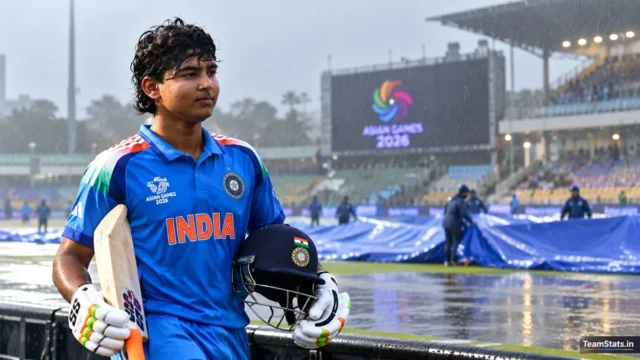
Vaibhav Sooryavanshi Misses Asian Games Debut Chance as India vs Afghanistan Match Is Abandoned
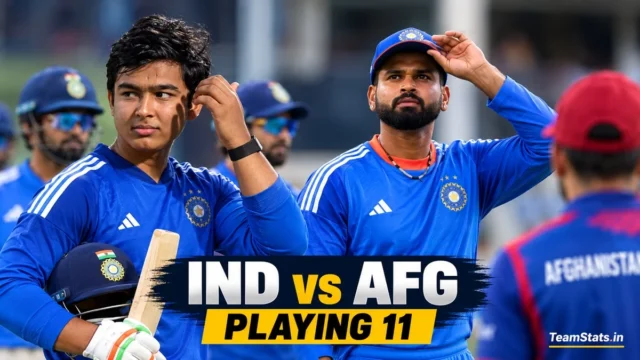
India vs Afghanistan Playing XI: Match Abandoned, India Reach Asian Games 2026 Semi-Final