
Afghanistan National Cricket Team vs Japan National Cricket Team: Head to Head, Matches & History
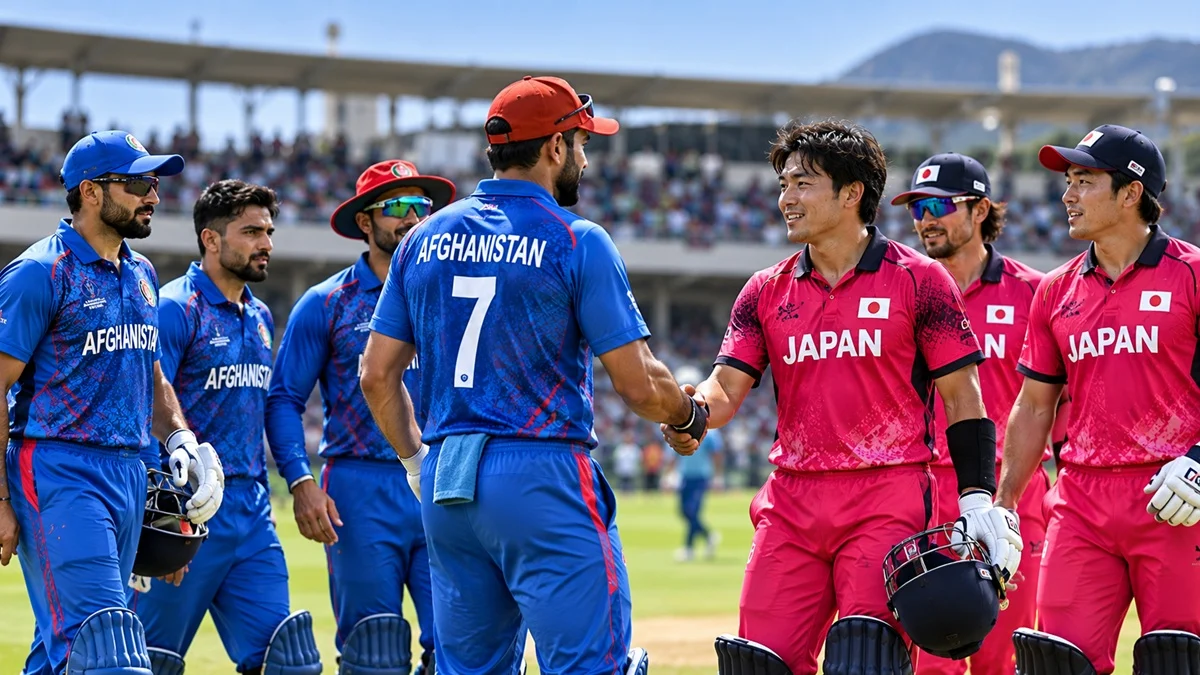
The Afghanistan National Cricket Team vs Japan National Cricket Team matchup brings together two Asian cricket nations whose journeys have taken very different routes. Afghanistan have grown into an established international side, while Japan are still building their presence through the Associate cricket pathway.
Their modern meeting at the 2026 Asian Games brought new attention to Afghanistan vs Japan cricket. However, the connection between the two countries goes further back than that single T20I, including the period when both were part of the ICC development structure.
Afghanistan and Japan were both involved in the 2008 ICC World Cricket League Division Five, when Afghanistan themselves were still climbing through the lower levels of international cricket. Afghanistan’s remarkable rise since then makes the comparison between these two teams particularly interesting.
This page follows the broader Afghanistan vs Japan cricket story rather than focusing on one tournament. It covers their background, head-to-head record, important meetings, latest result and how the cricketing gap between the two countries developed.
Afghanistan vs Japan: Two Very Different Cricket Journeys
Afghanistan are now recognised as a major international cricket nation, but their rise happened remarkably quickly. The country entered the ICC system in 2001 and began working its way through regional competitions and the World Cricket League.
Success followed rapidly. Afghanistan progressed through the lower divisions, gained ODI status in 2009 and qualified for the 2010 ICC World Twenty20 before eventually reaching the ODI World Cup.
The biggest structural change arrived in June 2017, when Afghanistan were awarded ICC Full Member status alongside Ireland. That gave Afghanistan the right to play Test cricket and confirmed their place among cricket’s leading international nations.
Japan’s cricket story has followed a very different timeline. Cricket has existed in the country for well over a century, but it never developed the mass following enjoyed by sports such as baseball and football.
The ICC records organised cricket being played in Japan during the nineteenth century, with the Yokohama Cricket Club established in 1868. The modern national structure developed much later as university, club and regional cricket began to expand.
Japan joined the ICC as an Affiliate member in 1989 and subsequently competed through Asian and East Asia-Pacific tournaments. Their development has been gradual rather than explosive, but international opportunities have increased over time.
Afghanistan and Japan’s Connection Goes Back to 2008
One of the most interesting parts of this matchup came long before the 2026 Asian Games. Afghanistan and Japan were both placed in Group B of the 2008 ICC World Cricket League Division Five tournament.
The group also contained Botswana, Singapore, Bahamas and hosts Jersey. Japan had qualified through the East Asia-Pacific pathway, while Afghanistan were beginning the international climb that would transform their cricket over the following decade.
At that point, the distance between the two countries in cricket’s global structure was much smaller. Afghanistan were not yet an ODI nation, had never appeared at a senior World Cup and were still years away from Full Member status.
What happened next changed everything. Afghanistan won Division Five, continued climbing through the World Cricket League and rapidly moved towards ODI and global tournament cricket.
Japan remained within the Associate pathway and continued developing through East Asia-Pacific competitions. Looking back from 2026, the contrast provides a striking illustration of how quickly Afghanistan cricket progressed.
How Afghanistan Rose Through International Cricket
Afghanistan’s rise did not stop with success in Division Five. They continued progressing through the World Cricket League, winning Division Four and then Division Three as their international profile grew.
ODI status followed in 2009, giving Afghanistan access to a much higher standard of international competition. Qualification for the 2010 World Twenty20 then placed the country on a global stage for the first time.
Afghanistan continued appearing in major ICC events and qualified for the 2015 Cricket World Cup. Their victory over Scotland at that tournament became another important milestone in the country’s rapid development.
By 2017, Afghanistan had completed a journey that few cricket nations had managed so quickly. Full Member status meant they were no longer simply an emerging Associate side but part of cricket’s top international structure.
That transformation is directly relevant when comparing Afghanistan with Japan today. The two countries once appeared in the same development-level tournament, but Afghanistan now operate in a completely different international environment.
Japan’s Cricket History Is Older Than It Looks
Japan may be an emerging international team, but cricket itself is not new to the country. Historical records place organised cricket in Japan as far back as the nineteenth century.
For much of that history, however, the sport remained concentrated within expatriate communities. Cricket did not spread nationally in the same way that baseball eventually did.
A more organised domestic structure began taking shape through university and club cricket. Institutions such as Keio, Chuo and Senshu universities helped provide another route for Japanese players into the game.
Japan later became part of the ICC development system and began competing regularly against other emerging cricket nations. Victories in East Asia-Pacific competitions helped the country reach higher-level qualifying tournaments.
The challenge has always been turning those regional opportunities into sustained exposure against stronger opposition. That is why matches against countries such as Afghanistan are particularly valuable for Japan’s development.
Afghanistan National Cricket Team vs Japan National Cricket Team Head to Head
The Afghanistan National Cricket Team vs Japan National Cricket Team head-to-head record needs to be viewed carefully. Historical development competitions and the modern senior T20I record should not be mixed together as though every meeting had the same international status.
For the current senior T20I matchup, the 2026 Asian Games provides the main benchmark. Afghanistan won that match and therefore hold the early advantage in the modern T20I head-to-head.
| T20I Head-to-Head | Afghanistan | Japan |
|---|---|---|
| Matches | 1 | 1 |
| Wins | 1 | 0 |
| Losses | 0 | 1 |
| First T20I Meeting | 24 September 2026 | 24 September 2026 |
| Latest Result | Won by 48 runs | Lost by 48 runs |
A one-match sample should not be treated as an established rivalry. It simply provides the starting point from which the Afghanistan vs Japan T20I record can grow.
Every future senior meeting can be added to this section. That will eventually make comparisons involving win percentage, home and away performance and winning margins much more meaningful.
From Division Five to Full Member vs Associate
The difference between 2008 and 2026 tells perhaps the most interesting part of this story. Afghanistan and Japan once operated much closer together within cricket’s international development system.
By 2026, Afghanistan were an ICC Full Member with experience across Tests, ODIs, T20Is and major global tournaments. Japan remained an Associate nation looking to gain more exposure against stronger international sides.
That does not make Japan’s progress insignificant. Instead, it demonstrates how differently cricket development can unfold depending on pathways, player depth, competitive opportunities and success in qualification tournaments.
Afghanistan provide an unusual example because their rise happened exceptionally quickly. Japan’s development has been more gradual and remains focused on strengthening the foundations of the game within the country.
Afghanistan vs Japan Latest Match
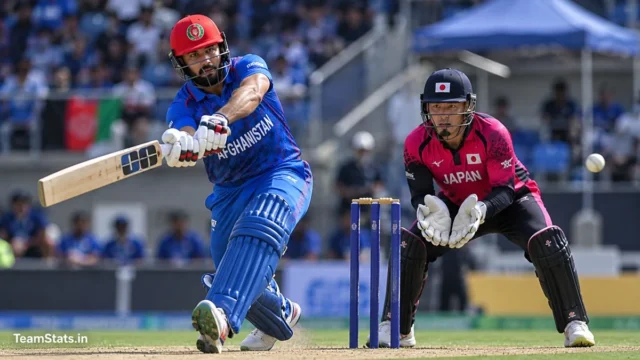
The latest senior Afghanistan National Cricket Team vs Japan National Cricket Team meeting took place on 24 September 2026 during the men’s Asian Games cricket competition in Japan.
Afghanistan batted first and made 129/6 from their 20 overs. Japan managed to keep Afghanistan from producing a huge total, leaving themselves with what appeared to be a potentially manageable chase.
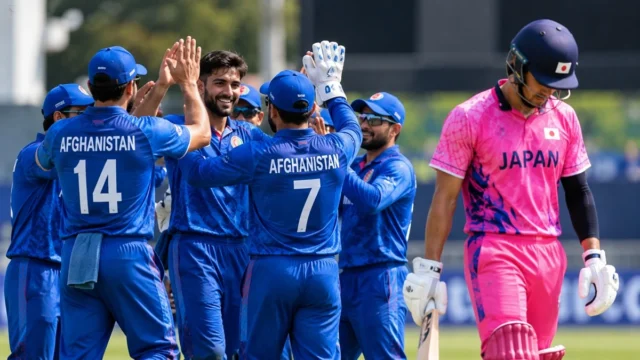
The second innings was very different. Afghanistan’s bowlers dismissed Japan for 81 in 19.3 overs, completing a convincing 48-run victory.
That result established the first modern T20I benchmark between the teams. It also showed both the progress Japan have made and the gap that still exists when facing a side with Afghanistan’s greater international depth.
What Happened in Afghanistan vs Japan?
Afghanistan’s batting innings never completely broke away from Japan. Mohammad Akram top-scored with 34, while captain Darwish Rasooli contributed 29 and Mohammad Ishaq finished unbeaten on 25.
Japan’s bowlers kept taking wickets often enough to prevent a major acceleration. At 129/6, Afghanistan had a defendable total but not one that made the result feel inevitable.
Afghanistan’s bowling changed the contest. Arab Gul took 4/8, while Nangeyalia Kharote claimed 3/19 and Abdullah Ahmadzai added two wickets.
Japan were eventually bowled out for 81. The 48-run margin looked comfortable, although Japan’s first-innings bowling had kept them competitive for half of the match.
A complete batting and bowling breakdown does not need to be reproduced on this broad pillar page. The dedicated Afghanistan National Cricket Team vs Japan National Cricket Team Scorecard article can target that search intent with the full card and match details.
Afghanistan vs Japan Cricket Timeline
The history between these countries is better explained through important cricketing milestones than by pretending they have played a long bilateral series.
Their paths have crossed at very different stages of development. Afghanistan’s rapid climb makes those milestones particularly useful when comparing where both countries started and where they are today.
| Year | Afghanistan–Japan Cricket Context |
|---|---|
| 2007 | Japan won the EAP Cricket Trophy and progressed to WCL Division Five |
| 2008 | Afghanistan and Japan were part of WCL Division Five |
| 2009 | Afghanistan gained ODI status |
| 2010 | Afghanistan reached the ICC World Twenty20 |
| 2015 | Afghanistan competed at the ODI World Cup |
| 2017 | Afghanistan became an ICC Full Member |
| 2026 | Afghanistan and Japan met in a senior T20I |
| 24 Sep 2026 | Afghanistan defeated Japan by 48 runs |
This timeline provides more context than simply looking at one modern scorecard. In 2008, Afghanistan were themselves trying to climb the international cricket ladder.
Less than two decades later, the same country entered a match against Japan as the far more established cricket nation. That transformation is central to the Afghanistan-Japan story.
Afghanistan vs Japan Team Comparison
The biggest difference between Afghanistan and Japan is currently international exposure. Afghanistan’s players operate within a system that regularly faces Full Member opposition and participates in major ICC competitions.
Japan’s national side receives fewer opportunities at that level. Much of their competitive cricket has historically come through East Asia-Pacific tournaments and ICC qualification pathways.
Afghanistan also benefit from greater player depth. Their cricket system can now produce tournament squads containing experienced internationals alongside younger players looking for opportunities.
Japan are still developing that depth. The positive sign is that stronger international fixtures are increasingly becoming part of their programme, giving players a clearer benchmark for the level required.
Why Afghanistan Have the Experience Advantage
Afghanistan’s Asian Games squad itself demonstrated the depth now available to the country. Darwish Rasooli captained a group that combined established names with emerging players.
Karim Janat and Najibullah Zadran brought substantial international experience. Around them were younger players such as Mohammad Akram, Mohammad Ishaq, Hassan Eisakhil and Arab Gul.
That balance allows Afghanistan to develop younger cricketers without fielding an entirely inexperienced side. Players entering the national setup can learn within an environment that already understands major international tournaments.
Japan do not yet possess the same depth of international experience. Their challenge is to create enough high-level cricket for successive generations of players to become comfortable against stronger opposition.
Where Japan Are Making Progress
Japan’s development should be judged against where their own cricket programme stood previously. The national side now has a clearer pathway connecting domestic cricket, youth teams and senior international competition.
Players such as Kendel Kadowaki-Fleming, Reo Sakurano-Thomas, Benjamin Ito-Davis and Shoma Sugaya-Slater have become familiar names within Japan’s senior setup.
The country has also started receiving opportunities against stronger teams. Those fixtures are important because regional dominance alone cannot prepare players for the pace and depth found higher up the international structure.
Playing Afghanistan therefore has value beyond the result. Japan can identify exactly where their batting, bowling and match management need to improve against a stronger cricket nation.
Afghanistan vs Japan Stats: An Early Record
The Afghanistan National Cricket Team vs Japan National Cricket Team stats remain limited because the modern senior T20I sample is still very small.
Afghanistan currently have the advantage in matches won, while the 2026 encounter established the first major team and individual benchmarks between the sides.
There is little value in filling this pillar with dozens of record tables after only one modern T20I. Doing so would also duplicate the purpose of the dedicated Stats page.
The separate Afghanistan National Cricket Team vs Japan National Cricket Team Stats article should eventually contain highest totals, most runs, most wickets, best bowling, batting averages, strike rates and updated records after every meeting.
On this page, the important statistical takeaway is simple: Afghanistan currently lead the modern T20I matchup, but the sample remains too small for broad statistical conclusions.
Afghanistan vs Japan Players
The Afghanistan National Cricket Team vs Japan National Cricket Team players also come from very different cricketing environments.
Afghanistan’s system now includes players with experience in Full Member international cricket and major franchise competitions. Younger Afghan players therefore enter a pathway where high-level cricket has become normal.
Japan’s players generally have fewer opportunities against elite international opposition. Their progression depends heavily on domestic cricket, regional tournaments, youth pathways and international qualifiers.
That difference helps explain the current gap between the teams. A separate Afghanistan National Cricket Team vs Japan National Cricket Team Players page should cover complete squads, roles, batting and bowling styles and individual career records.
Keeping those details outside this pillar gives the Players article a clear independent search intent rather than forcing two TeamStats pages to compete for the same query.
Afghanistan and Japan in Youth Cricket
Youth cricket could become one of the most important parts of this matchup in future. Afghanistan’s rise has already shown what can happen when emerging talent continually feeds into the senior national side.
Japan have also been working on building stronger age-group pathways. Players progressing from junior cricket into domestic clubs and eventually the national team provide the continuity required for long-term growth.
The purpose of discussing youth cricket here is not to mix U19 records with senior head-to-head statistics. Those are different competitions and should remain statistically separate.
Instead, youth cricket helps explain where future Afghanistan and Japan players may come from. As Japan’s development system expands, the quality of future senior meetings could change significantly.
What Afghanistan’s Rise Shows Emerging Cricket Nations
Afghanistan were playing World Cricket League Division Five cricket in 2008. Nine years later, they had become an ICC Full Member.
That trajectory was exceptional and should not be treated as the normal development timetable for every Associate nation. Different countries face different challenges involving facilities, participation, funding and competition from other sports.
Still, Afghanistan proved that cricket’s international hierarchy is not completely fixed. Strong performances in qualifying tournaments can create opportunities for emerging teams to move rapidly through the system.
Japan’s route is likely to be different. But more fixtures against stronger teams can help establish exactly what needs to improve for the country to move to the next level.
Asian Games 2026: A New Chapter, Not the Whole Story
The Asian Games 2026 meeting should be viewed as one chapter of Afghanistan vs Japan cricket rather than the identity of the entire matchup.
Afghanistan and Japan were placed in Group A alongside Nepal. With only a small number of group matches available, every result carried significant qualification importance.
Afghanistan’s 48-run victory therefore gave them an important early advantage. Japan, meanwhile, needed to respond quickly because there was little room for error in such a short group stage.
For changing tournament positions, readers can follow the Asian Games Cricket Points Table 2026 rather than relying on a static table inside this evergreen article.
That keeps this page focused on Afghanistan vs Japan while allowing the standings article to rank and remain updated for its own search intent.
Why Afghanistan vs Japan Standings Are Different From Head to Head
Head-to-head and standings answer two different questions. The head-to-head record tells us what happened specifically when Afghanistan played Japan.
Tournament standings include results against other teams as well. In the Asian Games group, matches involving Nepal can affect Afghanistan and Japan’s qualification position even without the two teams playing each other again.
That is why a separate Afghanistan National Cricket Team vs Japan National Cricket Team Standings article is unnecessary. It would largely duplicate information already covered by the Asian Games points-table page.
The pillar should provide only the context required to understand the matchup. The dedicated standings page can handle points, matches played, wins, losses, net run rate and qualification scenarios.
What Japan Can Learn From Afghanistan
Afghanistan offer an interesting development reference because they once competed much lower in the international structure. Their progress came through consistently winning at each new level.
Japan cannot simply copy Afghanistan’s path. The cricket cultures, domestic structures and sporting environments of the two countries are very different.
But one lesson is universal: stronger competition matters. Teams need regular opportunities against better opposition if they want to understand the standards required at the next level.
Japan’s bowling effort against Afghanistan showed some encouraging signs. Restricting a stronger side to 129/6 demonstrated that Japan could compete for significant periods of the match.
The next challenge is doing that across all 40 overs. Japan’s batting collapse to 81 showed where the bigger gap remained in their first modern T20I against Afghanistan.
Could Afghanistan vs Japan Become More Competitive?
T20 cricket provides emerging teams with opportunities that longer formats do not always offer. One strong powerplay or an exceptional bowling spell can change a match very quickly.
Japan demonstrated part of that potential by keeping Afghanistan to 129/6. Had the chase produced one substantial partnership, the pressure on Afghanistan could have been considerably greater.
Afghanistan will still hold the experience advantage in the near term. Their players have simply played more high-level international cricket and operate within a deeper system.
But future meetings will provide a better measurement than assumptions based on one result. Each match will show whether Japan are closing the gap or Afghanistan are maintaining their advantage.
Future Afghanistan vs Japan Matches
The current senior history is too limited to describe Afghanistan vs Japan as an established rivalry. That could change if the teams begin meeting more frequently in Asian competitions.
Future fixtures would make the statistical side of the matchup much more meaningful. Highest totals, leading run-scorers, most wickets and winning percentages become useful only once a larger match sample exists.
This pillar is designed to grow with those meetings. New results can be added to the head-to-head and timeline sections without rebuilding the entire page.
Detailed scorecards and player records can continue living on their dedicated pages. That keeps the broader article clean while strengthening the surrounding Afghanistan vs Japan content cluster.
Afghanistan National Cricket Team vs Japan National Cricket Team FAQs
Who leads Afghanistan vs Japan head to head?
Afghanistan currently lead the modern senior T20I head-to-head after winning the teams’ 2026 Asian Games meeting by 48 runs.
What was the score in Afghanistan vs Japan?
Afghanistan scored 129/6 from 20 overs, while Japan were dismissed for 81 in 19.3 overs. Afghanistan therefore won the match by 48 runs.
Did Afghanistan and Japan have a cricket connection before 2026?
Yes. Afghanistan and Japan were both part of the 2008 ICC World Cricket League Division Five competition during the period when Afghanistan were still climbing through cricket’s development structure.
Is Afghanistan a Full Member of the ICC?
Yes. Afghanistan became an ICC Full Member in 2017, completing a remarkable rise from the lower World Cricket League divisions to Test status.
Is Japan a Full Member cricket nation?
No. Japan competes through the Associate cricket structure and has historically developed through East Asia-Pacific competitions and ICC qualification pathways.
Where can I find Afghanistan vs Japan player details?
Full squads, individual records, roles and player comparisons are better covered on the dedicated Afghanistan National Cricket Team vs Japan National Cricket Team Players page rather than duplicating those details here.
Where can I find the full Afghanistan vs Japan scorecard?
The complete batting and bowling figures should be maintained on the dedicated Afghanistan National Cricket Team vs Japan National Cricket Team Scorecard article. This pillar keeps only the result and essential match context.
Where can I check Afghanistan vs Japan standings?
For the Asian Games, use the Asian Games Cricket Points Table 2026. Tournament standings and permanent head-to-head records serve different search intents.
Afghanistan vs Japan: A Matchup to Follow
The Afghanistan National Cricket Team vs Japan National Cricket Team story is unusual because the most interesting comparison goes beyond wins and losses.
Afghanistan and Japan were operating much closer together within cricket’s development structure in 2008. Afghanistan then made one of the fastest rises international cricket has seen, eventually reaching Full Member status.
Japan have followed a slower development path but continue to gain international experience. Their meetings with stronger opposition now provide a clearer picture of how far the national programme has progressed.
The 2026 Asian Games produced the first major modern benchmark, with Afghanistan winning by 48 runs. Japan’s ability to restrict Afghanistan to 129/6 nevertheless showed that the contest was not without competitive periods.
As the two countries meet again, the picture will become clearer. Head-to-head results can grow here, while Stats, Players and Scorecard remain separate resources with their own search intent.
For now, Afghanistan hold the advantage. But the wider story of Afghanistan National Cricket Team vs Japan National Cricket Team is also about two countries that once appeared much closer together in cricket’s development structure and have since travelled very different international paths.

Related Posts
Afghanistan vs Japan Timeline: Complete Cricket History & Key Matches
Afghanistan vs Japan Match Scorecard: AFG 129/6, JPN 81
Afghanistan National Cricket Team vs Japan National Cricket Team Players 2026
Afghanistan National Cricket Team vs Japan National Cricket Team Stats & Records
Afghanistan vs Japan Asian Games 2026: Arab Gul Takes 4/8 as Afghanistan Win by 48 Runs